
By September 11, 2026 / 12:48 PM EDT
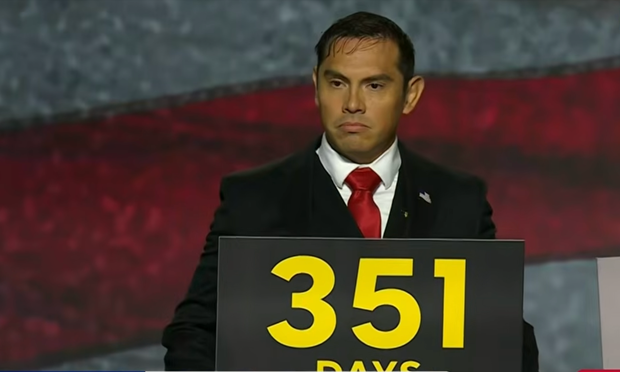
Washington — The appearance of an active-duty Navy sailor at the Republican National Committee’s convention has stirred questions about military rules on political participation. Petty Officer 2nd Class Wilbert Joseph Castañeda, who was jailed in Venezuela and later released in a prisoner swap under the Trump administration, was seen on stage at the GOP’s midterm convention.
Castañeda walked onto the stage in Dallas wearing a black suit and red tie, avoiding his military uniform. He held a sign indicating the number of days he spent imprisoned. The event highlighted former hostages freed by President Trump, emphasizing their plight under the Biden administration.
Defense Department regulations restrict active-duty personnel from engaging in partisan political gatherings. Service members risk charges for not adhering to these rules. Nevertheless, they are permitted to attend political events as spectators if not in uniform.
The Pentagon did not immediately confirm if it was aware of Castañeda’s participation in the event. Castañeda’s military status was verified, noting he is no longer a Navy SEAL, having lost his trident due to performance issues.
The convention aimed at rallying support for upcoming elections, with President Trump asserting his party’s accomplishments. Military personnel are allowed to express political opinions privately, but participation in such events crosses a line into political endorsement. Legal experts emphasize the distinction between attending as a spectator versus becoming an active participant.
Castañeda’s military journey has attracted attention previously. Enlisting in 2007, he endured rigorous SEAL training. His service record includes commendations like Achievement Medals and Service Deployment Ribbons.
Castañeda’s arrest in Venezuela in 2024 came during a personal visit, with Venezuelan authorities initially accusing him of coup involvement. This claim was later retracted due to lack of evidence. His eventual release involved diplomatic negotiations exchanging detained Americans for deported Venezuelans.
His family’s statement highlighted Castañeda’s brain injuries from service, which they claim affected his decision-making and led to his Venezuelan trip. Evaluations for these injuries occurred post-release. Meanwhile, other service members face scrutiny for similar political involvements.
The military’s firm position on political neutrality is evident in cases like Air Force Maj. Jason Watson, who publicly criticized Trump. Both military codes and legal proceedings underscore the importance of separating military duties from political actions to preserve trust in the armed forces.
Maintaining a divide between the military and politics sustains the impartiality vital for national security. Eleanor Watson contributed to this report.