
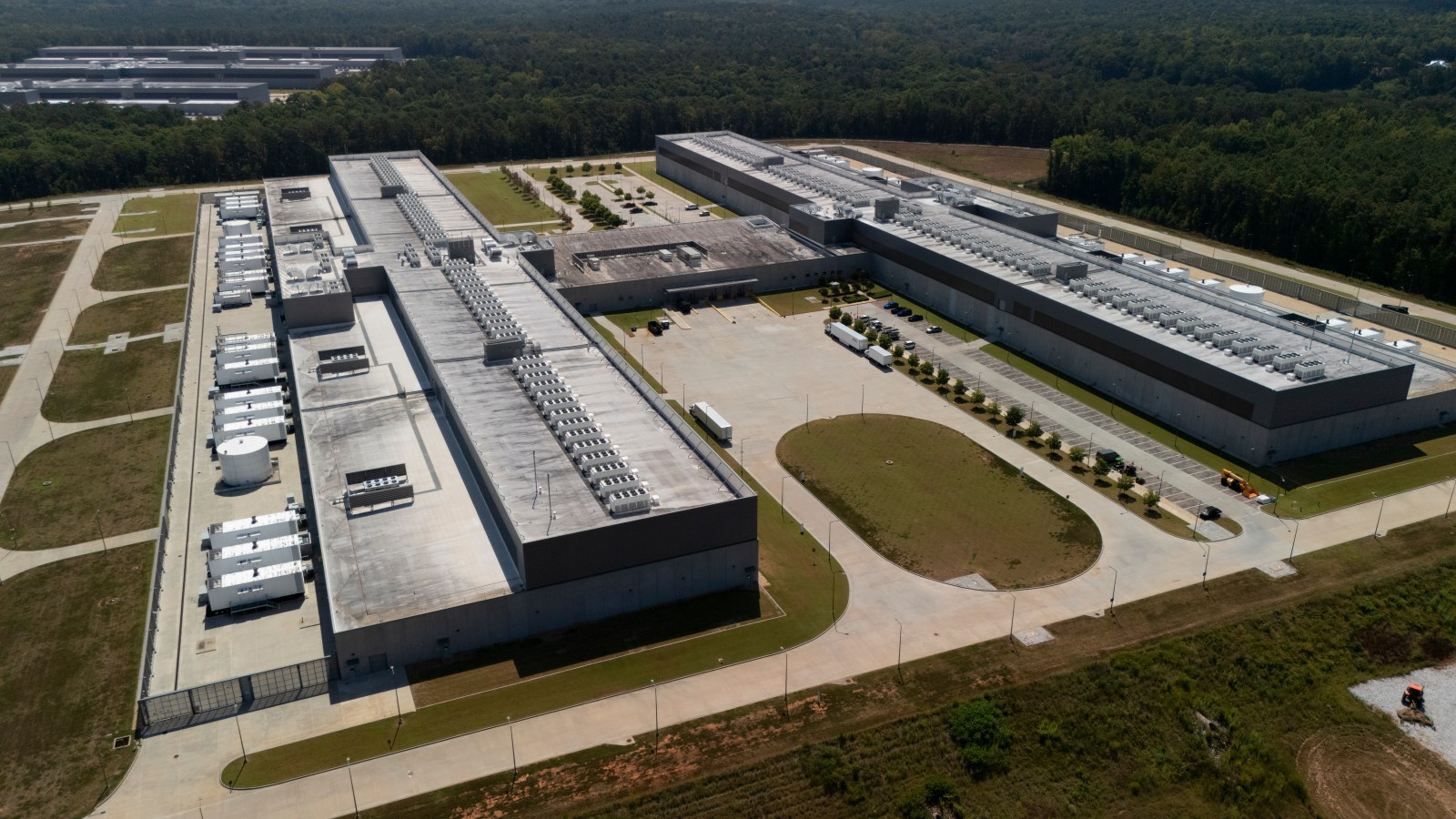
Artificial intelligence (AI) has become a rare issue uniting Americans across political lines ahead of this year’s midterm elections. An NBC News Decision Desk poll reveals concerns about the rapid expansion of AI infrastructure. The survey shows 34% identify as Republican, 29% as Independent, and 37% as Democrat.
Overall, 69% of Americans oppose the idea of an AI data center in their area, including 45% who strongly oppose it. Only 31% support such development. The poll confirms that 70% are more worried than excited about AI.
AI infrastructure impacts local communities regardless of party affiliations. When asked which political party they trust more for AI policy decisions, 20% chose Democrats, 16% Republicans, 44% neither party, 5% both parties equally, and 15% were unsure.
“Worries about the technology transcend virtually all of the demographic divides that usually define American politics and policy. Republicans and Democrats, men and women, those with and without college degrees, and Americans who live in cities, suburbs, small towns, and rural areas were united in their discomfort with AI.” — NBC News
The poll surveyed 7,105 adults online from August 20 to September 1, with a margin of error of ±3.3 percentage points.
Concerns and Debates on AI
Bill Gates, Microsoft co-founder, has warned about insufficient public debate over AI. He expressed concerns about cyberattacks, bioterrorism, and societal consequences due to the technology’s rapid development. Gates emphasized that restricting data centers won’t significantly slow AI development as companies could relocate them.
The debate around data centers often involves their demands on electricity, water, and land. Supporters argue they bring jobs and economic development, while critics worry about resource strain and potential utility cost increases. This tension is making data centers a prominent political topic.
The Trump administration is advocating for increased AI capabilities and data center investments. However, figures like Texas Governor Greg Abbott oppose AI data centers due to resource impacts. Abbott has halted up to 1,800 projects, setting guidelines regarding their impact on local communities.
President Donald Trump stated on Truth Social that rejecting data centers could harm economic progress, urging communities not to obstruct such developments.
Public Perception and Concerns
According to the survey, 38% of respondents are extremely or very concerned about China leading in artificial intelligence. Twenty-eight percent are somewhat concerned, while 34% are not very or not at all concerned. Concerns appear prominent among self-identified Republicans.
Vice President JD Vance noted that people associate data centers with neighborhood degradation, particularly power bill increases. He suggests solutions to restore power to the grid.
The poll indicates bipartisan consensus; neither party will benefit from owning the issue. Professor Robert Y. Shapiro from Columbia University argues that Trump’s larger issues eclipse his potential gains from AI as an electoral talking point.
Impact on Society
The survey also assessed AI’s impact on jobs and workplaces. Fifty-three percent believe AI will do more harm than good. Twenty-seven percent feel it will bring more good, while 20% are uncertain.
When asked about AI benefits for society, nearly 30% rated them high or very high. Thirty-eight percent saw medium benefits, while over 30% considered them low or very low.
Regarding democracy, 64% believe AI will do more harm than good. Fourteen percent think it will do more good, and 22% remain unsure. In healthcare, 47% anticipate more good from AI, 30% foresee more harm, and 23% are undecided.
Usage of AI varies among respondents; over 50% use AI sometimes or very often, 26% use it rarely, and 22% never use it.