
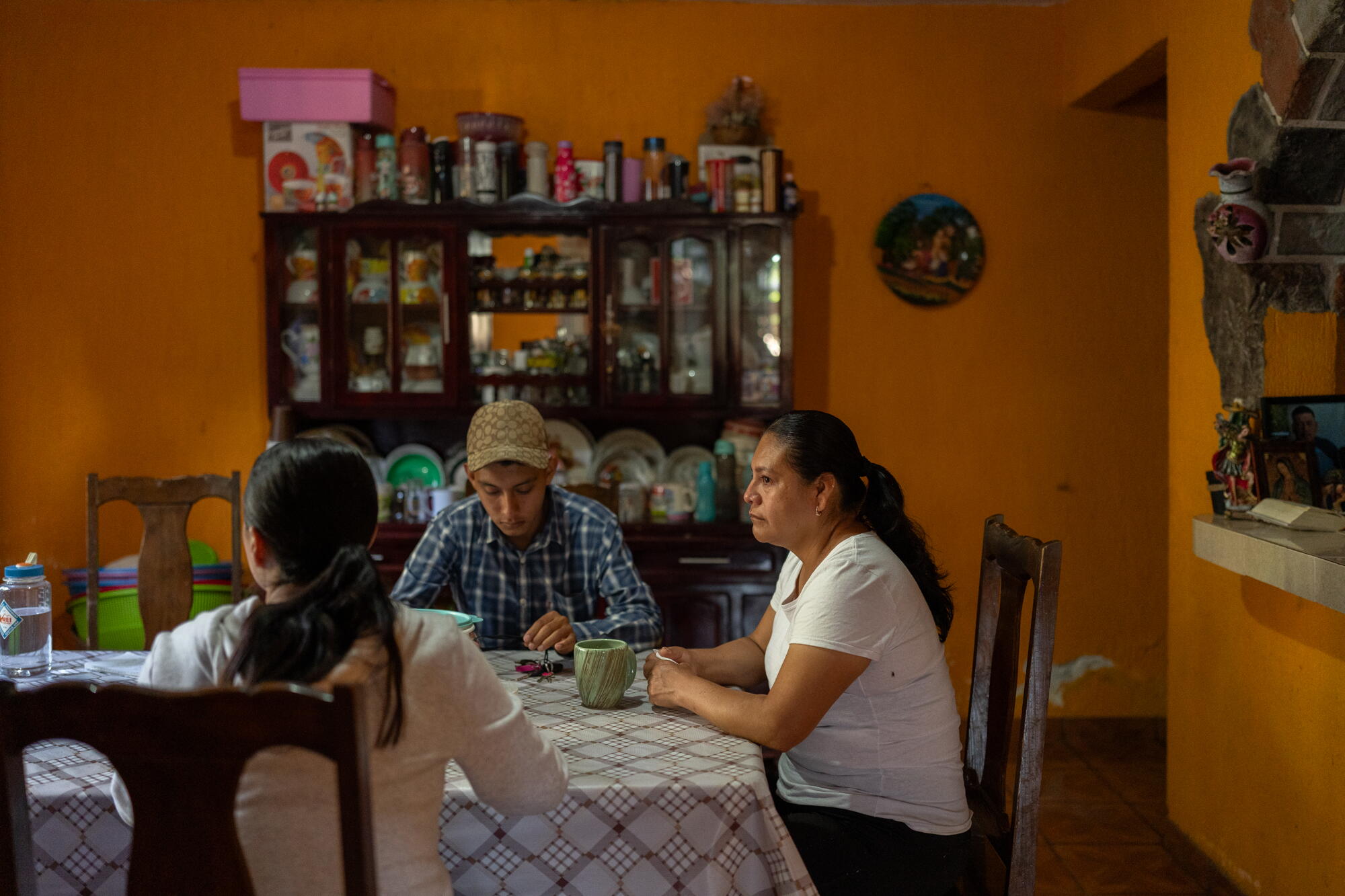
Terésa Pérez, 44, sits with her children, Ana García, 24, and Óscar García, 18, in their home in San Ángel Zurumucapio. Óscar slows his truck to pass a checkpoint manned by paramilitaries guarding the town. His grandfather, Francisco, 74, remarks on the transformation from peace to danger, primarily due to the avocado industry.
The booming avocado market has transformed this western region of Mexico. Enormous wealth came, but so did terror. The lucrative industry, which changed the town and its people, also attracted criminal elements.
Óscar is now responsible for his family farm. He recalls when they found his father’s abandoned truck, signaling a family tragedy. Their town of San Ángel Zurumucapio, which has P’urhépecha roots, is close-knit, where everybody feels like family. Once a virgin forest, locals earned a living from resin and sought opportunities by leaving for work in the U.S.
The North American Free Trade Agreement ended the U.S. ban on Mexican avocado imports in 1997. This change allowed people like Francisco and his son Pancho to elevate their lives. They built houses, bought cars, and embraced a middle-class lifestyle.
The avocado boom led to climate changes due to deforestation and invited criminals to seize control of farms and extort growers. In San Ángel, armed criminals expanded beyond drug trafficking into avocados, demanding protection fees and causing fear among residents.
Óscar grew up amidst this threat. His father, Pancho, taught him about farming and remained unarmed, despite the evident danger. Many locals expressed frustration with authorities who seemed to overlook, or worse, collude with these issues.
In 2021, residents voted for self-governance, bypassing traditional political parties to manage their community. They soon formed a militia for self-defense, driven by pervasive insecurity.
Pancho disapproved of the fortifications but participated reluctantly. Francisco worried about increasing violence. Despite the militia’s presence, safety remained elusive, and the area continued to face lawlessness.
On December 10, 2024, Pancho left for his orchard but never returned. Authorities found little evidence of what happened. The family’s efforts to seek answers included contacting local criminals, but no resolution emerged. Francisco instructed the family to halt their search, fearing further losses.
Francisco now worries for Óscar, who resembles his father and dropped out of school to manage the farm fully. Though he seems comforted by participating in militia shifts, the family recognizes a change in him.
The avocado industry brought prosperity to Francisco’s family, providing them with comforts like a spacious home and prized livestock, yet also delivered violence and personal loss. Francisco ensures a candle stays lit beside Pancho’s photo, a constant reminder of both avocados’ promise and peril.