
The House Select Committee on the Chinese Communist Party is seeking a briefing from the Department of Homeland Security (DHS) regarding the enforcement of the Uyghur Forced Labor Prevention Act (UFLPA). This act aims to curb the importation of goods manufactured using slave labor from China.
DHS’s Forced Labor Enforcement Task Force was tasked with devising a strategy to prevent the import of products made with forced labor in China. Human rights groups have highlighted the mistreatment and forced labor of Uyghurs, a Muslim ethnic group in China’s Xinjiang region.
Rep. Ro Khanna, a ranking member on the House Select Committee on Strategic Competition between the United States and the Chinese Communist Party, emphasized the gravity of the situation. “The Uyghurs face political persecution in China. They’re coerced to abandon their religion, assimilate into Chinese culture, and labor under exploitative conditions,” Khanna stated.
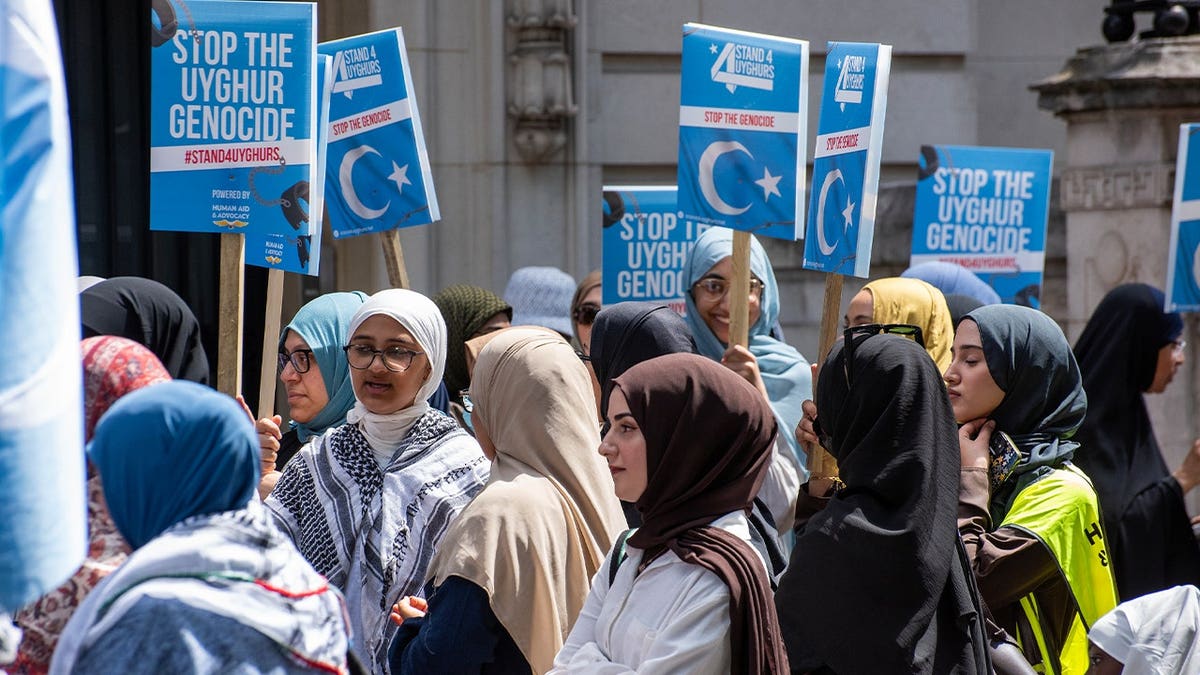
Protesters gathered outside the Chinese embassy in London to demand the dismantling of internment camps and the respect for religious freedom.
Khanna argued that the enforcement of the UFLPA is essential not only for moral reasons but also for economic and national security benefits. He noted that forced labor products undercut American industries, creating unfair competition.
The letter to DHS Secretary Markwayne Mullin seeks answers on ten issues related to the UFLPA Entity List. DHS added 43 companies to this list recently, a move Khanna supported, though he hoped for further action.
Concerns persist that products from these companies, originating in the Xinjiang region, are still entering U.S. markets. The products in question include textiles and tech-related materials.
Labubu dolls, reportedly using cotton sourced from forced labor, are among the products of concern.
China’s strategy involves evading tariffs by moving operations to countries like Malaysia and Vietnam. Khanna stressed the need to trace products back to their origins and ban those linked to forced Uyghur labor.
The letter underscores the bipartisan nature of the issue, with eight lawmakers signing from both parties.
“It’s about fair trade and human rights,” Khanna said, advocating for equitable competition and opposing slave labor entering the U.S.
The Department of Homeland Security, Customs and Border Protection, the Chinese Embassy, and Pop Mart, a manufacturer involved in the matter, were contacted for comment.