
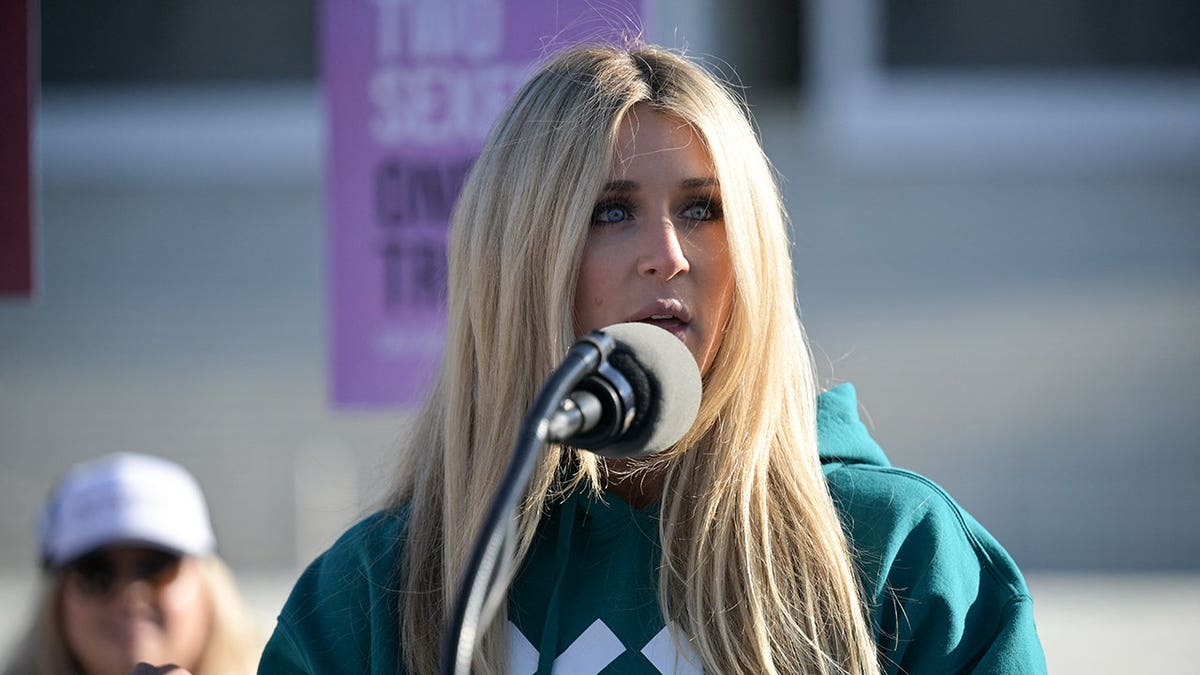
Riley Gaines, a prominent advocate for keeping women’s sports exclusive to biological women, is causing a stir across the nation. Her stance is clear: transgender women should not participate in women’s sports. This belief often puts her at odds with progressive viewpoints.
Gaines recently spoke outside the U.S. Supreme Court during a session about state bans on transgender athletes in women’s sports. This highlighted ongoing debates in areas with differing political climates. For instance, in Minneapolis, she received boos and hostility at her first WNBA game. She supported Indiana Fever’s Sophie Cunningham, recognized for speaking out for women in sports.
“My main takeaway is that when Minneapolis is booing you, it’s generally a good sign,” Gaines remarked during a halftime interview.
In contrast, at a subsequent game in Indianapolis, Gaines experienced a warm reception. The event included former NBA player Royce White, now identifying occasionally as “Roysha,” who supports the same cause. This difference in reception exemplifies broader political divides.
The WNBA, with teams largely in politically mixed states, faces challenges reconciling differing opinions on its transgender policies. Red-state teams like Indiana Fever and Dallas Wings remain minority views in the league, while upcoming expansions, such as Cleveland, aim to balance political influences.
Freedom of expression in different cities brings varied responses. Enes Kanter Freedom and Royce White have both voiced intent to join the WNBA, identifying as trans women to protest lenient policies. Their declarations criticize the league for its lack of clear gender definitions.
Freedom faced backlash in Chicago, leading to a lifetime ban from the Wintrust Arena. Contrastingly, White’s visit to Indianapolis was met warmly, suggesting a political and cultural divide in fanbases.
Gaines, supported by figures like Indiana Attorney General Todd Rokita, believes sports should clearly define eligibility based on biological sex. Rokita aims to clarify bylaws legally to prevent manipulation and maintain fairness in competition.
“If the WNBA can’t define in their bylaws what a woman is…you’re entering a real gray area,” Rokita stated.
With ongoing debates and legal scrutiny, Gaines and her allies continue to campaign for policy changes, aiming to influence the WNBA’s stance on transgender athletes. Support from red-state politicians and fans adds pressure for potential legislative involvement.