
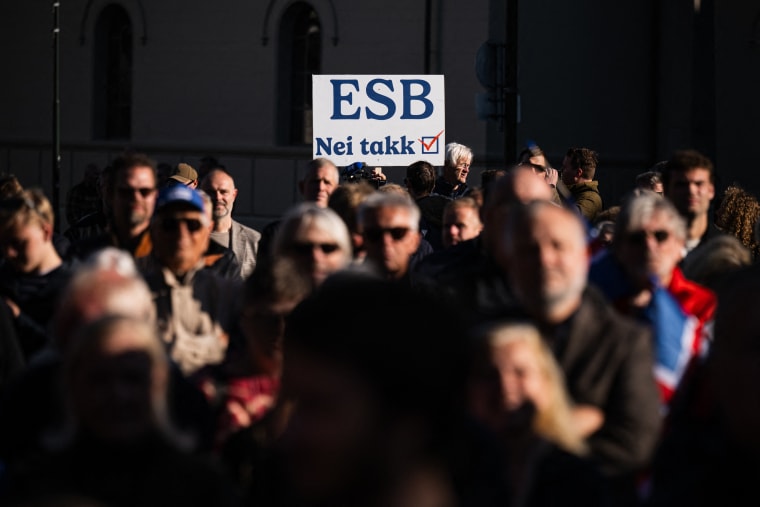
In Reykjavik, Icelanders participated in a pivotal vote on Saturday to determine whether to reopen membership talks with the European Union. The island nation is divided on the issue, with the campaign highlighting the cost of living, security, sovereignty, and control of fishing waters.
The race remains uncertain, with a recent Gallup poll indicating a slight majority opposing renewed negotiations. This marks a change from earlier surveys that showed a narrow advantage for those supporting the talks.
Proponents of the ‘Yes’ campaign argue that EU membership could reduce high interest rates and enhance security, especially in light of global uncertainties such as the war in Ukraine and U.S. political moves concerning Greenland.
Critics, backing the ‘No’ campaign, contend that EU membership threatens Iceland’s sovereignty and fishing waters.
Ólafur Ragnar Grímsson, Iceland’s former President and campaigner against EU membership, stated on social media, “Today is our encounter with history.”
Should the ‘Yes’ vote prevail, Iceland will enter negotiations with Brussels, potentially followed by a second referendum in a few years on joining the EU.
The European Union, with its 27 member countries, is among the world’s largest trading blocs. Iceland, along with Norway and Switzerland, remains one of the few northern and western European states resistant to joining, following Britain’s exit post-2016 referendum.
The Persistent Debate
Iceland initially applied for EU membership in 2009, driven by a financial crisis severely impacting its economy. Talks ceased in 2013 when a Eurosceptic government sided against the process.
Current geopolitical tensions have renewed the urgency of the debate. Foreign Minister Thorgerdur Katrin Gunnarsdottir emphasizes the crucial nature of the vote, posing the question of Iceland’s ability to remain apart in a changing global order.
“The international order that underpinned our security and prosperity for decades is under serious pressure,” she highlighted.
“In such times, small nations must carefully consider their position and alliances.”
Economic Concerns
The domestic discussion centers more on interest rates, fishing rights, and the cost of living. Iceland confronts high inflation and steep mortgage rates, with supporters of the “yes” vote proposing that EU membership, potentially involving adopting the euro, might provide economic relief. Iceland’s central bank rate is at 8.00%, compared to the European Central Bank’s 2.25%.
Vilhjalmur Hilmarsson, chief economist at Viska, a major Icelandic labor union, remarked that EU membership wouldn’t resolve Iceland’s structural issues but could spur a healthier economy.
Opposition leader Guðrún Hafsteinsdóttir counters that the economic advantages are overstated.
“These are issues that Icelandic politicians must address, not Brussels,” she asserted.
Fishing Rights Dispute
EU fishing quotas emphasize historical patterns, suggesting Iceland might retain control of its waters. However, opponents like Hafsteinsdóttir remain skeptical of long-term promises made by the EU.
A foreign ministry memo estimates negotiations could commence by late 2026, lasting 18 to 24 months, contingent on a favorable vote.
Iceland must also conduct a general election by November 2028, inserting political unpredictability into any negotiation timetable.
Polling stations across Iceland, home to roughly 400,000 residents, were scheduled to close at 6 p.m. ET.