
Military appointments in authoritarian regimes during wartime reveal various priorities. In Iran, the new military hierarchy under Supreme Leader Mojtaba Khamenei indicates more than a simple restructuring. It serves dual purposes: confronting the United States and Israel abroad, while maintaining stability in the country.
Those promoted are veterans of Iran’s revolutionary-security framework. These leaders gained experience during war, intelligence operations, and domestic enforcement. Claims of leadership change bringing about regime transformation in Tehran should be viewed cautiously. Replacing individuals is not equivalent to regime change, which requires a shift in institutions, ideology, and strategic aims.
IRAN’S UNSEEN SUPREME LEADER BECOMES WEAPON IN ESCALATING POWER STRUGGLE, EXPERTS SAY
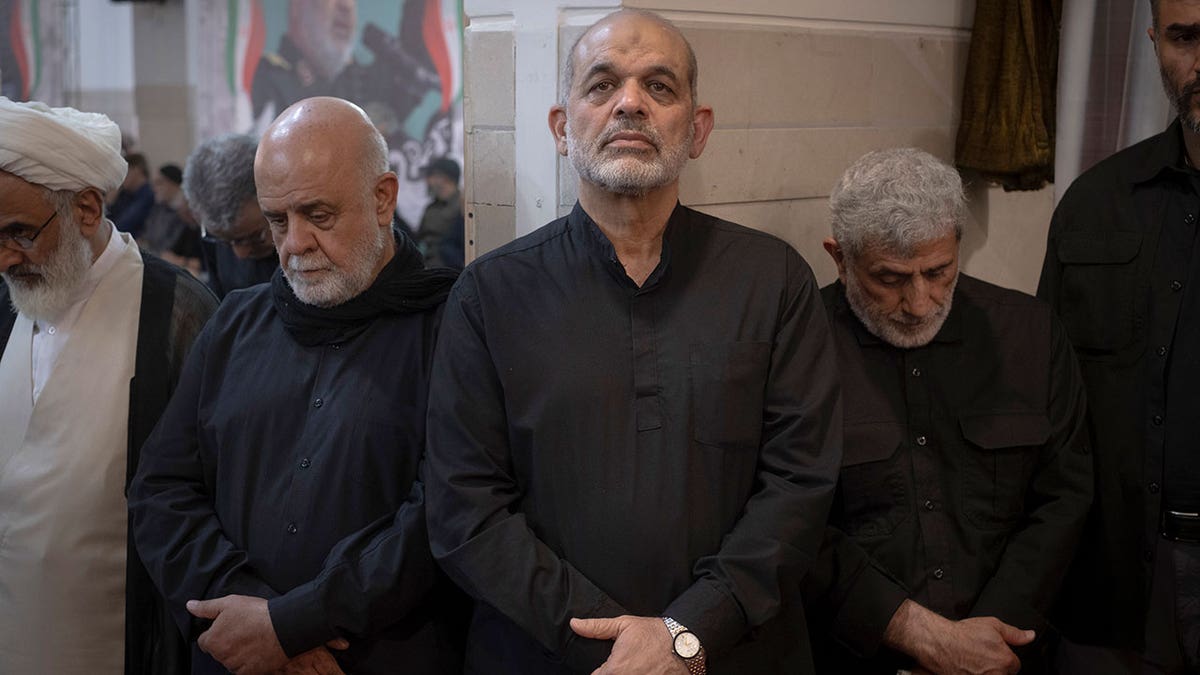
The Islamic Republic still holds firm. It relies on individuals forged in institutions that spent years countering Washington and Jerusalem while safeguarding the regime. Ahmad Vahidi, commander of the Islamic Revolutionary Guard Corps (IRGC) Quds Force, Esmail Qaani, and Iraj Masjedi, Deputy Coordinator of the IRGC Quds Force, are key figures who partake in ceremonies honoring fallen commanders.
Ali Abdollahi, appointed as the new chief of the General Staff, belongs to the generation that saw the rise of the Islamic Republic. His role underscores continuity rather than new beginnings.
IRAN ACCELERATES EXECUTION CAMPAIGN AGAINST ANTI-REGIME ACTIVISTS AMID INTERNET CENSORSHIP
Kiumars Heydari, now deputy chief of the General Staff, once called the suppression of 2019 protests a “proud” mission. Such statements blur the line between defending Iran and the Islamic Republic.
The choice of Ahmad Vahidi as IRGC leader is significant for the U.S. and Israel. Vahidi has a background in intelligence and extraterritorial operations, such as accusations linked to the 1994 AMIA bombing in Buenos Aires. However, his history is key as the regime places great trust in his abilities.
WHO IS AHMAD VAHIDI? IRAN’S NEW IRGC CHIEF TIED TO GLOBAL ATTACKS AND ‘DEATH TO AMERICA’ IDEOLOGY
Vahidi’s promotion should be seen through an institutional lens. The IRGC has long used proxies, missiles, and covert networks against stronger foes. This strategy allows Tehran to exert pressure with manageable escalation risks.
EXPERTS URGE EXTREME CAUTION ON IRAN’S ‘CROWN JEWEL’ HEZBOLLAH — TERROR GROUP WITH US BLOOD ON ITS HANDS
Iran’s confrontation with the U.S. involves supporting groups held responsible for American casualties. The rise of such veteran leaders implies continued hostility rather than appeasement. Tehran seems ready for ongoing challenges with the U.S. and Israel.
Hossein Taeb’s return to command the Basij completes this structure. Taeb’s tenure across various intelligence sectors adds weight to Tehran’s internal security priorities. Sanctioned by the U.S. and EU for human rights abuses, Taeb’s position underscores the seriousness of internal security.
IRAN HANGS 2 PROTESTERS IN PUBLIC, CROWD CRIES ‘DISHONORABLE’ AS SECURITY FIRES TEAR GAS
The Basij operates extensively within society for surveillance and suppression. Bringing back an experienced intelligence leader highlights the regime’s approach to internal threats. Vahidi and Taeb demonstrate the regime’s dual focus on external and internal security. Any military setbacks can weaken its perception of strength, while intelligence breaches expose vulnerabilities.
TRUMP IS WINNING EVERY BATTLE IN IRAN—AND RISKING THE WAR THAT MATTERS
This fusion affects Iran’s future behavior. Leadership under threat may grow more aggressive externally and repressive internally. The new structure likely supports continued asymmetric pressures against the U.S. and Israel through various means.
The Islamic regime remains resilient but not invigorated. Despite challenges, it maintains a functioning command structure. However, reliance on an aging leadership raises strategic concerns. A robust military develops new leaders; an insecure regime revisits its past.
For the U.S. and Israel, understanding this distinction is crucial. Strategy should account for enduring hostile institutional structures. New leadership still means continuity of missions and ideology. Demonstrating strength remains a priority.
The focus for U.S. strategy should address the underlying system these leaders preserve. Iran rebuilds its institutions for external challenges and internal control, reinforcing a dual-front strategy.
CLICK HERE FOR MORE FOX NEWS OPINION
This complex reshuffle signals that Iran is not changing its political order post-war. Its strategy encompasses foreign confrontation and domestic insecurity.
CLICK HERE TO DOWNLOAD THE FOX NEWS APP
Washington and Jerusalem must not assume Iranian moderation follows military pressure. A regime led by war-experienced veterans perceives the struggle as survival. Iran’s old order remains active with renewed determination.