
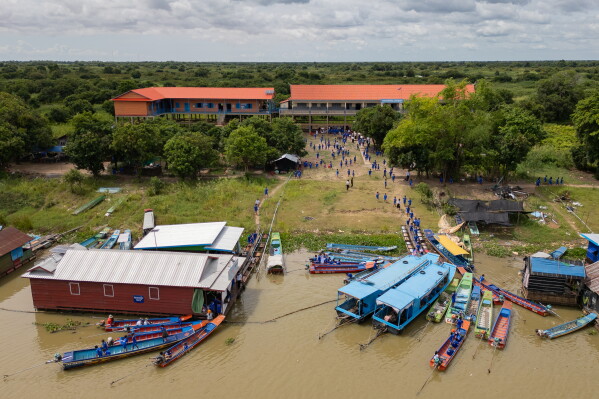
In Cambodia’s Tonle Sap Lake, the largest freshwater lake in Southeast Asia, life centers around the water. For children in the floating villages, reaching school involves navigating the lake on boats. Each morning, a boat powered by a gas engine moves through the floating village of Kampong Prahok. The boat, often steered by young students, stops next to floating houses, picking up peers dressed in smart uniforms as they board carefully, keeping their belongings dry.
Recently, rising fuel prices due to the Iran conflict have increased transportation costs, affecting students’ journeys to school. Students typically arrive at the school in Kampong Prahok aboard boats on the lake. The scene repeats as children return to their homes after a day of learning. In these floating communities, education happens within village schools where students engage in various activities.
At the school, thirteen-year-old Sou Sreynich participates in a computer class alongside other students. Despite the challenging circumstances, these educational activities continue daily. In one classroom, a student looks up from his picture book, emphasizing the focus on education in these small, water-bound classrooms.
The economic strain has pushed some children to leave school and help their families financially. This situation adds pressure on governments across Asia already struggling to fund educational initiatives and meal programs that help keep children in school. These programs are crucial for ensuring children’s continued education in regions like Tonle Sap.
Nhim San and her daughter Sou Sreynich are among those who navigate these challenges within their floating village home. Daily routines include collecting firewood and commuting to school by boat, highlighting the community’s reliance on both education and traditional lifestyle.
Boats are a common sight, continuously moving through the village waters, symbolizing the lifeblood of these communities. The importance of education remains evident as students board school boats, returning home to their floating homes after classes.