
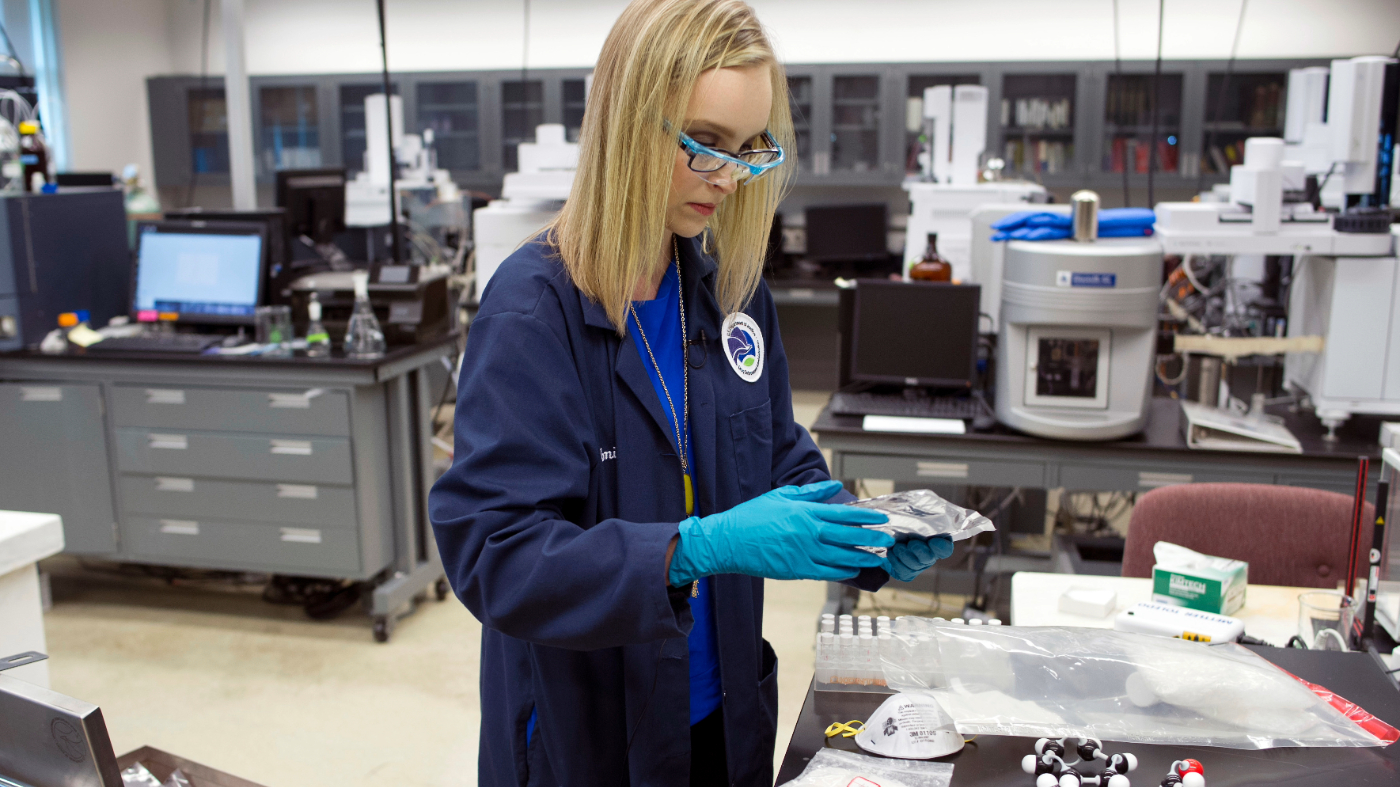
In a recent incident, forensic chemist Emily Dye at the Drug Enforcement Administration (DEA) Special Testing and Research Laboratory in Sterling, Virginia handled evidence containing fentanyl analogs. Such evidence is crucial in many drug-related cases.
While violent crime rates are declining in Washington and across most U.S. cities, each shooting incident leaves a lasting impact on victims and communities. This month, a colleague and friend became a victim while biking home in Washington, D.C., suffering serious injuries from a shooting.
Over the past decade, discussions on reducing violence have centered around policing strategies, community intervention programs, sentencing policies, and firearm regulations. Yet, the crucial role of forensic science often goes unmentioned.
The public expects thorough investigations when shootings occur, with guilty parties identified and held accountable. Forensic science plays a pivotal role in this process, with advancements largely due to federal investment in research and development.
Federal investments have bolstered DNA analysis, expanded information recovery from difficult samples, and enhanced the scientific foundations of court-scrutinized forensic disciplines. Additionally, technologies like high-resolution 3D ballistic imaging have advanced.
The National Institute of Justice, the research branch of the Department of Justice, stands as the largest federal funder of forensic research grants. Since 2009, it has directed over $300 million into research efforts, significantly advancing the field.
These advancements stem from sustained federal investment, which is essential for maintaining public trust in the criminal justice system. Despite increased demands on crime laboratories, resources for forensic science are narrowing.
The American Statistical Association notes a decline in the National Institute for Justice’s forensic funding from $30 million in 2015 to a projected $13.6 million in 2024. This decrease is concerning, given the agency’s role as the primary federal funder of forensic research grants.
Even with growing public reliance on forensic outcomes such as solving murders, identifying shooters, or exonerating the innocent, the competition for funding is fierce. Despite these challenges, the benefits of forensic science in strengthening the criminal justice system are immense.
During my time as the institute’s director, I often faced tough decisions regarding the allocation of forensic research funding. Budget constraints meant cutting back investments in order to support educational fellowships and workforce development.
Forensic science’s impact may not always make headlines, with its significance usually overshadowed by fictional portrayals like “CSI.” However, each DNA match, ballistic connection, missing person identification, and wrongful conviction prevented represents years of scientific discovery.
To achieve a more accurate and fair justice system, investing in the science that underpins justice is crucial. Delaying this investment until another tragedy occurs is not a viable option.
Nancy La Vigne, Dean of Rutgers School of Criminal Justice and former director of the National Institute of Justice.