
David Crowley, a moderate Democrat, secured victory in the Wisconsin primary for governor. This win came as he faced off against Francesca Hong, a democratic socialist. Crowley, currently the Milwaukee County Executive, aims to be Wisconsin’s first Black governor. He positions himself as the candidate most likely to succeed in November against Republican opponent U.S. Rep. Tom Tiffany, who has former President Donald Trump’s endorsement.
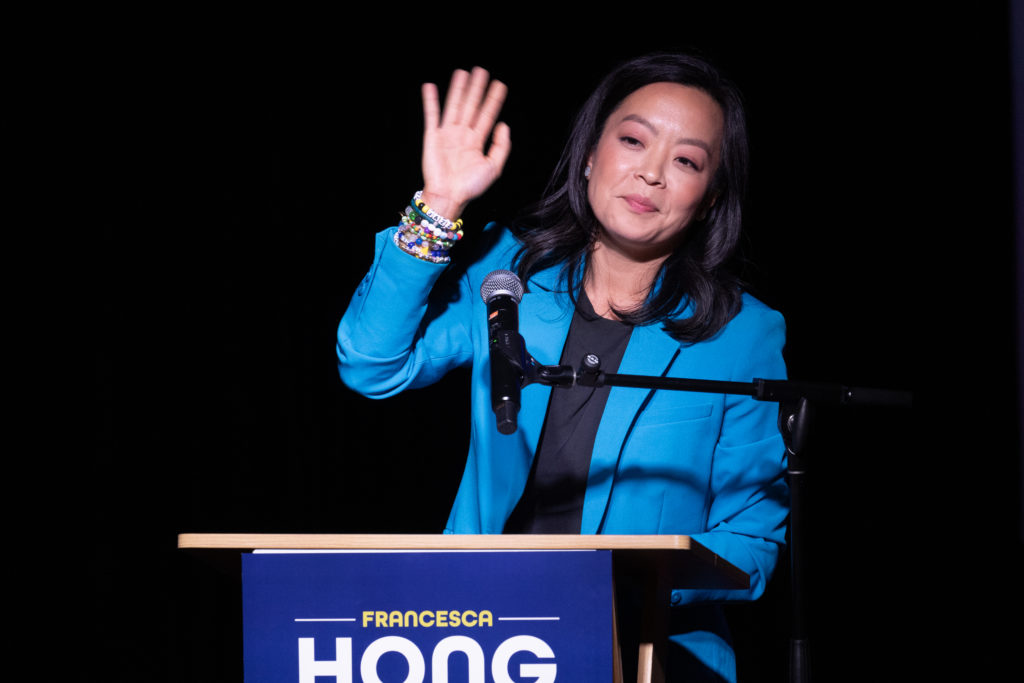
Crowley’s success over Hong indicates a strategic choice by Democrats to field a candidate with broader appeal in a battleground state. Francesca Hong, who aligns with progressive values, almost gained victory, highlighting some division within the Democratic Party. Her campaign managed to harness progressive momentum seen with candidates like Abdul El-Sayed, who recently won in Michigan’s U.S. Senate race.
Despite her loss, Hong’s performance in Wisconsin demonstrates a persistent undercurrent of discontent among party voters who favor progressive candidates. Addressing her supporters, Hong emphasized the enduring impact of her campaign, pledging to continue her political efforts.
Crowley’s narrow win could have prompted a recount request by Hong, given the close margin. However, this possibility was ruled out following Hong’s concession, thus affirming Crowley’s candidacy. Garren Randolph, Crowley’s campaign manager, stated that Crowley seeks to unite voters across party lines, aiming for a collaborative approach to governance.
Key progressive figures, such as Bernie Sanders and Alexandria Ocasio-Cortez, did not involve themselves in Wisconsin’s race. Yet, their principles find resonance in other regions. In New York City’s recent primary elections, democratic socialist candidates have replaced traditional Democratic incumbents, reflecting a trend towards electing ‘better Democrats’ as stated by Zohran Mamdani, a democratic socialist mayor.
Democrats in Wisconsin are keen to harness dissatisfaction with Trump’s presidency. By doing so, they hope to not only maintain the governorship but also to control the legislature, replicating political control last seen in 2010. Crowley and his fellow Democrats stress the importance of remaining united against Tom Tiffany.
The primary race was turbulent, with several candidates exiting amidst scandals. This volatility included Crowley himself, who shortly recommitted to the race, garnering support from Governor Tony Evers. The chaotic nature of the primary underscored the determination of both Crowley and Hong to present distinct visions for Wisconsin’s future.
Francesca Hong captured attention through her vigorous critique of mainstream Democrats and opposition to Trump’s policies. Her proposals for free childcare and healthcare reflected broader progressive priorities, although past controversial positions on issues like policing posed challenges.
The primary was marked by procedural missteps, such as delays in absentee ballot counts due to errors in data processing. Despite these challenges, Crowley emerged as the Democratic candidate, set to face Tiffany in the November election.
This election cycle in Wisconsin highlights the ongoing debates within the Democratic Party about strategy, representation, and the direction of future campaigns.