
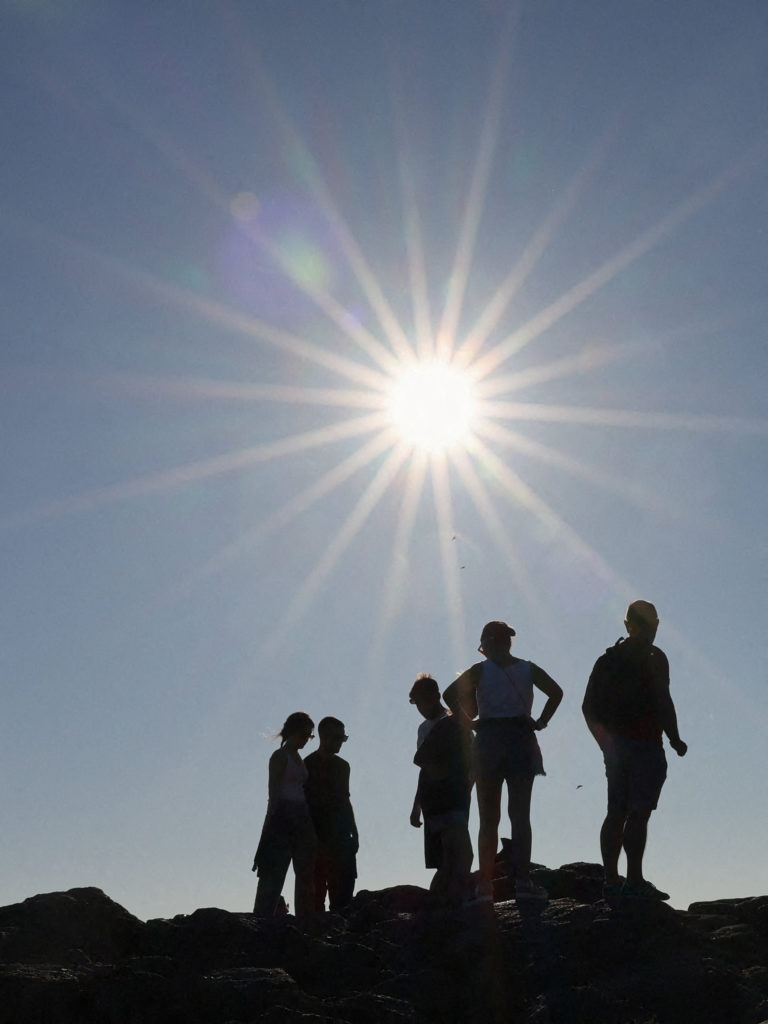
In Medinaceli, Spain, people rushed to buy specialized glasses for a rare total solar eclipse. Authorities warned those heading to rural areas to prevent actions that could trigger wildfires. NASA coverage of the eclipse begins at 1:15 p.m. EDT, with a live broadcast available.
Millions in northern and central Spain await this celestial event, set to occur around sunset. The sun, moon, and Earth will align, briefly plunging parts of the Iberian Peninsula, as well as sections of Greenland and Iceland, into darkness. The eclipse’s peak visibility will be off Iceland’s west coast, lasting less than 2.5 minutes. In Portugal and Spain, totality will reduce to about a minute, ending over the Mediterranean.
Preventing Wildfires Amid Eclipse Tourism
Given high summer temperatures and wildfire risks, Spanish officials launched a public safety campaign. The eclipse could attract an additional half a million visitors. Demand for accommodations in the path of totality has surged, particularly in cities like A Coruña, Bilbao, and Santiago de Compostela.
In Medinaceli, sky watchers secured their spots early. Agatha Bak, a philosophy professor, traveled with friends from Madrid at sunrise, eager to witness the sudden darkness.
Authorities Brace for the Influx
Spain’s Interior Ministry has prepared 350 official viewing sites across rural “Empty Spain.” Access to 123 additional sites is restricted due to environmental concerns or potential evacuation challenges. The recent wildfire in Ávila, central Spain, burned 500 square kilometers and forced mass evacuations. Active fires remain elsewhere in southern and central regions.
More than 33,500 officers are deployed to observation areas. Interior Minister Fernando Grande-Marlaska emphasized the need for extreme preventive measures due to high temperatures, dry vegetation, and travel pressures. Parts of Spain expect temperatures above 35°C (95°F), particularly in regions where the eclipse occurs. Visitors are urged to avoid sparks, littering, or parking in areas with dry vegetation.
Essential Eclipse Glasses
For safe viewing, special eclipse glasses are crucial, even if only a portion of the sun remains visible. Telmo Fernández Castro, director of the Madrid Planetarium, stressed their importance, as they block harmful solar radiation. Many establishments ran out of stock before the eclipse.
In Madrid, long lines formed outside shops selling eclipse glasses. One customer reassured those waiting that supplies were still available.
Greenland Cruise Passengers Eager for the Eclipse
Sverre Rudd, captain of the MS Spitsbergen, navigates eastern Greenland’s waters, aiming to secure the best vantage point for his 126 passengers. Despite recent 24-hour daylight, passengers anticipate the brief darkness.
The ship’s atmosphere is charged with excitement, akin to holiday anticipation, as people eagerly watch the skies.
High Demand for Accommodation in Iceland
In Iceland, room rates soared as locals prepared for their first total eclipse since 1954. Reykjavík’s prices exceeded $1,000 for a single night, with many bookings made years ahead. Despite forecasts of cloudy skies, many still hope to see the event.
Iceland expects 20,000 additional tourists during peak season. The 70-room Hotel Keflavík, fully booked, recalls its busiest times, comparable only to the 1986 Reykjavík summit of Reagan and Gorbachev.
These collective efforts reflect the excitement and challenges associated with observing one of nature’s great spectacles.