
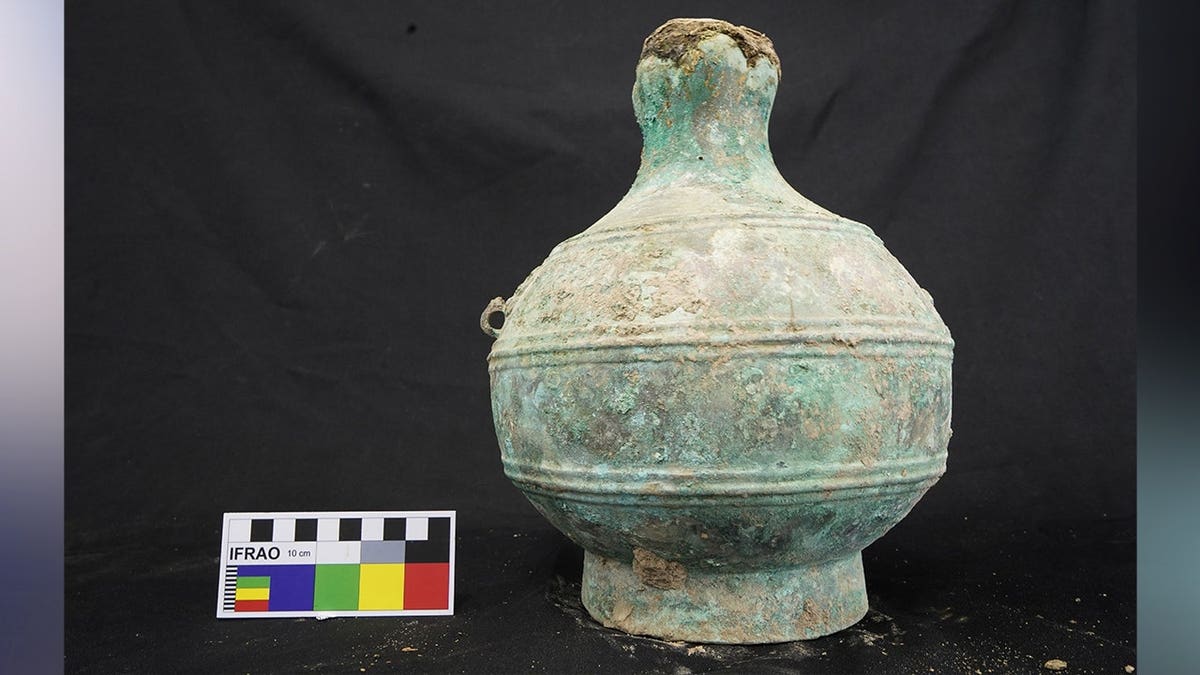
Researchers in China have made a significant archaeological find: a large bronze bottle containing an alcoholic beverage, buried for more than 2,200 years. This discovery was made in a Qin tomb at the Shanjiabao cemetery in Ningxia Hui Autonomous Region. Details of this find were published in the Journal of Archaeological Science: Reports in June.
Findings from the Warring States Period
The tomb dates back to the Warring States period, which lasted from 475 to 221 B.C. This was a time of conflict among rival kingdoms before China was unified. The preserved liquid in the tomb was identified as an ancient cereal-based alcoholic drink, similar to a fermented grain beverage or a primitive form of beer.
Archaeologists found over 3.7 liters of this ancient beverage intact.
Unlike other discoveries where only residues were found, this bottle contained 3,740 milliliters of well-preserved liquid.
Unexpected Preservation
The volume and preservation of the liquid surprised researchers, as noted by Ruru Chen from Northwest University’s School of Cultural Heritage in Xi’an. Despite its age, the liquid showed no strong odor and had clear, light blue-green appearance with some sediment.
The bronze bottle, which had a garlic-shaped mouth, is typical of vessels used by the Qin people for storing alcohol. By using various scientific analyses, researchers aimed to identify the beverage type and understand its brewing process.
Ingredients and Brewing Method
Starch grain analysis revealed the beverage was primarily brewed from broomcorn millet, with smaller amounts of wheat or barley. It was similar to a non-distilled alcoholic drink.
The team identified high levels of lactic and oxalic acids, among other compounds, which are indicative of such ancient beverages.
Preservation Factors
Researchers are investigating why the liquid survived so well. The dry local environment, the bronze vessel’s characteristics, the sealing method, and burial conditions are considered influential factors. Future studies aim to explore these aspects further.
Stimulating Interest in Ancient Beverages
This discovery could encourage more research into ancient Chinese alcoholic drinks and brewing practices. A similar recent discovery involved finding traces of ancient fermented beverages at a Bronze Age cemetery in northwestern China, showing a history of brewing techniques from millet, rice, wheat, and barley dating back over 3,000 years.