
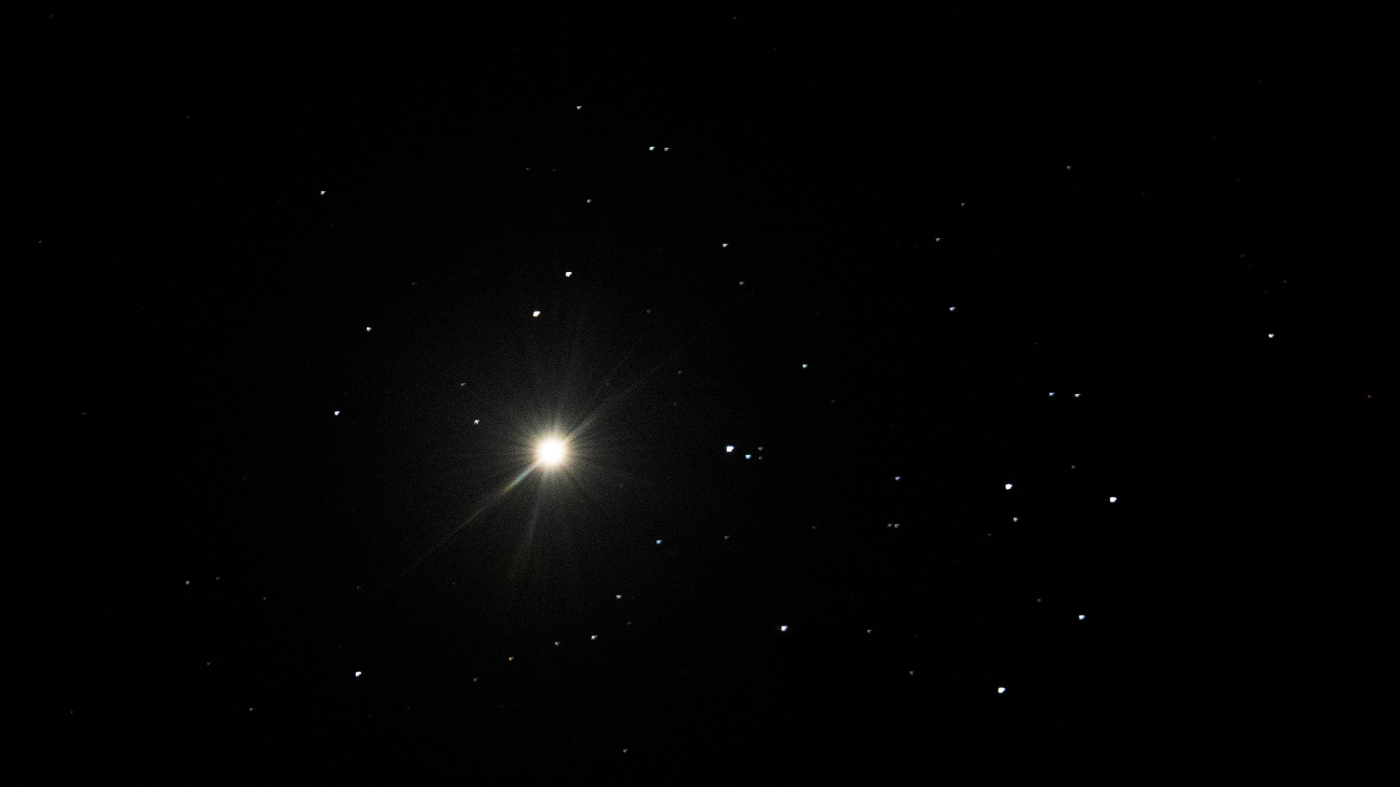
The conjunction of Venus and the Pleiades, visible from Olympia, Washington, on April 3, 2020, highlights the cultural fascination with the planet Venus. Known as the ‘seven sisters,’ this star cluster aligns closely with Venus approximately every eight years.
An interesting subplot in Apple TV’s series ‘Star City’ involves a Soviet crewed flyby of Venus in the early 1970s. This fiction echoes a lesser-known historical fact. NASA once considered a similar mission during the Apollo era.
Vision of Space Exploration
During the Apollo Applications Program, which explored extended lunar missions and orbital stations, NASA studied a possible flyby of Venus. This idea was ambitious given the technology of the time and little knowledge about human endurance in prolonged space travel. Bellcomm, a Bell Labs subsidiary, led the research for this mission.
The Proposed Mission
Kirk Sorenson, in his Selenian Boondocks blog, summarized the mission plan. The mission would launch an Apollo capsule via a Saturn V rocket into Earth orbit. Replacing the lunar module, an Environmental Support Module would carry necessary supplies. The rocket’s third stage, S-IVB, would propel the craft toward Venus. Any excess fuel would be released into space.
Astronauts would transform a fuel tank into living quarters using materials from the support module. This strategy was termed the ‘wet workshop.’ Solar panels on the S-IVB would generate power.
Mission Duration and Activities
According to space historian Paul Drye, astronauts would travel 123 days to reach Venus. The spacecraft was to pass 6,200 kilometers from Venus. After about 273 days, they would return to Earth, marking a 396-day journey.
Close to Venus, radar, spectroscopic, and photographic tools would study the planet. The plan included launching an orbiter and 14 probes. These probes included atmospheric probes to assess density variations, meteorological balloons for wind studies, crash-landing probes for surface photos, and soft-landers for soil examination and surface photography.
Challenges and Cancellation
Congressional budget cuts, even before the Apollo 11 moon landing, halted the Venus mission. This resulted in the cancellation of the final three Apollo missions. Under the Apollo Applications, only Skylab, America’s first space station, materialized. It saw three manned missions in 1973 and 1974.
Modern Space Exploration
Uncrewed missions have ventured to Venus, revealing its harsh environment with atmospheric pressure 90 times that of Earth and surface temperatures nearing 880 degrees Fahrenheit.
Today’s space focus gravitates towards the moon and Mars for manned missions. A contemporary mission to Venus might involve a SpaceX Starship equipped with new technology and instruments. However, the absence of a landing possibility dampens enthusiasm for such missions.
Mark R. Whittington, a space policy author, examines these challenges in his works, including ‘Why is It So Hard to Go Back to the Moon?’ and ‘The Moon, Mars, and Beyond.’