
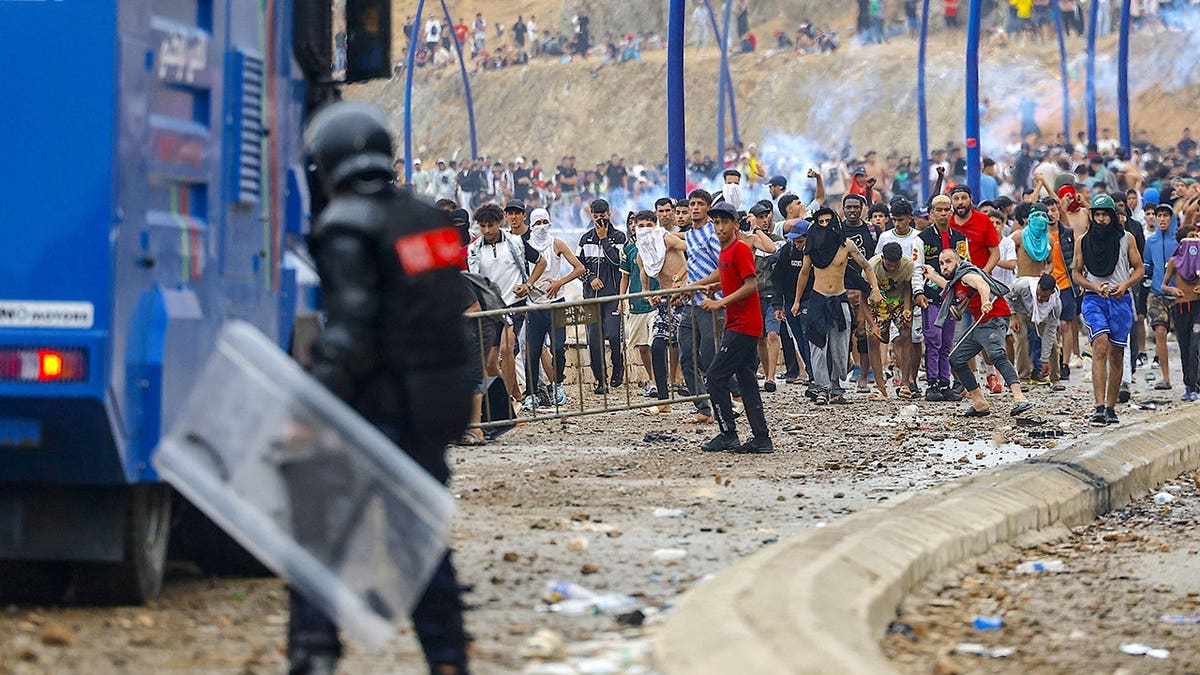
The sudden influx of approximately 72,000 Moroccan migrants into the Spanish city of Ceuta within a single day highlights Europe’s significant migration challenges. This event raises concerns over legal and illegal migration, as well as the threat of Islamic terrorism.
Migrant Influx Brings Tensions
Recent reports indicate rising tensions between Spain and Morocco. European advisors stress the importance of addressing radical Islamism to combat terrorism. A Europol report from July identified Spain as having the highest number of arrests related to jihadist offenses—117—in the European Union in 2025.
“This is Europe. This is the way it has been for the last 15 years, with some ebbs and flows,” said Lorenzo Vidino, George Washington University’s Extremism Program Director.
Security Concerns and Government Responses
Some media outlets claim the identification of individuals with past deportations for suspected terror activities among the recent arrivals. The Spanish interior ministry, however, has not confirmed these claims, emphasizing that the new arrivals pose no threat to public security.
Across Europe, security measures have been intensified following recent terror threats and incidents. For instance, the UK raised its terror threat level to “severe,” indicating a high likelihood of a terrorist attack in the coming months.
Debate on Addressing Radicalization
Experts like Tom Gross call for European leaders to acknowledge the role of radical Islamic influences in current terrorism trends. He suggests leaders should support efforts to challenge regimes like Iran’s rather than perpetuate extremism narratives.
Gross emphasized, “Europe’s ruling classes need to be honest… Leaders in Dubai, Abu Dhabi and Egypt acknowledge this. Why can’t Western leaders?”
Efforts to Tackle Extremism
- London’s Mayor has allocated significant resources to combat intolerance, including £16 million for community initiatives.
- Germany’s intelligence reports highlight nearly 28,000 individuals linked to Islamist ideologies, with 9,110 oriented towards violence.
Recent events like the Berlin Pride attack by Abdul Ballout and subsequent stabbings in Paris underscore the continuing threats. Additional arrests of suspected terrorists in countries such as Austria and Sweden reflect these challenges.
Preventive Measures and Lessons Learned
Nervana Mahmoud, a commentator on Islamist terrorism, stresses the need to prevent radicalization by disrupting foreign funding and ideological networks.
“The current challenge facing Europe is, in many ways, a battle over Islamist extremism and its place within Western societies,” Mahmoud said.
European security agencies have improved since past attacks, as Vidino points out, citing advances in legal capabilities and preparedness in Switzerland, Austria, and Scandinavia.