
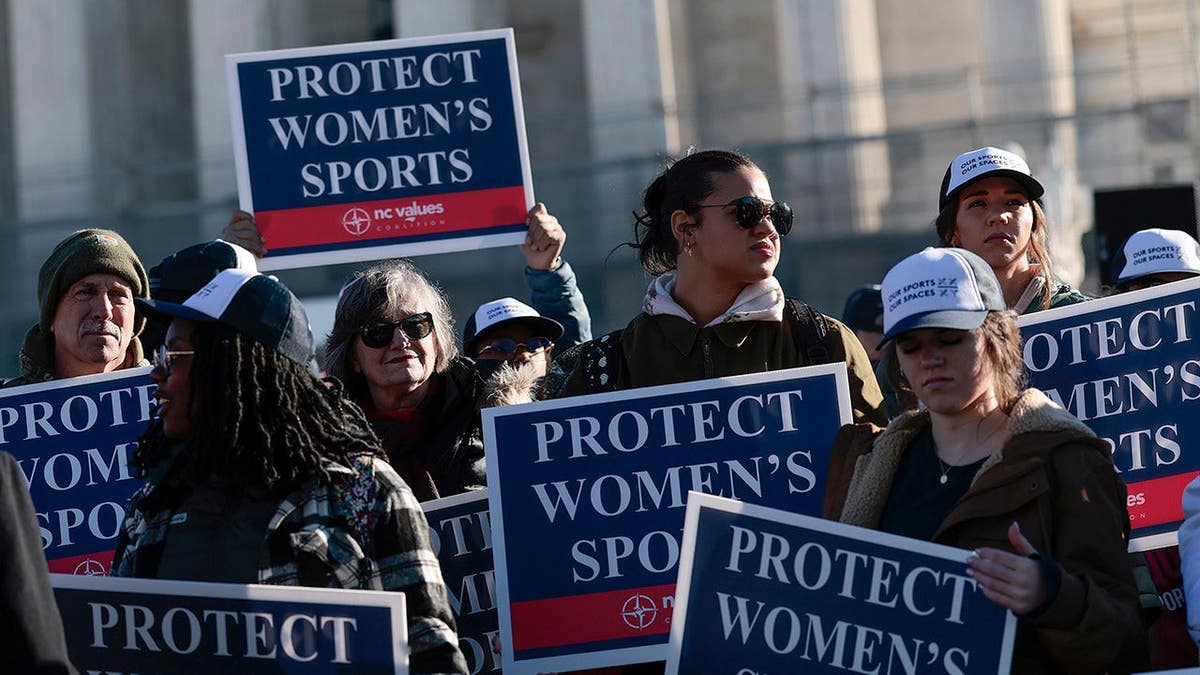
Olympic gymnast MyKayla Skinner and former swimmer Riley Gaines express approval for the Supreme Court’s decision to maintain state bans on transgender girls in female sports, highlighting the significance of equitable competition. Lara Trump emphasizes the importance of state elections in safeguarding women’s athletics from perceived male physiological benefits, critiquing media representations in the ‘Outnumbered’ panel discussion on the ruling.
USA Volleyball may revise its policy on genetic sex testing to uphold the integrity of the women’s category. Criticism has arisen from members of USA Volleyball leagues and their families, who have objected to competing against a purportedly transgender opponent. USA Volleyball, alongside the International Volleyball Federation and the U.S. Women’s National Team, announced a “constructive path forward” in addressing the SRY gene screening concerns in international play.
An official statement from the organizations on July 28 confirms a “shared understanding” regarding the SRY screening procedure. Initial concerns from the WNT about privacy and procedure prompted an immediate response from the FIVB to adapt processes. However, there is no cessation of SRY screening; instead, the focus remains on improving testing communication and administration.
This issue follows the International Olympic Committee’s March 2026 policy restricting female category eligibility at the Los Angeles 2028 Olympics to biological females via a one-time SRY gene test. This policy does not affect grassroots sports. FIVB’s 2026 Sports Regulations implement SRY assessments, assigning players to male or female categories based on chromosome presence and allowing for categorization changes with sufficient evidence against competitive advantage.
FIVB’s regulations apply to official competitions, leaving domestic eligibility rules to national federations. This discrepancy has led to frustration among families in competitions who claim to compete alongside alleged biological male athletes. These arguments concentrate on non-compliance in current USA Volleyball policies requiring competition according to biological sex.
Athlete 1 remarked on the physical differences, expressing feelings of unfairness and labeling concerns as factual rather than hateful. Her mother echoed these sentiments, highlighting the emotional and financial strain on the family.
Similarly, Athlete 2 and her mother stressed competitive disadvantages and legal implications. They pointed to mixed messages sent to young female athletes about the merits of hard work in sports.
Athlete 3 and her family expressed disappointment in USA Volleyball’s eligibility verification methods. They lamented perceived rule inconsistencies and lack of trust in assurances of fair competition.
The grievances by the three families reflect broader discussions about policy enforcement and the perceived erosion of Title IX protections. They call for rigorous eligibility verification beyond amended birth certificates to ensure consistent application of rules based on biological sex.
Jackson Thompson of Fox News Digital, reporting on sports’ political and cultural aspects, contributed perspectives offered by families to the discussion. This controversy underscores the ongoing debate around fairness and inclusion in female sports.