
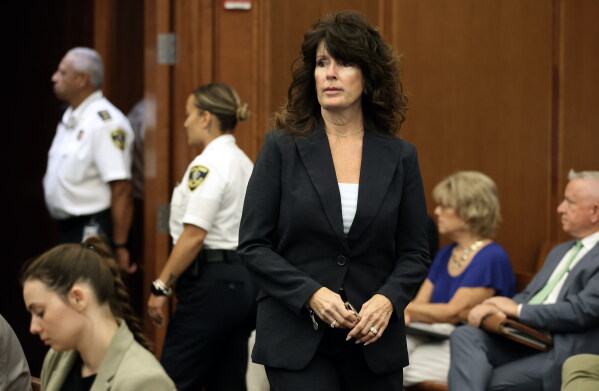
In Plymouth, Massachusetts, Lindsay Clancy wept during her trial as jurors examined autopsy photographs of her youngest child, a victim in the 2023 incident where Clancy is accused of killing her three children. The trial has entered its second week with prosecutors calling on friends, a former colleague, and her ex-father-in-law to testify about her mental and emotional state. They noted her openness about postpartum mental health issues, though she appeared as a caring mother.
Clancy has pleaded not guilty to murder charges in the deaths of her children: Cora, 5, Dawson, 3, and Callan, 8 months. Her defense acknowledges the killings but argues that her mental illness should exempt her from criminal responsibility. Prosecutors argue her actions were planned, accusing her of sending her husband on errands as part of a scheme. Clancy remains paralyzed after an attempted suicide the night of the killings.
EDITOR’S NOTE: This story includes discussion of suicide. If you or someone you know needs help, the national suicide and crisis lifeline in the U.S. is available by calling or texting 988.
A Friend’s Perspective
Friends and acquaintances have testified about Clancy’s demeanor leading up to the tragic event, noting her participation in family gatherings and outings with her children. No witnesses reported Clancy expressing thoughts of suicide or hearing voices. However, post-birth of her third child, she disclosed sleep difficulties and adverse reactions to medication.
Former colleague Andrea Hennigan cited occasions where Clancy expressed her inability to return to work at Massachusetts General Hospital due to mental health struggles, referring to brain fog and medication side effects. Amy Bevins, another associate, testified about Clancy’s claim of experiencing dark thoughts as she managed her medication regimen.
Bethany Decollibus attended Cora’s birthday party in January 2023, where Clancy disclosed ongoing sleep troubles and feeling like a ‘zombie’. Clancy’s former father-in-law, Christopher Clancy, acknowledged her struggles and proposed taking care of the children temporarily. He recounted her challenges with insomnia and overall poor health.
Legal Defense and Implications
Clancy’s attorneys assert she suffered from postpartum psychosis and bipolar disorder, with her condition reportedly worsening with certain psychiatric medications. If convicted, Clancy faces life in prison without parole. A verdict of not guilty by reason of mental illness could lead to her placement in a mental health facility.
Similar Case in Retrial
The judicial system faces a similar case involving Latarsha Sanders, whose convictions for killing her two sons were overturned. A new trial was ordered due to restricted psychiatric evidence in the original trial. Sanders had been diagnosed with schizophrenia spectrum disorder, and her testimony revealed delusions related to conspiracy theories as a motive for the killings.
The Massachusetts Supreme Judicial Court ruled that excluding Sanders’ medical records unjustly weakened her defense, as these showed consistent diagnoses. The retrial offers potential to introduce this overlooked evidence.
District Attorney Timothy Cruz’s office is evaluating its approach with the new trial pending. Sanders’ attorney, Robert F. Shaw Jr., anticipates presenting the case afresh, leveraging previously excluded evidence.