
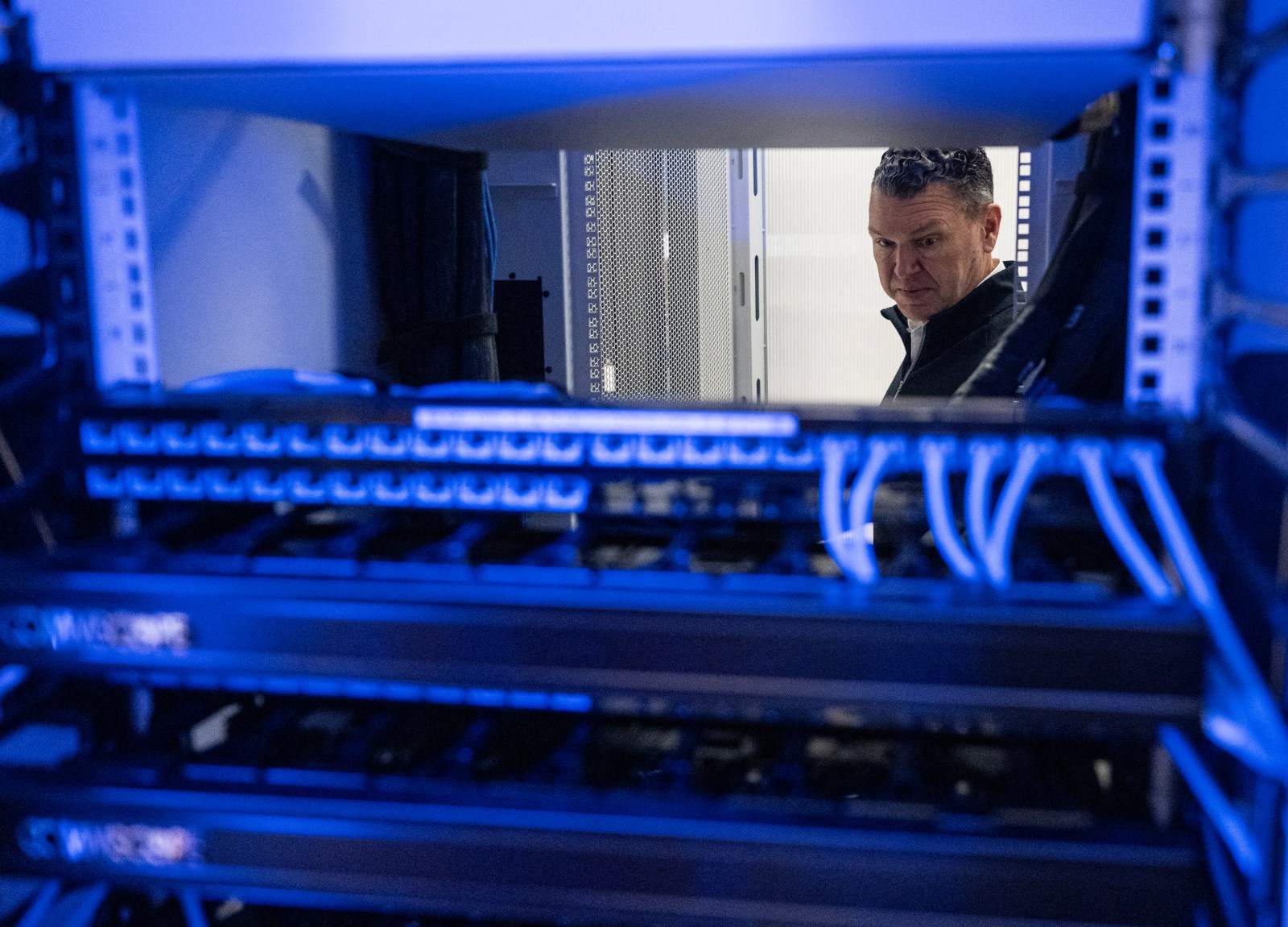
The Trump administration is reportedly preparing measures to ban a Chinese-made component from data centers, reflecting heightened concerns over reliance on China for America’s AI infrastructure. According to sources cited by Reuters, plans are in development to restrict Chinese imports of optical transceivers by the end of 2026. These devices are crucial for data transmission via fiber-optic cables in expansive data centers. The Federal Communications Commission might still adjust or discard the proposed restrictions.
This report follows the growing U.S.-China AI competition, which now extends beyond chips and algorithms to the necessary infrastructure. The U.S. has already enforced stricter export controls on advanced AI chips to China. This aims to impede technological advancements that could benefit the People’s Liberation Army and diminish America’s technological edge. Meanwhile, U.S. intelligence reports suggest that Chinese state-backed hackers have infiltrated critical American infrastructure, highlighting the potential to gather intelligence or interfere during crises.
“As with the risk from the other products the Trump administration is looking to ban, there are real concerns with the transceivers around data collection, disruption, and long-term dependence on Chinese suppliers,” said Adam Segal, director of the Council on Foreign Relations’ Digital and Cyberspace Policy Program, to Newsweek.
The White House did not respond to inquiries for comment.
Understanding Optical Transceivers
Optical transceivers are integral to modern communication networks, including Ethernet systems and long-distance telecommunications. These devices transform electrical signals into light pulses and back, enabling large data volumes to travel through fiber-optic cables. Their role has grown in AI data centers, where they facilitate high-speed optical connections among thousands of AI chips needed to process substantial data sets and train large language models like ChatGPT and Claude.
Why the Ban?
U.S. officials are increasingly concerned about potential cyber vulnerabilities and the risks associated with reliance on Chinese suppliers for components such as optical transceivers. They fear the country may become vulnerable if China cuts off supplies. Dmitri Alperovitch, chair of Silverado Policy Accelerator, highlighted that banning these imports would bolster the security of the AI supply chain, reducing dependency on China’s resources. China’s history of leveraging rare earth dominance during trade tensions with Washington adds context to these concerns.
However, analysts caution that the ban could have drawbacks. Adam Segal pointed out the potential for increased costs and uncertainties for major cloud computing providers like Amazon, potentially hindering AI development in the short term.
China has consistently opposed U.S. restrictions on advanced technology exports, arguing they disrupt global supply chains and harm bilateral relations. “Such practices do no good to anyone. They are market-distorting acts of bullying. China urges the U.S. side to immediately revoke the relevant measures and its wrongful practices,” stated Liu Chang, spokesperson for the Chinese embassy in Washington, to Newsweek.