
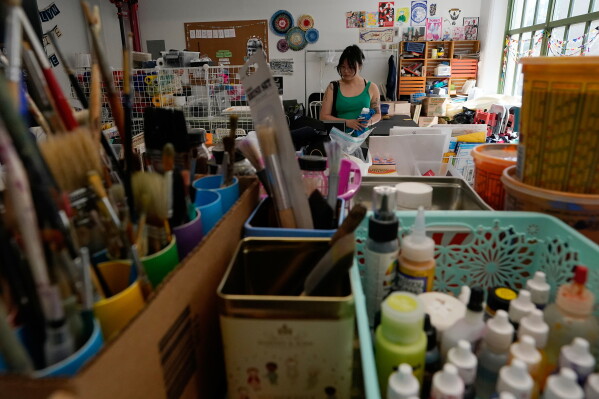
Charlene Catalano sought green-and-white yarn for crocheting a winter scarf. Avoiding large retail stores, she shopped at Brooklyn Creative Reuse. There she found yarn, crochet kits, and hooks for just $6.
Catalano noted rising art costs, appreciating the reuse center’s affordability. Brooklyn Creative Reuse is among many centers working to prevent art supplies from ending up in landfills. These centers offer donated art materials at low prices, akin to thrift stores for crafting.
The lifespan of bulk art supplies like markers and construction paper often surpasses project needs. Disposal in landfills leads to degradation and potential pollution from chemicals and microplastics. Reuse centers help mitigate this environmental impact by rescuing thousands of pounds of materials monthly.
“Reducing waste is the first benefit. But also, you can be more creative when you’re in a large warehouse and looking at things that you could not source yourself.” — Julian Silverman, New York’s Fashion Institute of Technology
Impact of Reusing Art Supplies
Many find art costly, making secondhand shopping appealing. Reuse centers offer bits of ribbon or fabric scraps instead of full spools. Brooklyn Creative Reuse prices supplies at $3 per pound, with some items priced individually.
The process of making and distributing art supplies consumes water and energy. For instance, producing paint requires about 13 gallons of water per gallon of paint. Packaging often adds extra waste, particularly for light-sensitive items like paint.
Scraplanta Creative Reuse in Atlanta collects approximately 7,000 pounds of supplies monthly. They cater to a diverse clientele, including teachers and teenagers. Jonelle Dawkins, Scraplanta’s executive director, values even a half bottle of paint if it remains usable.
“Basically, our paint is plastic.” — Zoie Diana, Barnard College
Diana pointed out that synthetic paintbrush bristles take centuries to degrade in landfills. Decomposing paint can release microplastics and metals like cadmium and cobalt. Artists should not feel guilty about their art’s environmental footprint, as paint pollution is minor compared to other sources.
Practices for Sustainable Art
Sustainable art involves mindful purchasing and donating excess materials. Proper paintbrush cleaning also reduces environmental harm; wiping instead of rinsing prevents microplastic pollution in waterways.
Creative minds can repurpose household items for projects. Silverman, for example, creates inks from onion skins and beets for tie-dye. Upcycling old makeup into paints is another suggestion.
Rosina Morelli, an artist and teacher, emphasizes the value of donating unused supplies to inspire others. Shopping at Brooklyn Creative Reuse motivated her to sort through her own materials.
“What I’m most happy for is my chance to donate stuff, not buy stuff.” — Rosina Morelli
The Associated Press Health and Science Department receives support from organizations focused on science education and environmental issues. AP maintains editorial independence in its content.