
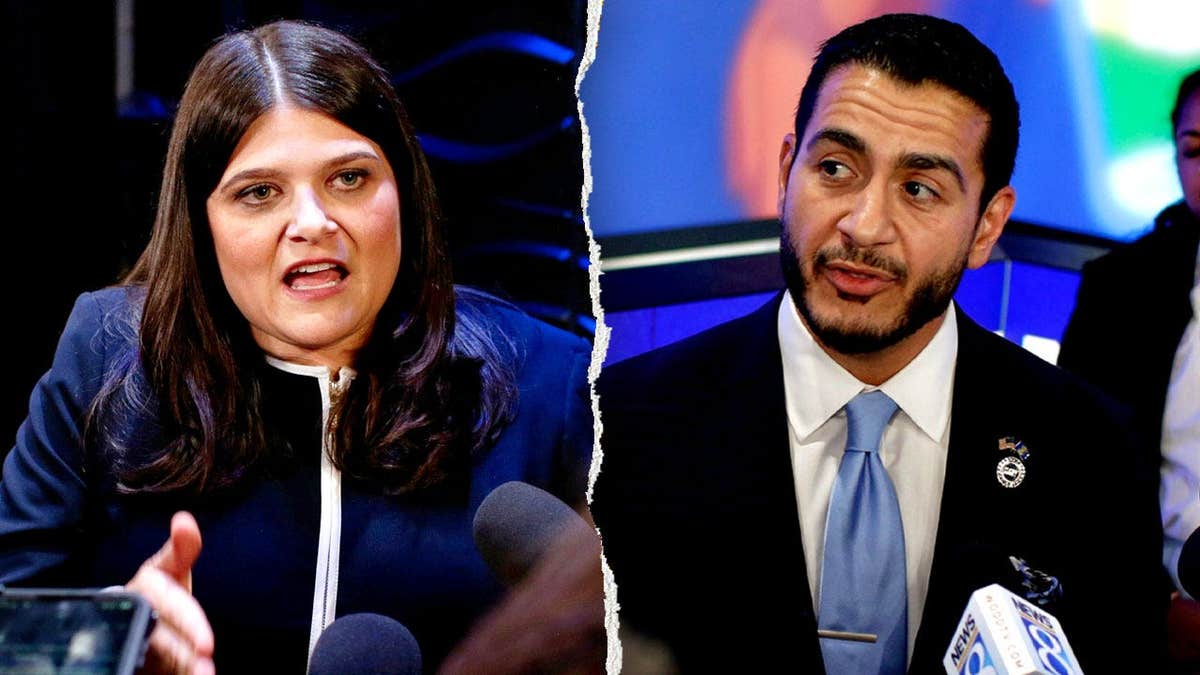
The ongoing conflict between the Democratic Party’s progressive and establishment factions made its way onto the stage during a Senate debate in Michigan. This event occurred one week before the primary election on August 4, where two candidates faced off to prove who could best represent Michigan and defeat Republican nominee Mike Rogers in the general election on November 3.
El-Sayed’s Remarks and Clarifications
During Monday’s debate, candidate Abdul El-Sayed maintained he stood by his “ogre on a pike” comment. He clarified that it was aimed at Sen. John Fetterman of Pennsylvania, not his opponent, Haley Stevens. El-Sayed expressed disappointment in Fetterman’s shift away from his initial values after being elected.
Conversely, Stevens wondered why El-Sayed withheld his complete tax returns and characterized him as having ambitions that might harm his general election campaign. Her stance highlights financial transparency as an ongoing issue in their debates.
Israel and Campaign Spending
Outside spending in support of Stevens, reportedly over $46 million, was a contentious topic. The focus was whether these funds from pro-Israel groups might sway her actions in office. Stevens assured voters of her commitment to a two-state solution and peace. Meanwhile, El-Sayed criticized the money as indicative of their differences, implying it could buy support for policies he opposed, like recent aid to Israel.
Stevens countered by mentioning both candidates benefit from external funding sources. She highlighted that one such organization supporting El-Sayed is partly funded by his father-in-law.
Financial Transparency
Stevens continued pressing El-Sayed on his finances. She accused him of earning $300,000 in outside income without full tax disclosure. El-Sayed replied he had released required financial documents, dismissing the demand for more information as a distraction. Stevens warned that these financial questions could serve as leverage for Republicans in future elections.
Filibuster and Legislative Priorities
El-Sayed called the Senate filibuster “anti-democratic,” arguing its removal would aid Democrats in passing significant legislation, such as the PRO Act. He advocated for aggressive antitrust measures and a wealth tax, positioning these changes as crucial Democratic goals.
Debating Immigration and Customs Enforcement
The candidates also debated the future of Immigration and Customs Enforcement (ICE). Stevens labeled ICE as “rogue” and suggested reallocating its budget to social services. El-Sayed proposed abolishing ICE entirely, criticizing it as “tyrannical.” He argued for a new agency focused on humane immigration enforcement.
Stevens disagreed with his abolition approach, emphasizing practical legislative reforms she believes could better address ICE’s issues.