
Mike Russell, co-owner of J&M Dog Walking, routinely checks the weather before starting work. Weather conditions are crucial for determining the outdoor duration for his clients’ pets. Faced with Thursday morning’s advisory on poor air quality, Russell was uncertain about the impact. He directed walkers to limit outdoor time and focus on indoor activities with dogs. The situation abruptly escalated as pollution posed significant challenges. Several North Side clients canceled dog walks to avoid exposing their pets to the polluted air, with some clients opting to stay home. The news drew concerning comparisons between the air quality and smoking cigarettes. ‘Dogs do not smoke cigarettes,’ Russell noted.
This week’s hazardous air quality affected pets and wildlife alike, according to experts. Fine particles, identified as PM2.5, emitted by wildfires from Minnesota and Canada, were the primary cause of the elevated air quality. Animal caretakers were alerted to safeguard their animals, whether they had wings or tails. PM2.5 poses grave health risks, potentially causing harmful effects like eye and nose irritation, and, due to its small size, can penetrate deep into the lungs and bloodstream.
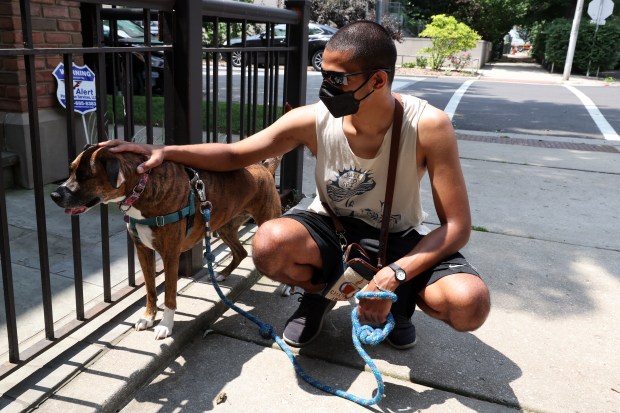
Shravan Raghuram from J&M Dog Walking took Roo for a stroll in Chicago’s Bucktown neighborhood on July 17, 2026. Raghuram donned a face mask to mitigate the impact of wildfire smoke.
Dave Bernier, curator of Lincoln Park Zoo, conveyed that zoo staff were closely monitoring animals for any signs such as difficulty breathing, altered activity levels, or reduced movement. These symptoms could indicate discomfort from environmental conditions similar to recommendations for humans. Despite Thursday’s poor air quality, zoo animals retained access to outdoor spaces. Bernier expressed concern that keeping potentially sensitive animals indoors might cause additional stress.
Zoo staff adjusted animal feeding procedures during the advisory. Typically, food challenges mimic wild foraging, with food dispersed around habitats. On Thursday, feeding was simplified. More indoor food distribution occurred for some animals, including great apes, to minimize outdoor time. Bernier urged pet owners to monitor their pets at home, emphasizing attentiveness to subtle changes such as breathing or activity levels.
The presence of PM2.5 quadrupled previous air quality records in Cook County on Thursday, as reported by the U.S. Environmental Protection Agency. AirNow categorized the conditions as ’emergency,’ indicating widespread effects. Though conditions improved on Friday, an alert continued into Saturday night, presenting challenges for caretakers.
Beekeeper Jana Kinsman, based in Back of the Yards, noted pollution impacts on her ability to bring products to market. Smoke and heat prevented outdoor hive management, stressing the need for human involvement to ensure colony health. Kinsman expressed concern over the stress bees may face due to smoke and particulates.
Jessica Helgen, director of the University of Minnesota Bee Squad program, explained that bees can endure smoky conditions but the long-term impact of air pollution remains uncertain. Helgen highlighted differences between honeybees, as managed livestock, and native bees. Beekeepers could relocate honeybee colonies if conditions worsen, unlike native bees without such protections. Despite Minnesota’s wildfire smoke, bees continue foraging activities.