
A new artificial intelligence model from China has surprised the U.S. tech industry. The Kimi K3 model, developed by Beijing-based startup Moonshot, is closing in on top U.S. AI models like Anthropic’s Claude and OpenAI’s ChatGPT.
Anastasios Angelopoulos, CEO of Arena, praised the release of Kimi K3, noting its superior performance in front-end coding capability, a key measure of AI language model success. His comments on social media suggest Kimi K3 leads in its category.
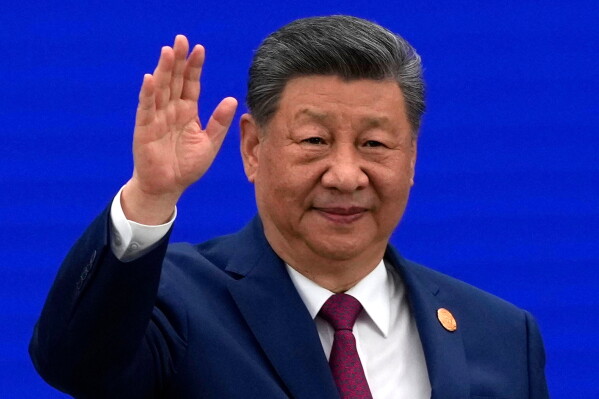
The model’s introduction coincided with Chinese President Xi Jinping’s speech at the World Artificial Intelligence Conference in Shanghai. Amid U.S. restrictions, China’s AI industry has intensified its efforts to develop its own technology.
President Xi emphasized the global nature of AI development, saying that it should be a collaborative effort rather than a solo performance by any single country.
Last month, another Chinese startup, Zhipu (also known as Z.ai), launched its GLM-5.2 model. This model is gaining traction internationally due to its competitive performance at a lower cost compared to leading U.S. models.
Tech analyst Patrick Moorhead sees reactions to K3 as an overreaction, similar to the response to a previous release by Chinese startup DeepSeek. Despite this, industry pros believe K3’s emergence challenges Anthropic and OpenAI’s revenue streams.
During the Shanghai conference, Huawei unveiled its new AI computing system, the Atlas 950 SuperPoD, showcasing China’s progress in building domestic hardware despite U.S. restrictions. Moonshot’s K3 model, developed in partnership with Huawei, is priced lower than OpenAI’s GPT-5.6 Sol model.
Amid these developments, U.S. companies, including OpenAI and Anthropic, accuse Chinese AI firms of illicit distillation. This process involves using outputs from stronger AI models to enhance less capable ones.
Anthropic claims rivals, including DeepSeek and Moonshot, exploit this technique to gain significant capabilities more rapidly and cheaply. However, Anysphere, a U.S. startup, acknowledges that one of its products was based on Moonshot’s K2.5 model.
Moonshot CEO Yang Zhilin, a Carnegie Mellon University graduate, has been recognized for his foundational contributions to machine learning. His open-source approach to AI models has garnered praise for promoting innovation, despite some concerns about safety and security.