
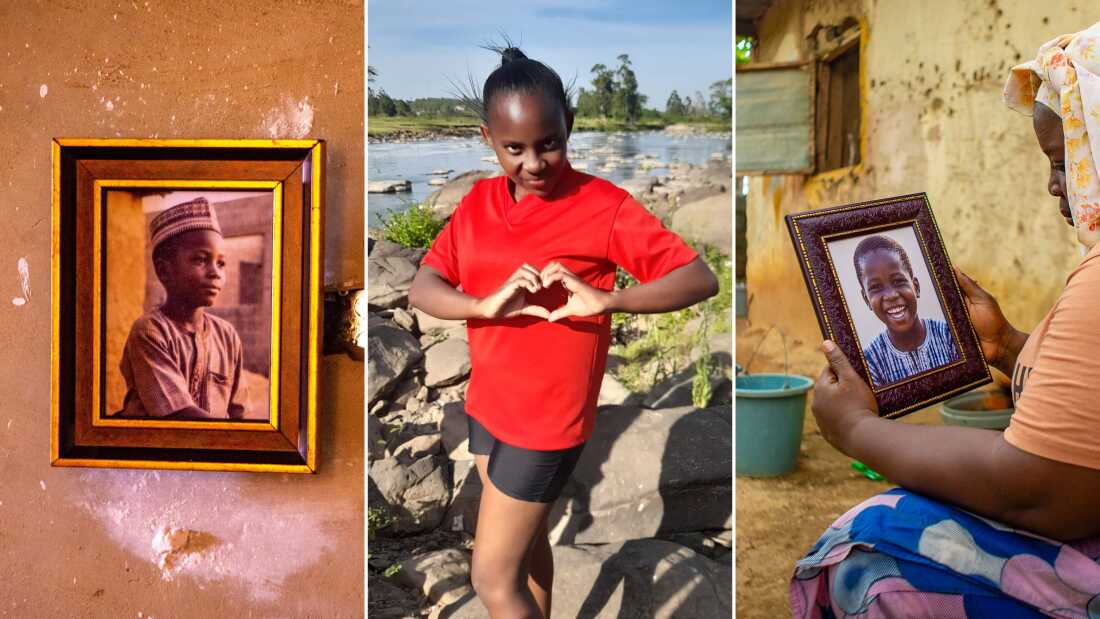
The cessation of funding from the U.S. Agency for International Development (USAID) has been linked to the deaths of several children in Africa. Their parents argue that the loss of medical services previously supported by these funds contributed significantly.
Abdullahi Ibrahim’s Struggle with Asthma
Abdullahi Ibrahim, a 10-year-old from Nigeria, started experiencing asthma symptoms at age five. His condition worsened over time. “Sometimes he would wake up suddenly, gasping for air,” recalls Ibrahim Musa, Abdullahi’s father. The family’s frequent hospital visits were supported by USAID, which covered the costs of drugs and inhalers, notes nurse Esther Agbo from Mucciya Primary Health Care.
Last year, a severe asthma attack overwhelmed Abdullahi. Musa recalls, “He told me, ‘Daddy, I can’t breathe well.’ We rushed to the clinic, but the medications were no longer free.” The withdrawal of USAID support was a financial burden too great for the family. Abdullahi’s father insists, “If there was still help coming from USAID, my child would still be alive today.”
Purity Wamboi’s Battle with Tuberculosis
Purity Wamboi, a 16-year-old from Nairobi, Kenya, experienced severe discomfort during a school holiday. Her mother, Rachael Wanjiru, noticed Purity’s worsening condition. “She used to cough severely and had chest pains,” Wanjiru recounts. Despite Purity keeping her suffering hidden to avoid adding stress to her mother, her tuberculosis diagnosis came too late.
Community health promoter Tabitha Mugweru, a family friend, notes that after USAID’s support was withdrawn, many community health workers stopped making crucial home visits. She reflects that these visits might have caught Purity’s condition earlier. “Most workers stopped when USAID withdrew their support,” Mugweru laments. Despite treatment, the late diagnosis led to Purity’s tragic death.
Ibrahim Garba’s Fight Against Typhoid
Ibrahim Garba, an 8-year-old from Nigeria, experienced a decline in health due to typhoid fever. His father, Yakubu Garba, mentions that Ibrahim initially received free antibiotics from a clinic, supported by USAID. “He felt better but didn’t complete his antibiotic course,” Garba explains. When symptoms grew severe, and free care was no longer available, the family struggled to afford the necessary medicine.
Grace Samuel, a nurse at Zokotu Primary Health Centre, highlights that the termination of USAID funding meant significant healthcare disruptions. Ibrahim’s family relied on affordable treatment, but the lack of it became decisive. Garba regrets the delay in seeking alternate treatment, “But he did not get better.”
Consequences and Responses
NPR reached out to the U.S. State Department, which didn’t specifically address the individual cases. The department instead pointed to new memorandums of understanding (MOUs) signed with countries like Kenya and Nigeria. These represent a shift in strategy, aiming for shared responsibility and reduced dependence on U.S. taxpayer funding. However, healthcare professionals argue that these MOUs were insufficient given the immediate needs.
Dr. K.J. Seung from Brigham and Women’s Hospital and Brooke Nichols, an infectious disease modeler at Boston University, question the practicality of such shifts. Nichols stresses that a sudden termination of aid disrupted essential services, arguing that effective healthcare requires continuity. “Turning off support created a gap that’s challenging to fix,” she notes.
While new bilateral agreements might promise a future foundation, they came too late for families like those of Abdullahi, Purity, and Ibrahim. Their parents live with memories and a profound sense of what might have been. For many, these losses are irreparable, as the absence of USAID support translated into unimaginable heartbreak.