
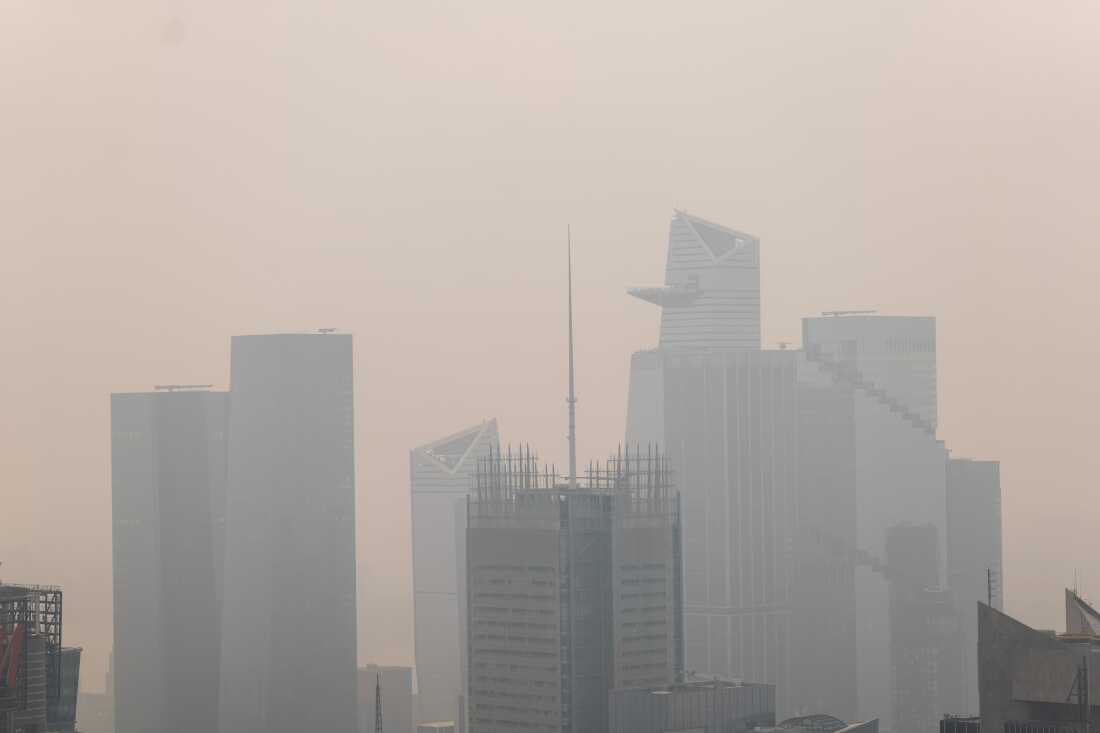
Heavy smoke from Canadian wildfires is impacting various regions across the U.S., stretching from the Great Lakes to New England and southward to Maryland. The air quality in several states has reached unhealthy and hazardous levels.
Extreme heat and dry conditions in areas like Ontario and northern Minnesota have fueled the wildfire spread since July 13. More than 800 wildfires are burning in Canada, according to the Canadian Wildland Fire Information System. Record temperatures exceeding 100 degrees have formed a heat dome over western Ontario and Minnesota, allowing fires to persist, noted Derek Mallia, atmospheric sciences professor at the University of Utah.
Ontario’s intense fires are widely documented on social media, showing smoke-filled skies. Air Quality Ontario has deemed some regions as “very high risk.” Evacuations have occurred for thousands in afflicted areas. States such as Minnesota, Wisconsin, and Michigan, along with northeastern cities like Philadelphia, New York City, and Baltimore, face air conditions ranging from hazardous to unhealthy, according to AirNow. Mallia refers to current smoke as a “firehose,” predicting smoke will linger through the weekend.
Human-induced climate change is worsening these situations. Dan Westervelt, associate research professor at Columbia University, highlighted that droughts and heatwaves create drier vegetation. “The frequency and intensity of wildfire smoke events are increasing,” Westervelt stated, noting fires have become regular occurrences, sometimes exceeding annual events.
Health Impacts of Wildfire Smoke
Wildfire smoke contains tiny particles that penetrate deep into the lungs and bloodstream. Dr. David Eisenman, a professor at UCLA’s David Geffen School of Medicine, underscores the health risks linked to smoke pollution. These include heightened heart attack, heart failure, stroke, and respiratory illnesses. Chronic exposure raises risks of pregnancy complications and potential developmental disorders in children. Eisenman emphasized air pollution as a leading cause of premature deaths globally, comparable to smoking and high cholesterol.
Eisenman advises checking air quality monitors regularly, even if smoke isn’t visibly present. “Many pollutants are invisible,” warned Eisenman, also co-director at UCLA’s Center for Healthy Climate Solutions. He stressed protective measures during periods of smoke or heat, which amplify public health risks.
For wildfire smoke safety, follow the Environmental Protection Agency’s guidelines. Stay updated on air quality, use air purifiers and replacement filters, create a “cleaner air room” at home, and stock up on essentials to limit outdoor exposure. Eisenman suggests reducing outdoor activities based on air quality reports and wearing an N95 mask when outdoors is necessary.