
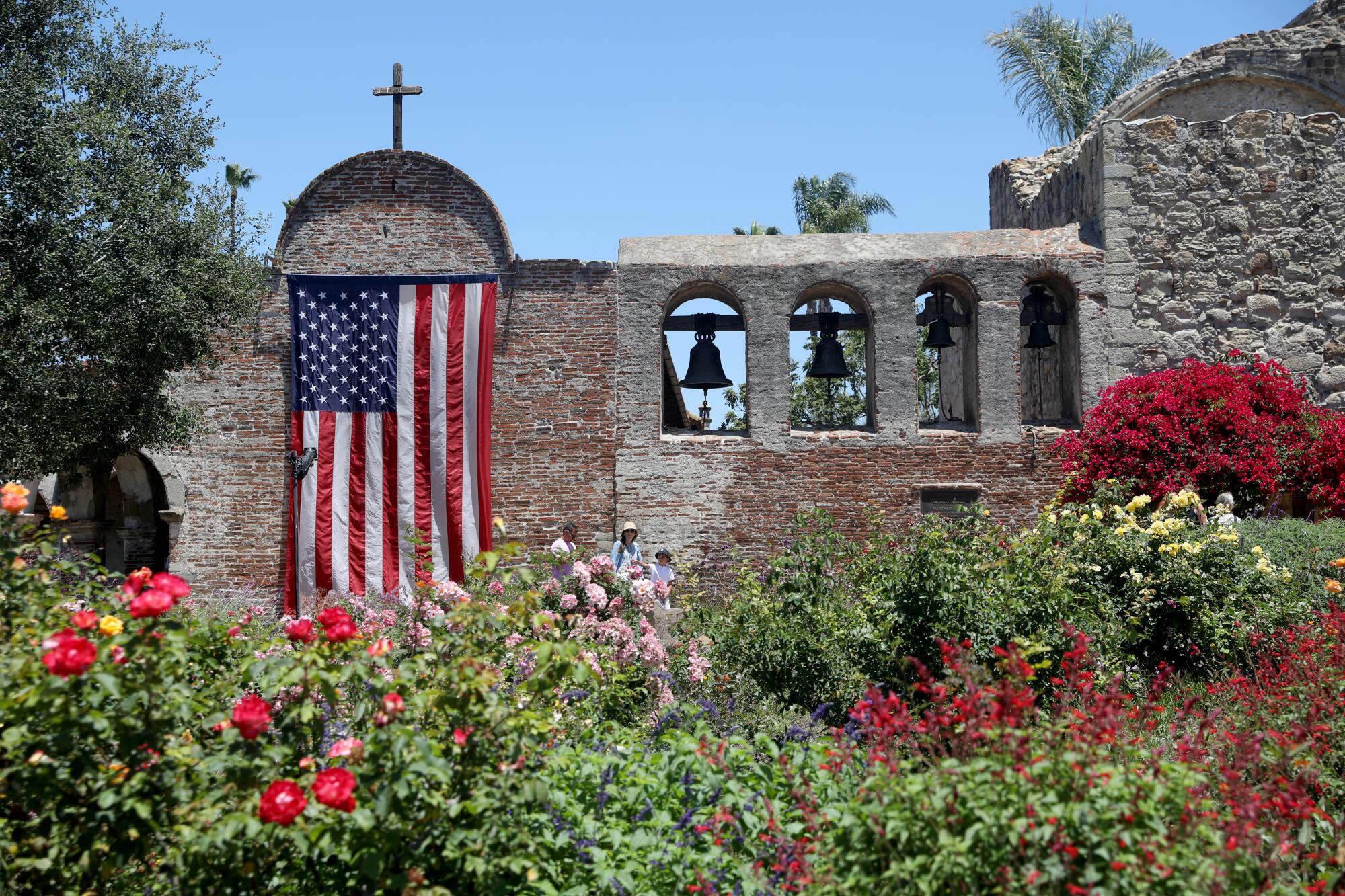
The visit to San Juan Capistrano last month offered a glimpse into a place rooted in history. This small city, home to about 35,000 residents, proudly holds onto its Old California charm amidst modern developments. At the heart of San Juan Capistrano is its mission, one of the 21 founded by the Catholic Church during the Spanish colonial era, which significantly shaped California.
The area is known for supporting President Trump in the past elections, and the streets are a testament to this. Downtown is adorned with Trump decals and banners marking the 250th birthday of both the mission and the United States.
The way history is taught at Mission San Juan Capistrano mirrors some aspects of Orange County itself: a mix of conservatism and nostalgia. As a child, I learned about the mission’s history in a simplified manner, focusing on the achievements of Spanish settlers without acknowledging their impact on native populations. The mission forced Indigenous tribes to assimilate, stripping them of their traditions and rewarding them with a life similar to serfdom.
This approach to history is reminiscent of Trump’s tendency to celebrate triumphs while dismissing the darker chapters involving minorities. His narrative tends to overlook the struggles and resistances against white supremacy, labeling discussions on these topics as unnecessary.
During my visit, the mission grounds felt different. New exhibits provide a more complete story, acknowledging environmental and cultural impacts. The exhibits discuss the lives of the Acjachemen, the tribe that once inhabited Southern Orange County, and their dramatic changes under colonial rule.
Noteworthy is the honest acknowledgment of the mission’s history and its lasting effects. Despite this, the narrative still respects figures like Father Junípero Serra, canonized by Pope Francis despite criticism over his treatment of native tribes. This balanced portrayal shows the mission’s imperfections over 250 years, offering lessons for the present.
This reflection is timely as the nation celebrates 250 years. Honest historical examination is crucial for understanding our national journey and avoiding the triumphalism seen in current discourse. Recognizing past errors doesn’t lessen patriotism; on the contrary, it enriches it.
My family shares stories of facing discrimination in past decades not as grievances but as testaments to resilience in building a better future. Nearly all my cousins still live in Orange County, pursuing opportunities their parents didn’t have, signaling progress amidst the challenges.
The area’s demographics have shifted significantly, with a majority-minority population since 2004. A new generation is challenging unfair practices, forming a unique identity for the region. Change is often difficult but necessary, a sentiment echoed by the ruins of the Great Stone Church, a reminder of both historical tragedies and the delicate nature of democracy.
As the visit concluded, the smell of smoked meats from Heritage Barbecue filled the air. Co-owned by Danny Castillo, the restaurant is a testament to unity and diversity. Despite skepticism, Castillo’s establishment succeeded in unifying various cultures over shared meals.
The eatery exemplifies the potential for cooperation in America. Castillo emphasizes the necessity for diverse individuals to work together, learning from the past to forge a better future.