
American fans are upset over a red card incident in the World Cup. Despite the United States securing a 2-0 victory against Bosnia-Herzegovina, anger erupted over star striker Falorin Balogun’s ejection in the second half. This decision means Balogun will miss the upcoming match against Belgium.
The penalty followed a video replay review, sparking debate. Many questioned if the punishment was too severe and wondered why players like Argentina’s Lionel Messi have evaded similar consequences.
Understanding Red Cards
Red cards carry the most significant consequences in soccer. They remove a player from the game with no replacement and suspend the player from the next match, possibly longer.
The red and yellow card system started after the 1966 World Cup. Former referee Ken Aston developed this color-coded system after being inspired by traffic lights. Yellow suggested caution, while red indicated stop.
Referees use discretion during matches. A second yellow card results in ejection with a red card. Direct red cards often result from serious offenses like dangerous tackles. According to FIFA rules, any player who lunges at an opponent with excessive force or endangers their safety is guilty of serious foul play.
Balogun’s case triggered discussion over whether the foul was intentional or a hard tackle that warranted only a yellow card. U.S. coach Mauricio Pochettino defended Balogun by stating the action was a normal play while fighting for the ball.
The Role of Video Review
Referees face challenges in observing every play. In crowded situations, some actions might go unnoticed. FIFA introduced Video Assisted Review (VAR) in 2018 for the World Cup.
Brazilian referee Raphael Claus did not initially issue a card against Balogun. However, upon VAR’s recommendation, a slow-motion review led to a red card. This prompted further debate over whether slow motion exaggerated the incident’s severity.
Former striker Thierry Henry, now an analyst for Fox Sports, criticized the decision. He questioned where Balogun could have placed his foot in that situation.
No Appeal Process
Balogun’s suspension for the next game stands, with no option for appeal unless FIFA imposes a penalty longer than one game. FIFA might increase the ban if deemed necessary, but Balogun’s suspension currently applies only to the next match.
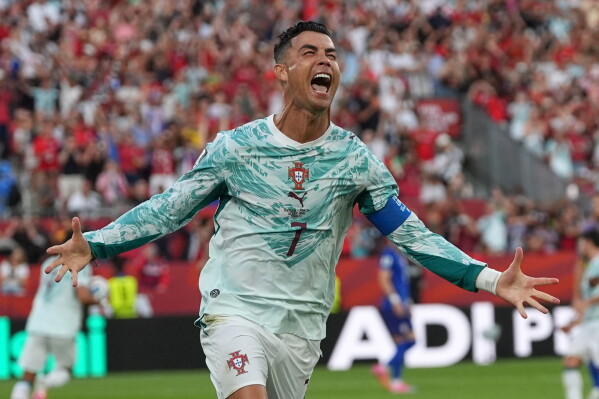
In a similar incident, Portugal’s Cristiano Ronaldo avoided missing multiple games after a severe red card in qualifying. His ban was deferred during a probationary period.
Star Player Treatment
Concerns over star players receiving favorable treatment have persisted. Critics point to Messi’s actions in Argentina’s first match. His challenge on Algeria defender Aissa Mandi drew no red card, even though Mandi suffered on the ground. Messi faced no booking and concluded the game with a hat trick.
Video clips of the Messi incident circulated widely on social media, leading to comparisons with Balogun’s situation. American defender Weston McKennie labeled Balogun’s red card as disappointing, noting similar instances received no card.
World Cup Red Card Controversies
Fury over red cards is not new. In the 1998 World Cup, David Beckham was sent off against Argentina for retaliating against Diego Simeone. In 2006, Wayne Rooney received a red card in a match against Portugal after a foul on Ricardo Carvalho. The most notable red card occurred in 2006 when Zinedine Zidane headbutted Italy’s Marco Materazzi during the final.
Meanwhile, the 2010 final witnessed a famous non-call when Nigel de Jong was not dismissed for a foul against Spain’s Xabi Alonso.