
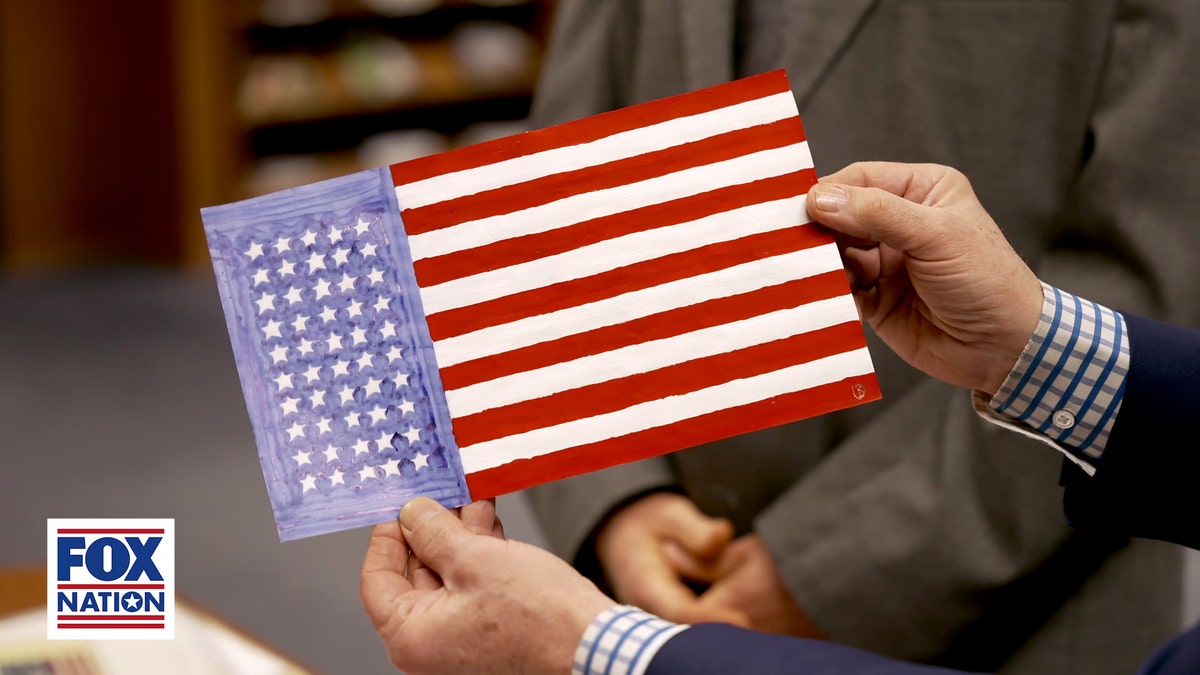
The American flag is iconic. However, its design might have taken a different path. In 1958, as the potential admission of two new states became a topic of national conversation, various proposals for a new 50-star flag emerged.
Dr. Jim Ginther, a supervisory archivist at the Dwight D. Eisenhower Presidential Library and Museum, highlighted the surge in public interest during this time. “People began sending in ideas for how the new flag should look,” he said. Starting in July 1958, the White House and the Army’s Quartermaster Corps received designs from across the globe.
An early proposed 50-star flag design from 1958 is displayed at the Dwight D. Eisenhower Presidential Library. Numerous designs were sent before settling on the final version.
The journey to the current flag is explored in “Crazy American History with Eric Shawn,” a series on Fox Nation. The initial addition of a star occurred in January 1959 with Alaska’s statehood. Hawaii’s subsequent admission led to the addition of the 50th star. This new flag made its debut on July 4, 1960, at Fort McHenry, Baltimore, the historic site tied to the national anthem.
From 1958 to 1960, more than 1,900 designs flooded the White House, with submissions coming from schoolchildren and adults, both domestic and international. These ranged from simple pencil sketches to elaborate sewn flags.
The Eisenhower administration used this opportunity to educate the public. Each submission received a response from a top White House official, often accompanied by publications on the flag’s history, etiquette, and other facets.
The American flag traces its roots back to the Continental Congress’ enactment on June 14, 1777, now recognized as Flag Day. Betsy Ross is often credited with the initial design, which featured 13 stars in a circle representing the original colonies. Notably, the placement of the stars was left to interpretation, allowing for diverse and intriguing designs.
Despite the variety of submissions, a drastic transformation of the flag did not occur. Ginther remarked, “The flag is symbolic.” Changing it dramatically could pose challenges, not least due to historical and military sentiment.
Ultimately, President Eisenhower decided on a design echoing tradition, incorporating two stars in alternating rows of six and five. This design continues to symbolize American freedoms and ideals.
The Eisenhower Presidential Library provides more insights about the flag and the president’s contributions. For further exploration, visit their official site at Eisenhower Presidential Library.
Eric Shawn, a seasoned anchor and correspondent for FOX News Channel, has been with the network since its inception in 1996. He delves deeper into topics like the flag on Fox Nation, a subscription-based streaming service.