
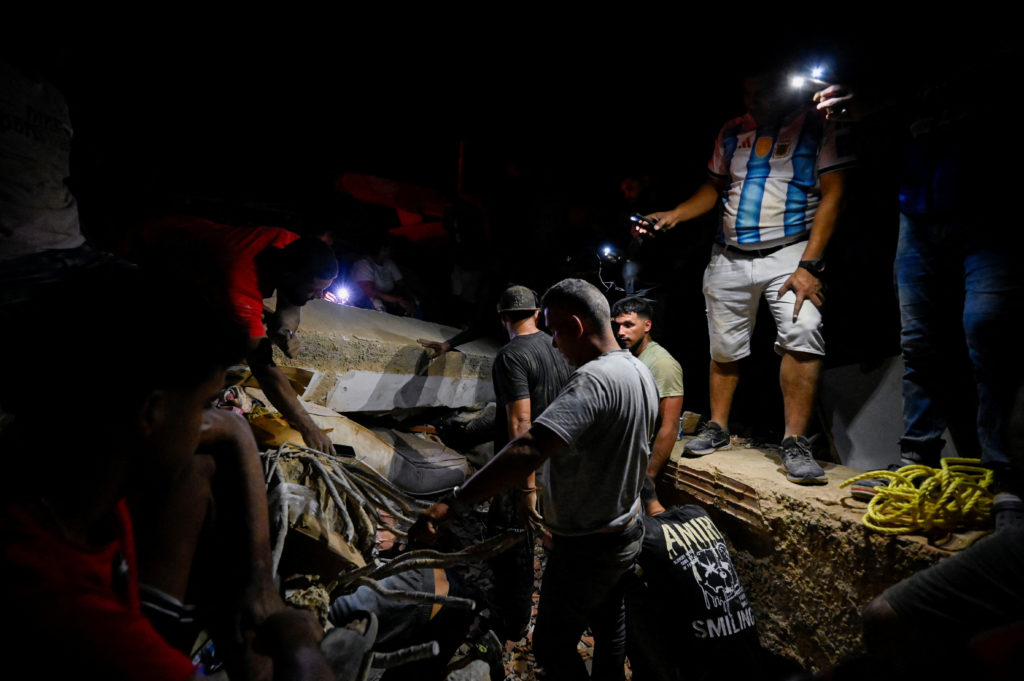
Venezuela faces dire conditions with hospitals lacking essential medicines and equipment amid frequent power outages. At least eight million people need humanitarian support. This was the situation before June 24, when back-to-back earthquakes struck. The nation has been grappling with a complex humanitarian emergency for years. Democratic backsliding, corruption, inflation, and economic sanctions have restricted access to basic services. Nearly eight million have fled, marking it one of the largest displacement crises, according to the United Nations.
Phil Gunson, a senior analyst at International Crisis Group, describes Venezuela as having experienced “the sustained collapse of a society.” The recent earthquakes added to the devastation, with civilians often forced to dig through rubble by hand, pleading for governmental aid. The longstanding crisis has led to a disjointed response, leaving citizens highly vulnerable, according to Laura Cristina Dib of the Washington Office on Latin America.
As of Wednesday, the Venezuelan government estimated 2,295 deaths and 11,000 injuries from the earthquakes, though this is likely an undercount. The United Nations is providing 10,000 body bags and notes that 50,000 missing persons is a plausible estimation.
Venezuela’s Pre-Quake Status
Six months prior, the U.S. military captured Nicolás Maduro, who had led since 2013, bringing Delcy Rodríguez to interim leadership with U.S. collaboration. The removal of sanctions allowed Venezuelan oil sales with U.S. companies, though elections remain unplanned. Orlando Pérez from the University of North Texas noted, “Maduro’s capture dismantled the regime but didn’t rebuild the hollowed institutions.” The earthquakes hit a nation already stretched thin.
Government’s Quake Response
Following the earthquakes, Rodríguez declared an emergency, appointing Juan Ernesto Sulbarán Quintero to head rescue efforts. The government accepted international aid without regard to alliances. Yet state capacity was limited. Twenty-seven countries, including the U.S., and 40 rescue teams mobilized.
Despite this, reports highlighted the government’s minimal presence in affected areas, with complaints about traffic management prioritization over rescue. Efforts were hampered by underfunded responders lacking equipment. Civilians turned to social media for help, reflecting a lack of governmental expectations.
Nonprofits and citizens organized donation centers and search-and-rescue efforts. An expert noted inadequate state capacity due to underfunding and planning failures over years. Reports emerged of aid obstruction, with some international rescue teams facing entry delays.
Reconstruction and Future Challenges
Focus remains on rescues, but rebuilding will soon take precedence. The UN estimates $6.7 billion in damages, with substantial needs for housing and healthcare. Political implications are inevitable, though outcomes depend on reconstruction efforts.
The U.S. has assumed a significant role post-Maduro, with military presence and aid commitments. There’s debate if Washington’s engagement will remain through the rebuilding phase, particularly with USAID’s absence.