
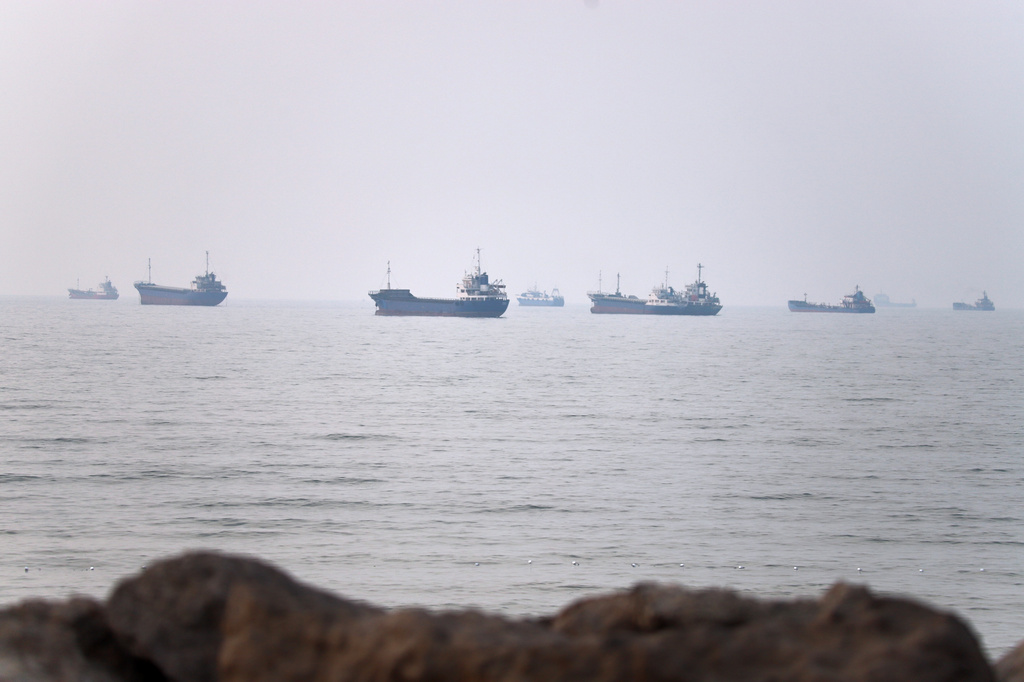
On June 30, 2026, commercial vessels were seen in the Strait of Hormuz near Bandar Abbas, Iran. This occurred on a day when leaders from Pakistan, Iran, and the United States, despite their differing views, confirmed a significant diplomatic breakthrough. Each leader made statements that highlight a common understanding about a key issue.
Pakistan’s Prime Minister Shehbaz Sharif claimed ballistic missiles weren’t discussed. Iranian President Masoud Pezeshkian declared that missiles wouldn’t be part of any agreement. In contrast, former U.S. President Trump, at the G7 meeting in Evian, described missiles as weapons that may damage local areas but don’t pose a global threat. This convergence of statements sheds light on a crucial omission in the U.S.–Iran Memorandum of Understanding (MOU).
The agreement between the U.S. and Iran includes only one significant commitment related to weapons: Iran agrees not to develop nuclear weapons. However, it does not address ballistic missiles, which play a key role in Iran’s military strategy and regional influence.
The omission of ballistic missiles is significant. For Washington, omitting them isolates the nuclear warhead development from its delivery systems. This means that while Iran has agreed to refrain from developing nuclear warheads, its capability to deploy ballistic missiles remains intact.
October 2024 exemplified this threat when Iran’s missile strikes tested Israel’s air defenses, revealing vulnerabilities despite the interception of most missiles. The current MOU does not place additional pressures on Iran to restrict its missile capabilities.
The impact of not including missiles in the MOU is profound. Iran maintains its missile program while also gaining access to $10–16 billion in previously frozen assets. Without any constraints on missile capabilities, these resources could support advancements in Iran’s missile technology.
This development creates challenges for regional countries like Israel, Saudi Arabia, and the UAE. These nations may choose to pursue their own defense strategies, including seeking partnerships outside of the U.S. guidance.
For Iran, the missile program is integral to both regional power projection and national security. It serves as a core component of their strategy, enabling both deterrence and influence over neighboring territories.
Unless future negotiations make missile restrictions unavoidable, the MOU might be remembered as a moment when the U.S. unintentionally supported Iran’s military expansions. This agreement, which protects Iran’s missile capabilities, could complicate efforts to reduce regional tensions.
Charbel A. Antoun is a Washington-based journalist and writer focusing on U.S. foreign policy related to the Middle East and North Africa.