
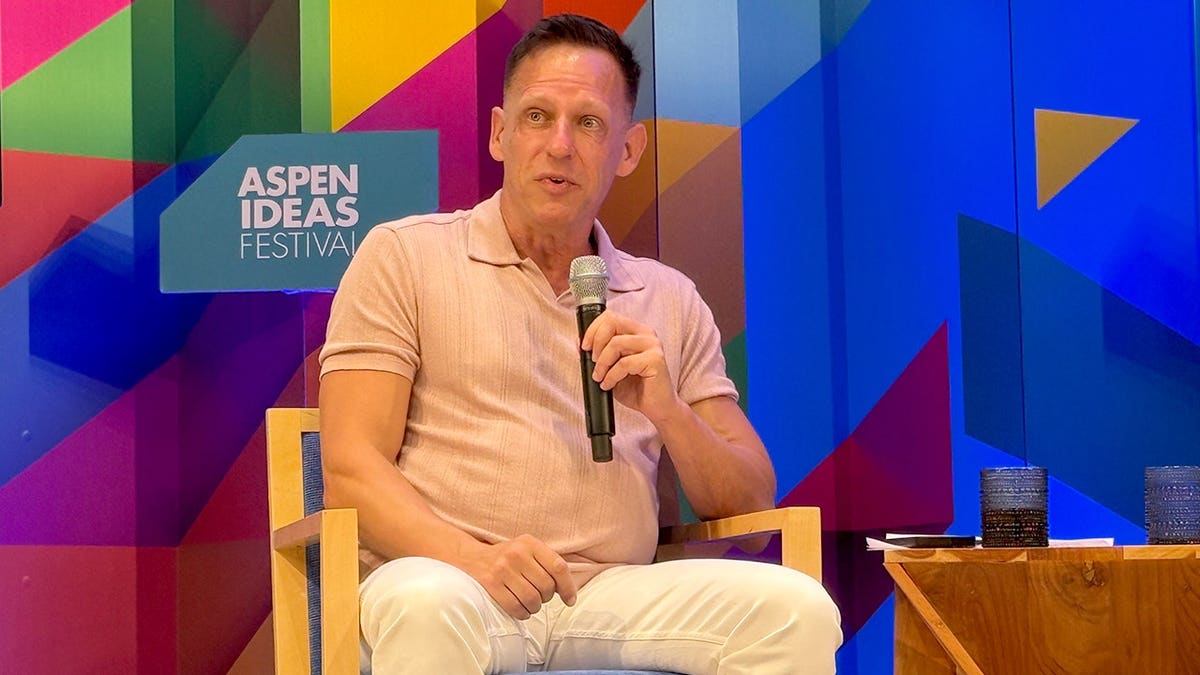
In Aspen, Colorado, billionaire Peter Thiel raised alarms among a group of liberal attendees at the Aspen Institute’s Ideas Festival. During a discussion on humanity’s direction, Thiel expressed concern about the ‘stagnation’ within cultural, technological, and economic sectors. He labeled this stagnation as ‘very destabilizing’ with potential long-term political impact.
Thiel shared his belief that millennials face more challenges than previous generations and are doing less well than their baby boomer parents. He highlighted how this stagnation influences politics, leading to solutions beyond traditional boundaries. Thiel referenced a significant shift among Republicans with the rise of Trump and the rejection of the Bush-era consensus.
He then surprised the audience with his prediction of a democratic socialist takeover within the Democratic Party. To support his theory, Thiel pointed to the recent success of democratic socialist candidates in New York primaries, endorsed by Mayor Zohran Mamdani. Candidates such as Claire Valdez, Brad Lander, and Darializa Avila Chevalier emerged victorious in their races.
Thiel’s comments sparked evident shock among the audience. He emphasized that the Democratic Party’s transformation would have profound consequences for the nation, overshadowing the Republican Party’s influence.
His statements followed the success of another democratic socialist, Melat Kiros, who won the Democratic primary in Colorado’s 1st Congressional District, defeating a longstanding incumbent.
Thiel is known for his political activity, particularly as a significant Republican donor. He gained national attention as a speaker at the 2016 Republican National Convention and has supported figures like Vice President JD Vance in past elections.
Beyond politics, Thiel spoke passionately about the necessity for the U.S. to embrace artificial intelligence (AI). He criticized those hindering societal and economic advancements, warning that continuous economic stagnation leads to ‘catastrophe.’ According to Thiel, halting AI progress would result in destructive politics and growing public dissatisfaction.