
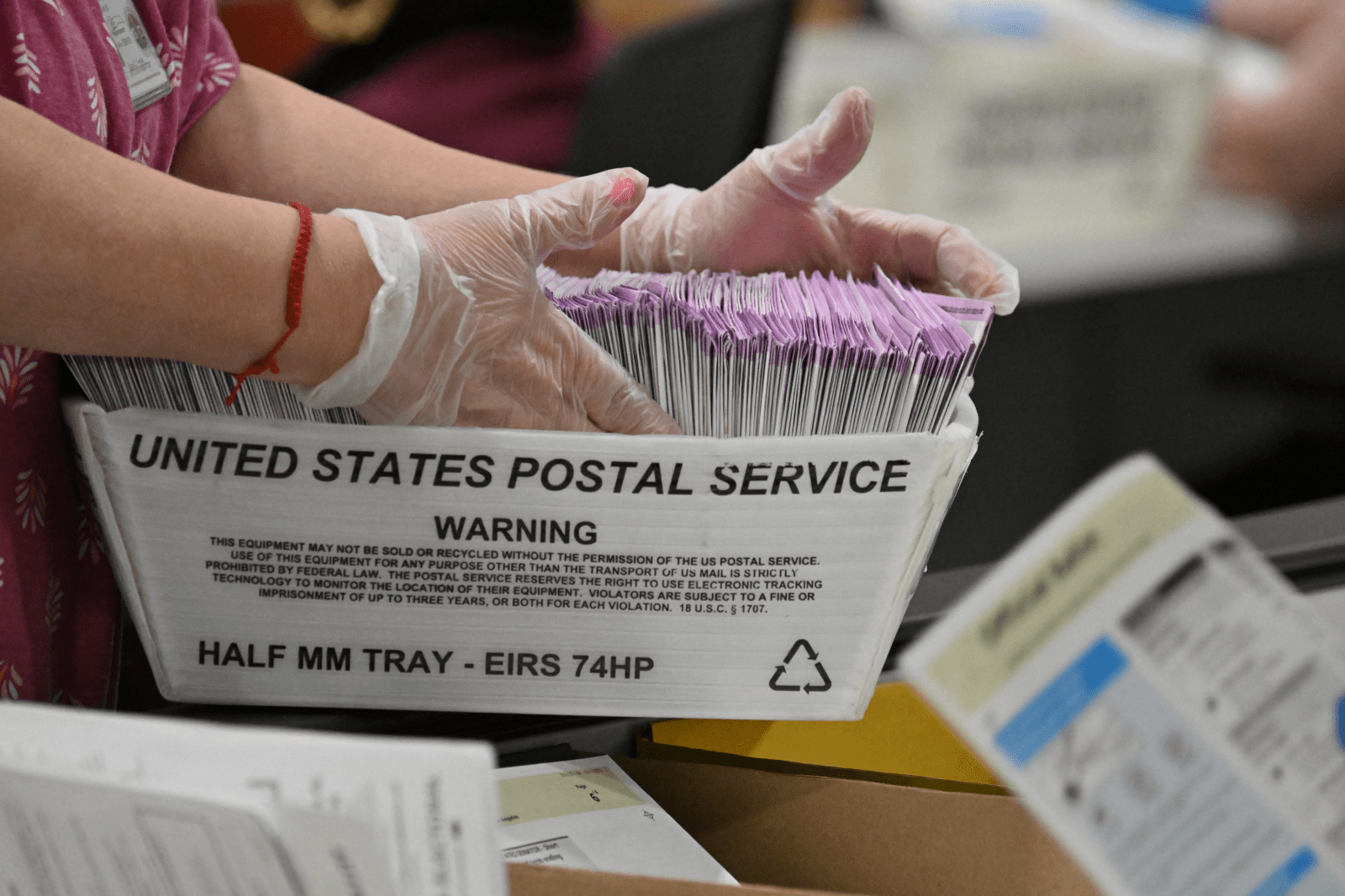
A small group of states that primarily conduct elections by mail are now at the center of a contentious debate that could affect the delivery of millions of ballots this fall. At the heart of the dispute are proposed rules by the U.S. Postal Service (USPS) aligned with President Donald Trump’s March 31, 2026, executive order on election administration. The rules would require states to provide detailed lists of mail voters and may hinder ballot deliveries for non-compliance.
The implications are immediate, with more than 48 million Americans having voted by mail in the 2024 election, representing about one-third of the national electorate. As the 2026 midterms approach, election officials caution that these changes could disrupt the voting process in states where mail-in voting is the primary method, not merely a supplement.
A total of 23 Democratic-led states and Washington, D.C., have already initiated legal action, and a federal appeals court may decide this summer—just as states prepare for the upcoming November midterms. Newsweek reached out to USPS and the White House for comments on the matter on Friday morning.
Executive Order Sparks Legality Debate
In March, Trump signed an order titled “Ensuring Citizenship Verification and Integrity in Federal Elections,” marking another effort to exert federal influence over elections, which he has often claimed are vulnerable to fraud—a claim made without evidence. Key provisions of the order include:
- Compiling state-by-state lists of eligible voting-age U.S. citizens by the Department of Homeland Security.
- Requiring the Postal Service to develop systems to ensure ballots are only sent to voters on approved lists.
- Mandating that mail ballots incorporate tracking systems including unique barcodes.
The Constitution assigns election administration primarily to states, which has provoked a significant legal challenge against a plan that could potentially position mail carriers as arbiters of ballot delivery eligibility. The ACLU’s legal statement warns of the risk of turning USPS into “an arbiter of who may cast a ballot by mail.”
An Unprecedented Role for the Postal Service
The USPS’s proposal, released in late May, operationalizes these directives, requiring states to provide names, addresses, and ballot-specific barcodes for each mail voter. The USPS would have the authority to reject mail that does not meet these criteria, marking a significant shift from their historic role as a neutral carrier.
Currently, the USPS’s “Election Mail” services include securely delivering ballots, registration forms, and voting notices. In 2024, the USPS reported delivering at least 99.22 million mail ballots, with 99.88% reaching voters within seven days. The new proposal would impose additional requirements such as:
- Verifying recipients against state-submitted voter lists before delivering ballots.
- Establishing a federal “Mail-In and Absentee Participation List” system via a new digital portal.
- Implementing mandatory envelope designs and voter-tracking systems.
Speaking to CNN, Anton Hajjar, former Vice Chair of the Postal Service Board of Governors, stressed that if proper postage is paid, USPS should deliver the mail regardless of voter lists. Concerns are echoed by postal unions, with Brian Renfroe, President of the National Association of Letter Carriers, describing the position this places mail carriers in as “very, very concerning.”
States Most Affected by the Changes
The proposed rules would impact states differently, hitting hardest those where mail voting is integral. States like California, Oregon, Washington, and Colorado, where elections are largely mail-based, could face significant disruptions, as the USPS acts as critical infrastructure similar to polling locations elsewhere.
These changes could severely disrupt mass mail voting systems, as shown by national data revealing eight states and Washington, D.C., largely using mail voting systems, while mail voting options exist in all states. In these states, any service interruption would move beyond an inconvenience, threatening voters’ primary means of participating in elections.
Tobias Read, Secretary of State for Oregon, argues this would effectively deny eligible voters their right to vote. Shenna Bellows, Secretary of State for Maine, participating in a coalition challenging the policy, warned of the possible virtual elimination of mail voting should the federal courts uphold the rule.
States like Arizona, Nevada, and Michigan, which have significant mail-in voting populations and routinely participate in close federal elections, might also face disruptions. Larger cities may fall in line relatively easily due to existing systems, but smaller or rural areas could deal with complicated and expensive compliance processes.
A Legal Battle at the Core of Election Control
Central to this legal battle is the question of who controls the administration of elections. The Constitution’s Article I states that election particulars are set by states with Congressional oversight, a principle upheld repeatedly by courts opposing executive overreach. Multiple lawsuits contest that Trump’s order attempts to implement national election rules without legislative backing, breaking separation-of-powers and federal law principles.
A federal judge declined to block the rule prematurely, awaiting full policy implementation. Appeals involving the D.C. Circuit Court are currently in process, which could redefine federal roles in elections, especially if it permits USPS to require compliance to deliver ballots.
Can USPS Deliver the Proposed System?
Even if courts allow rules to move forward, there remains the practical question of USPS’s ability to implement them. The operation relies on a digital portal for voter lists and ballot tracking, a system lacking current technological support, according to several election officials.
USPS’s current operations managed to deliver ballots quickly and efficiently in 2024, with average deliveries to voters and returns within two days. However, expanding this service to include verification and compliance presents logistical hurdles under tight timelines. Matt Crane, Executive Director of the Colorado County Clerks Association, questions the adequacy of USPS’s resources to handle such an expanded role.
Anticipated Developments
The immediate future hinges on judicial outcomes. The D.C. Circuit Court of Appeals’s decision, expected this summer, will likely influence whether USPS proceeds with the rules before the midterms. Observers will monitor whether USPS manages to establish the necessary voter-list portal, whether the DHS releases citizenship lists, and how states respond to federal data requirements.
The results of this battle may not only impact this election cycle but reshape the framework of U.S. election systems. With mail voting entrenched nationwide, affecting diverse voter demographics and political affiliations, any profound change or disruptions on USPS’s role could substantially alter the voting landscape just before Americans return to the ballot box.