
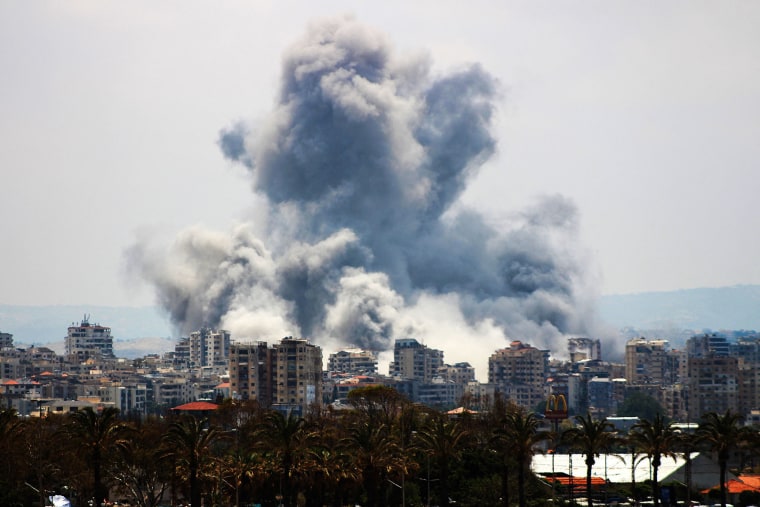
On Monday, Israeli Prime Minister Benjamin Netanyahu directed military operations on the Hezbollah-dominated southern suburbs of Beirut. This move signaled a further escalation in a conflict that has hindered efforts to mediate the U.S.-Iran standoff.
Iranian Foreign Ministry spokesperson, Esmaeil Baghaei, affirmed that the Israeli attacks in Lebanon are impeding the diplomatic process aimed at ending the U.S.-Iran war. Baghaei emphasized the necessity of a Lebanon ceasefire in any peace agreement.
Israeli Offensive Orders
Netanyahu, alongside Defense Minister Israel Katz, commanded the Israeli Defense Forces to target the Dahiyeh area in response to Hezbollah’s alleged ceasefire breaches and attacks on Israeli regions and citizens. Israeli forces have rarely attacked Dahiyeh since U.S. President Donald Trump announced a ceasefire in Lebanon on April 16, despite ongoing hostilities in southern Lebanon.
An Israeli airstrike caused a plume of smoke near Tyre in southern Lebanon on Monday. Amid intensifying hostilities, Israeli troops recently captured the historic 900-year-old Beaufort Castle, prompting Netanyahu to call for expanded military ground operations.
Lebanese officials report over 3,370 deaths from Israeli offensives since Hezbollah, allied with Iran, began firing on Israel in early March. Israel has recorded 24 military and four civilian fatalities in the same timeframe.
Geopolitical Implications
Israel has established a self-declared security zone in southern Lebanon, destroying villages to protect its northern territories from Hezbollah forces positioned in civilian locales. The Lebanese conflict is the deadliest extension of the U.S.-Israeli clash with Iran, displacing over 1 million people, according to Lebanese authorities.
On Sunday, Netanyahu ordered an enhanced Israeli military maneuver in Lebanon, seeking to tighten control over former Hezbollah strongholds. In response, Hezbollah conducted 21 operations, including a rocket attack on Israeli military facilities in Nahariya.
This led France to call for an urgent United Nations Security Council meeting on Monday due to the escalating violence.
Diplomatic Efforts and Obstacles
The U.S. has facilitated rare discussions between Israel and Lebanon since the conflict’s commencement. While Lebanon participated despite Hezbollah’s opposition, U.S. Secretary of State Marco Rubio has engaged in talks with Lebanese President Joseph Aoun and Prime Minister Netanyahu, proposing a phased de-escalation plan.
The proposal includes an initial step for Hezbollah to halt all assaults on Israel, with Israel reciprocating by ceasing escalations in Beirut. This aims to create a framework for sustainable de-escalation and cessation of hostilities.
However, Lebanese Parliament Speaker Nabih Berri, a Hezbollah ally, criticized the plan. Berri pledged Hezbollah’s adherence to a ceasefire if Israel ceased its aggressive actions, questioning who would ensure Israeli compliance.