
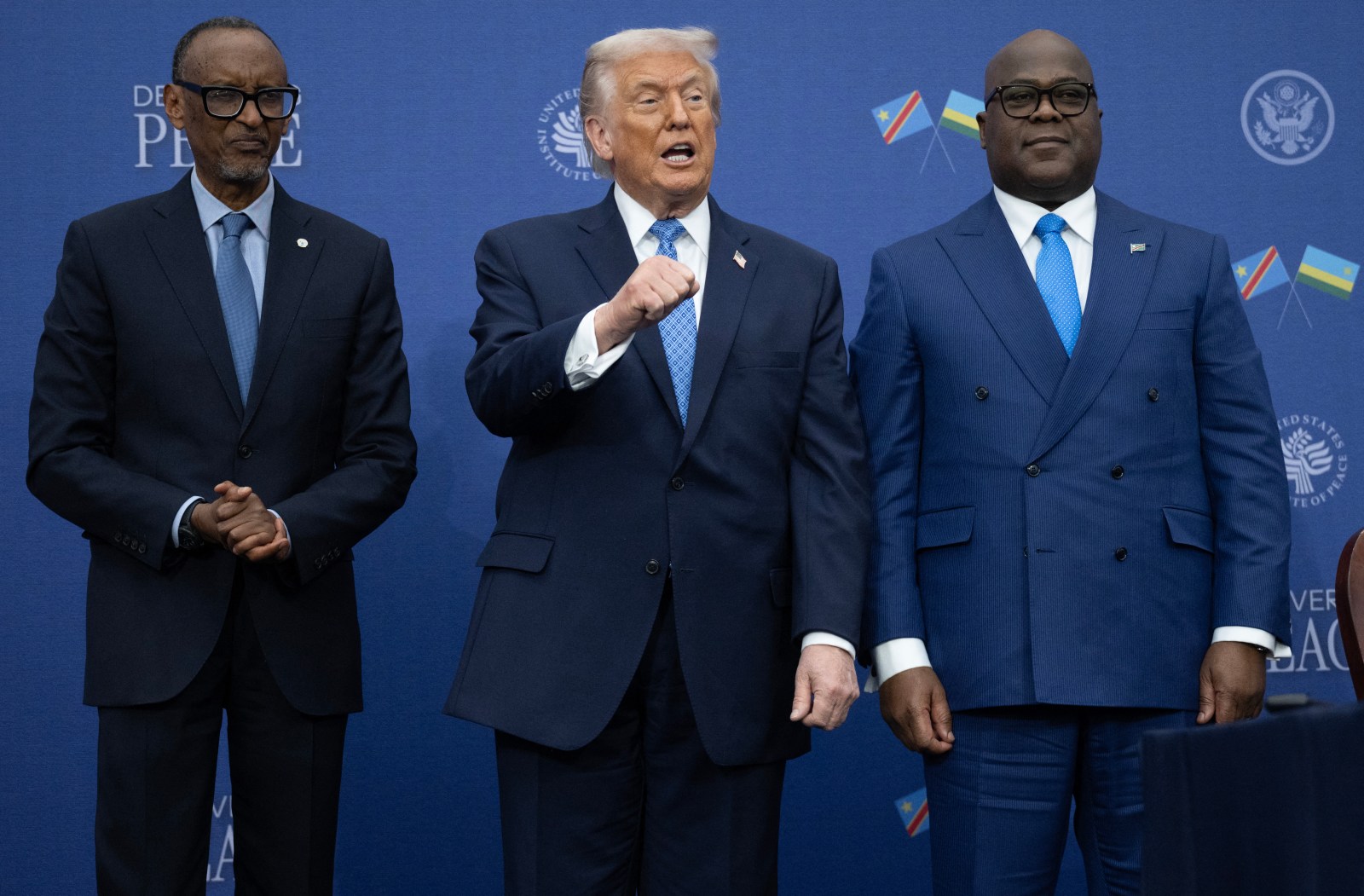
Nearly a year has passed since Congo and Rwanda signed a U.S.-backed peace agreement, aimed at bringing stability to Africa’s Great Lakes region. However, the initiative remains uncertain. For the Trump administration to solidify the Washington Peace Accords, it must urge Congolese allies to fulfill their commitments.
The United States recently intensified pressure on Rwanda and its M23 allies after Rwanda supported an M23 military move to capture Uvira, South Kivu’s second largest city. This occurred while President Trump was working to finalize the Washington Accords with Congolese President Félix Tshisekedi and Rwandan President Paul Kagame. Rwanda’s actions undermined efforts to resolve the ongoing conflict, which the U.S. aimed to incentivize with major investments.
In response, the U.S. took significant actions against Rwanda. It imposed sanctions and visa restrictions on Rwandan officials in March and placed sanctions on former Congolese President Joseph Kabila in April for supporting M23. The U.S. Treasury also sanctioned Rwanda’s national army, making Rwanda the second African nation to face such measures.
Conversely, the Trump administration favored Congo and its government. After extensive negotiations, Congo signed a strategic partnership with the U.S. in December, securing U.S. access to the Copperbelt region. Congo agreed to redirect mineral exports westward through a U.S.-funded railway. It also aligned with U.S. immigration policies, accepting deportees from Latin America and potentially the Middle East.
Congo seemed like a cooperative peace partner, but this was misleading. Though M23 remained mainly defensive since December, the Congolese army increased attacks, sometimes harming civilians. In talks mediated by Qatar, Congo stalled on confidence measures. The Congolese also continued funding armed groups, including the controversial FDLR, an extremist group linked to past genocides, increasing tensions with Rwanda.
The Trump administration’s pressure mainly on Rwanda could undermine the peace deal’s dynamics, alienating regional partners. Congo, under Tshisekedi, felt supported by the U.S. and thus felt military action remained a viable strategy against M23. Conversely, Rwanda and M23 perceived the peace process as unfair, with Kagame criticizing the U.S. stance, suggesting Rwanda wouldn’t yield to pressure.
Beyond regional dynamics, the U.S. indirectly enables Tshisekedi’s quest for more power, which risks long-term partnerships. Tshisekedi uses the conflict to justify potential constitutional changes, delaying elections, and suppressing opposition under the guise of combating M23 and its sympathizers, potentially fracturing eventual political stability once Congo shifts leadership.
The United States needs to pressure Congo further, starting with honoring its obligations under the Washington Accords. It should urge Congo to stop collaborating with armed groups like the FDLR and consider sanctions against officials hindering these efforts. Defense cooperation should be conditional on Kinshasa’s compliance.
In addition, the U.S. should encourage Congo to engage honestly in the Qatari-led negotiations tied to the Washington Accords. A successful Congo-M23 agreement, deemed crucial by U.S. officials, requires concessions, including transitional control for M23 over existing territories.
To achieve the intended peace and prosperity, the U.S. must hold all parties accountable, including allies in Kinshasa. The peace deal provides incentives for both Congo and Rwanda. After Rwanda’s noncompliance, the U.S.’ pressure was essential. However, U.S. officials must now address Congo’s role to secure the peace and partnerships formed in the past year.
Liam Karr leads the Africa team and Yale Ford analyzes for the Critical Threats Project at the American Enterprise Institute. Their views are personal.