
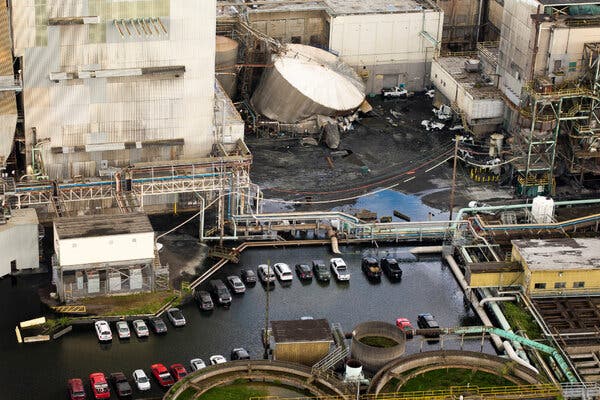
Authorities have recovered the bodies of two workers missing after a recent explosion at a Longview, Washington paper mill. This event increased the death toll to 11, according to officials.
The incident began when a tank containing 600,000 gallons of ‘white liquor’, a caustic chemical, exploded on Tuesday morning at the Nippon Dynawave Packaging plant. Located on the Columbia River, the plant uses this chemical in converting wood chips into packaging board for juice cartons.
Initially, two workers were found dead, and nine others were reported missing. The search efforts were hampered by hazardous conditions at the blast site. Workers equipped with special protective gear had to go through decontamination processes due to lingering dangerous chemicals.
On Saturday, Cowlitz County Coroner Dana Tucker confirmed the identities of the victims. They include Gilbert Bernal, 52; Tyler Covington, 29; Brad Covington, 27; Robert Wilson, 48; Dale Miller, 54; Jared Ammons, 35; Braydon Finkas, 38; Clinton Doran, 26; John Forsberg, 51; Norman Barlow, 58; and Dillon Miller, whose age was not provided.
Most victims were in an area designated for daily assignment distribution when the blast occurred. By Thursday, recovery teams had found seven of the missing workers’ bodies. Search crews continued working through the wreckage until the final two were found on Saturday.
“This work has been intense,” stated Kurt Stitch, Deputy Chief of Cowlitz 2 Fire & Rescue. “It’s been methodical and incredibly difficult for everyone involved.”
Nippon Dynawave is cooperating with investigations into the explosion’s cause. This disaster, one of the deadliest industrial incidents in recent years, stirs concerns over the plant’s future. The facility employs around 550 workers and its potential closure could impact the local economy.
Historically, paper mills have been significant employers, but many have closed due to globalization and changing economic landscapes.
Federal and state environmental officials have been present since Tuesday to monitor air and waterways for harmful chemicals. While the drinking water remains safe, the public is advised to avoid waterways connected to the storm drainage system.
Officials expressed minimal concern about contamination of the Columbia River due to its large size.