
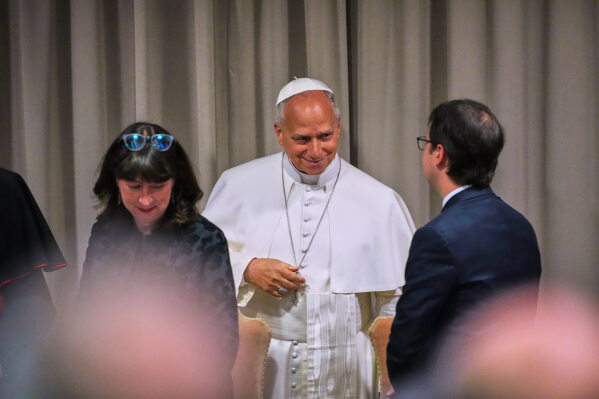
The Vatican has announced the formation of a study group on artificial intelligence (AI), initiated by Pope Leo XIV. The group aims to address the acceleration of AI usage and its potential impact on humanity, emphasizing the church’s concern for human dignity.
Pope Leo XIV’s Encyclical
Pope Leo XIV recently signed an encyclical, which aligns with his namesake Pope Leo XIII’s historic encyclical, “Rerum Novarum.” This document addressed workers’ rights and capitalism during the Industrial Revolution, laying the foundation for modern Catholic social teaching. Similar existential questions are posed by the AI revolution, which the pope plans to address within the context of the church’s teachings on labor, justice, and peace.
Church’s Ethical Approach to AI
Meghan Sullivan, a philosophy professor at the University of Notre Dame, remarked on the Catholic Church’s potential role in guiding debates on AI integration into society. Pope Leo XIV intends to advocate strongly for human dignity amid discussions on AI’s influence on justice and labor.
The forthcoming encyclical, expected soon, could spark dialogue between Pope Leo and the Trump administration, which emphasizes AI development as crucial to national interests. The U.S. resistance to global regulation of AI development contrasts with the Vatican’s ethical stance.
During his visit to China, U.S. President Donald Trump focused on AI business, accompanied by industry leaders like Elon Musk and Nvidia CEO Jensen Huang.
Vatican’s Position on AI
Since AI advancements were spotlighted by ChatGPT, tech companies have accelerated development amidst warnings about potential risks, such as algorithmic biases and rogue AIs. The United Nations adopted AI governance measures last year, and the EU implemented its own AI regulations.
The Vatican has contributed ethical guidelines for AI’s application in sectors like warfare, education, and healthcare. It stresses that AI should complement, not replace, human intelligence.
Concerns also revolve around AI’s environmental impact, with significant energy and water requirements highlighted.
Thomas Harmon, theology professor at the University of St. Thomas, underscores the importance of listening to the Catholic Church, considering its vast follower base and rich tradition of defining human dignity.
In 2020, the Vatican collaborated with tech firms to establish the Rome Call for AI Ethics, promoting inclusiveness, accountability, impartiality, and privacy.
Past Papal Efforts on AI
Pope Francis advocated for international AI regulation, highlighting risks of AI devoid of human compassion, morality, and accountability. His appeal for human-centric AI encompassed political efforts, including a G7 session focused on AI’s potential and dangers.
The pope argued for prohibiting autonomous weapons, emphasizing human decision-making over weapon usage.
Pope Leo XIV on AI Peace and Truth
Pope Leo XIV cautioned priests against AI-written homilies, while addressing AI implications for world peace and truth. Generative AI’s potential for misinformation and deception through deepfakes is concerning to him, stressing its impact on truth-seeking.
Leo acknowledged AI’s contributions to healthcare and scientific progress but questioned its influence on humanity’s relationship with reality and beauty.
“What is happening in Ukraine, Gaza, and other conflict zones illustrates the troubling evolution of warfare and technology, leading to annihilation,” said Pope Leo XIV at a conference.
His concerns extend to monitoring AI usage in military conflicts, emphasizing the need for vigilance.