
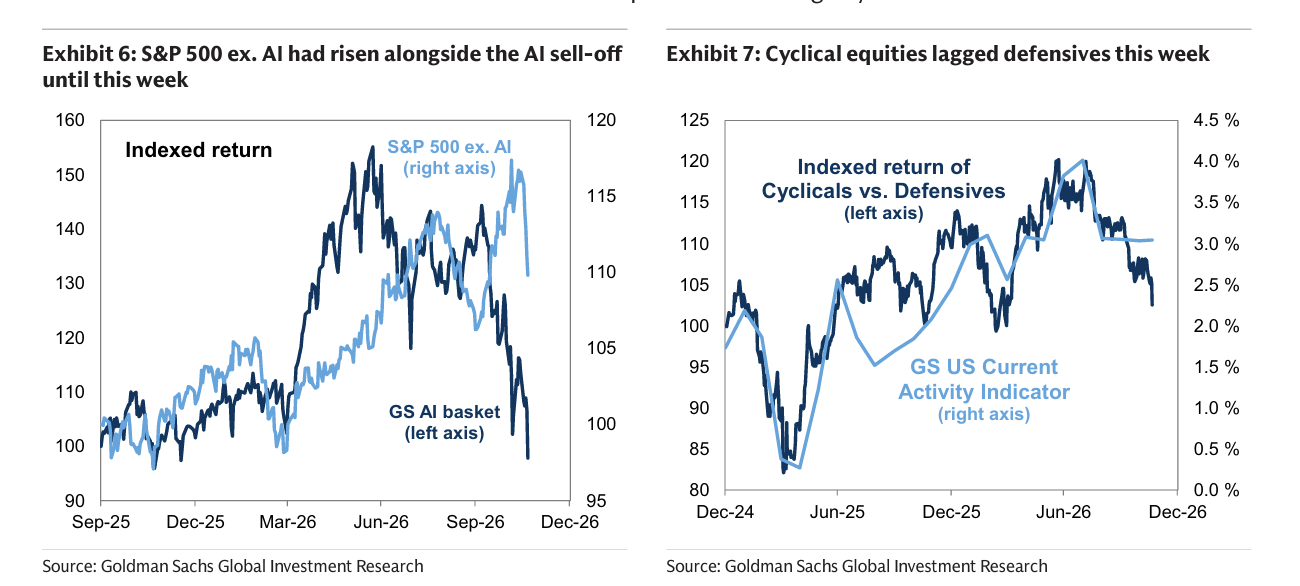
The S&P 500 concluded the week with a significant dip. It dropped 3.59% to 6,918.45, marking its seventh consecutive loss. This streak is the longest since February 2020. Meanwhile, the Nasdaq Composite fell by 5.28%, now showing a decline of over 2% for the year.
According to Goldman Sachs, the S&P 500 stands 12% below its October peak. Their strategists identified three key factors to watch for market recovery: confidence-building AI earnings news, dovish signals from the Federal Reserve, and a substantial decrease in investor positioning. Currently, the market’s outlook remains uncertain.
Market Factors at Play
AI Earnings Uncertainty
The AI sector is under pressure. Investor Dan Niles highlighted a price war between Anthropic and OpenAI, impacting their revenue growth and increasing losses from $7.9 billion to around $8.4 billion. Anthropic’s valuation, at approximately 40 times trailing sales, suggests an expectation of rapid growth. Yet, Goldman’s long-term AI outlook remains uncertain.
Federal Reserve Outlook
The Federal Reserve’s future actions are closely watched. Futures imply a high probability of a December rate hike. Goldman’s economists anticipate rate increases in December and March, projecting a peak of 4.25% to 4.5%. Despite a sharp rally in treasuries, a dovish Fed signal seems unlikely. Philadelphia Fed President Anna Paulson emphasized the need for further hikes due to high inflation.
Investor Positioning
A significant shift in investor positioning often marks the end of market declines. Goldman notes a current reduction in hedge fund leverage, the lowest since April 2025. Popular hedge fund AI trades have underperformed the S&P 500 by 14 percentage points over six months. However, Goldman’s Sentiment Indicator remains above average, with substantial equity inflows observed in the fourth quarter.
Market and Investor Sentiment
Anthropic’s recent IPO raised $93.5 billion, surpassing SpaceX’s record. However, its shares fluctuated, demonstrating investor skepticism. Notably, chipmakers Nvidia, Broadcom, Micron, and AMD experienced significant declines. Nvidia, particularly, saw its worst day in two years, with a 14% fall on Friday, losing $2.7 trillion in market value since October.
The VIX, known as Wall Street’s “Fear Gauge,” reached its highest level in 19 months. While market concern grows, JPMorgan Asset Management’s David Kelly offered reassurance, likening the situation to a manageable setback rather than a crisis.
Goldman’s broader economic predictions present mixed outcomes. A November 17 forecast projected an S&P 500 rise to 8,700 by 2027’s end. However, the Nov. 20 assessment suggests a range from 5,800 to 8,100, depending on earnings confidence. Historically, post-correction averages suggest potential for recovery, but outlooks vary widely among analysts.