
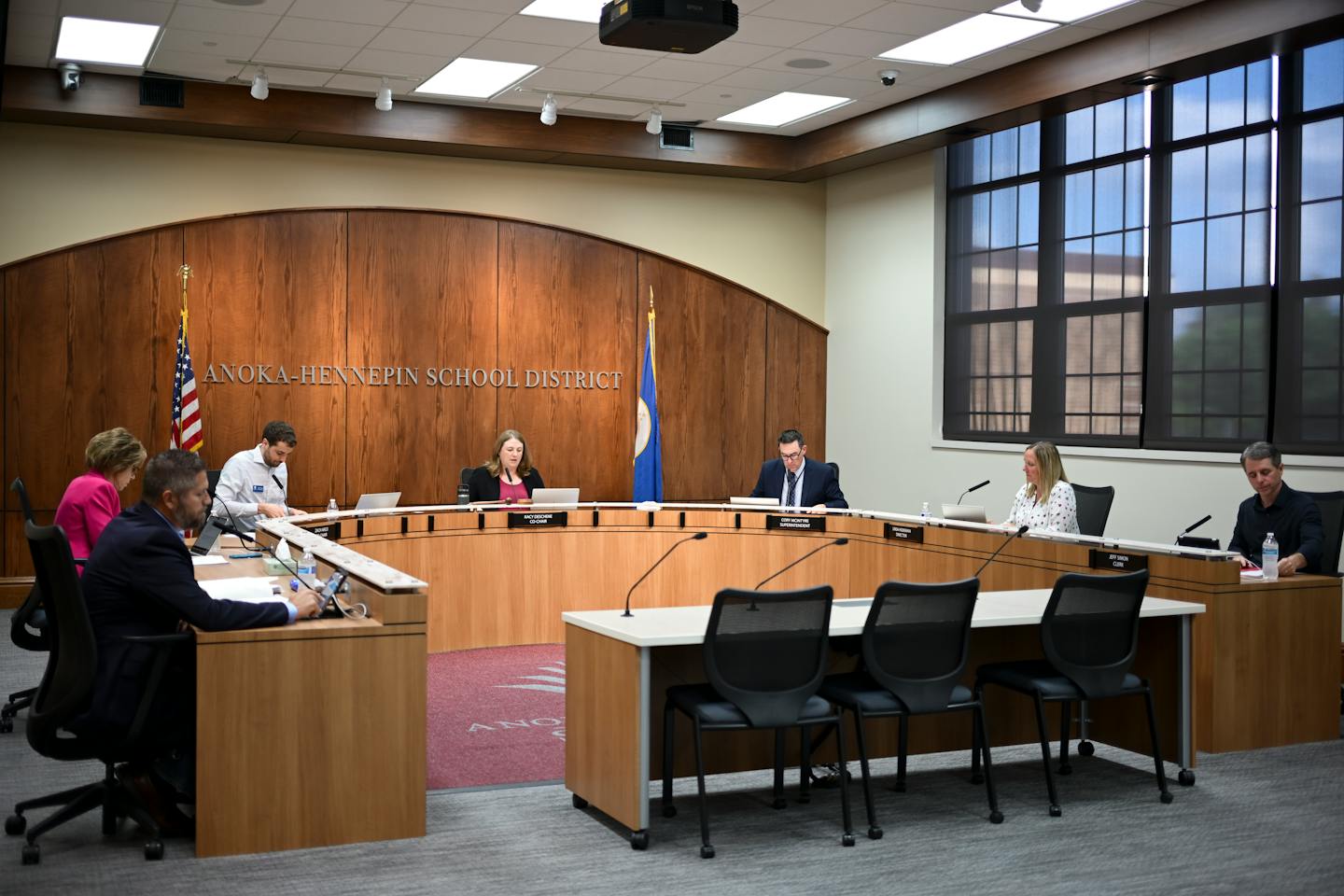
The Anoka-Hennepin school board in Minnesota is set to decide on the future of social and emotional learning (SEL) in its district. This decision comes amidst ongoing debates about how these lessons should be taught. SEL has joined the ranks of educational topics fueling cultural dispute, similar to past controversies like Common Core and Critical Race Theory. The board must soon decide whether to continue with the current SEL curriculum, which has been delayed by debate.
Board member Matt Audette shared his skepticism, expressing opposition to programs not developed within the district. He referred to such programs as “poison for our kids.” On the other hand, Board Co-chair Kacy Deschene defended the value of SEL, citing research and strong support from parents and teachers. Deschene argued that the perception of SEL as problematic is not reflective of reality.
SEL has been part of education for decades, according to Faith Miller, an associate professor of school psychology at the University of Minnesota. It is intended to help students develop practical skills in emotion management, goal setting, relationship building, and decision-making. Despite the practical benefits, SEL has faced increased political polarization, with opponents linking it to liberal ideologies.
The SEL curriculum in Anoka-Hennepin utilizes programs like ‘Leader in Me’ and ‘CharacterStrong’ at the elementary and middle school levels. These programs, introduced in the past five years, focus on character development, kindness, and strength. Lessons typically involve questions and activities that encourage student engagement and reflection.
While SEL gained initial bipartisan support, the pandemic and racial discussions in 2020 placed it under scrutiny. Organizations like the Collaborative for Academic, Social, and Emotional Learning (CASEL) have updated their strategies, which has led some to argue that SEL promotes social justice themes. However, the Anoka-Hennepin district clarifies that its implementation does not use such an approach.
Parental feedback on SEL is generally supportive, though the terminology can confuse some. A national survey by the Thomas B. Fordham Institute found that while many parents support SEL concepts, they worry about potential political indoctrination. Anoka-Hennepin’s own surveys indicate strong parental and teacher support, though time constraints are noted as a challenge.
Research supports the benefits of SEL, linking it to improved academic achievement. A 2011 study involving over 270,000 students found that those in SEL programs performed better academically. In the 2023-2024 school year, over 60% of U.S. public schools had SEL curricula, though time limitations often restricted their implementation.
The Anoka-Hennepin board has postponed their final decision but may resolve the matter soon. Some board members suggest developing new lessons focused on district values. Superintendent Cory McIntyre urged the board to take decisive action, emphasizing the importance of SEL for student achievement.