
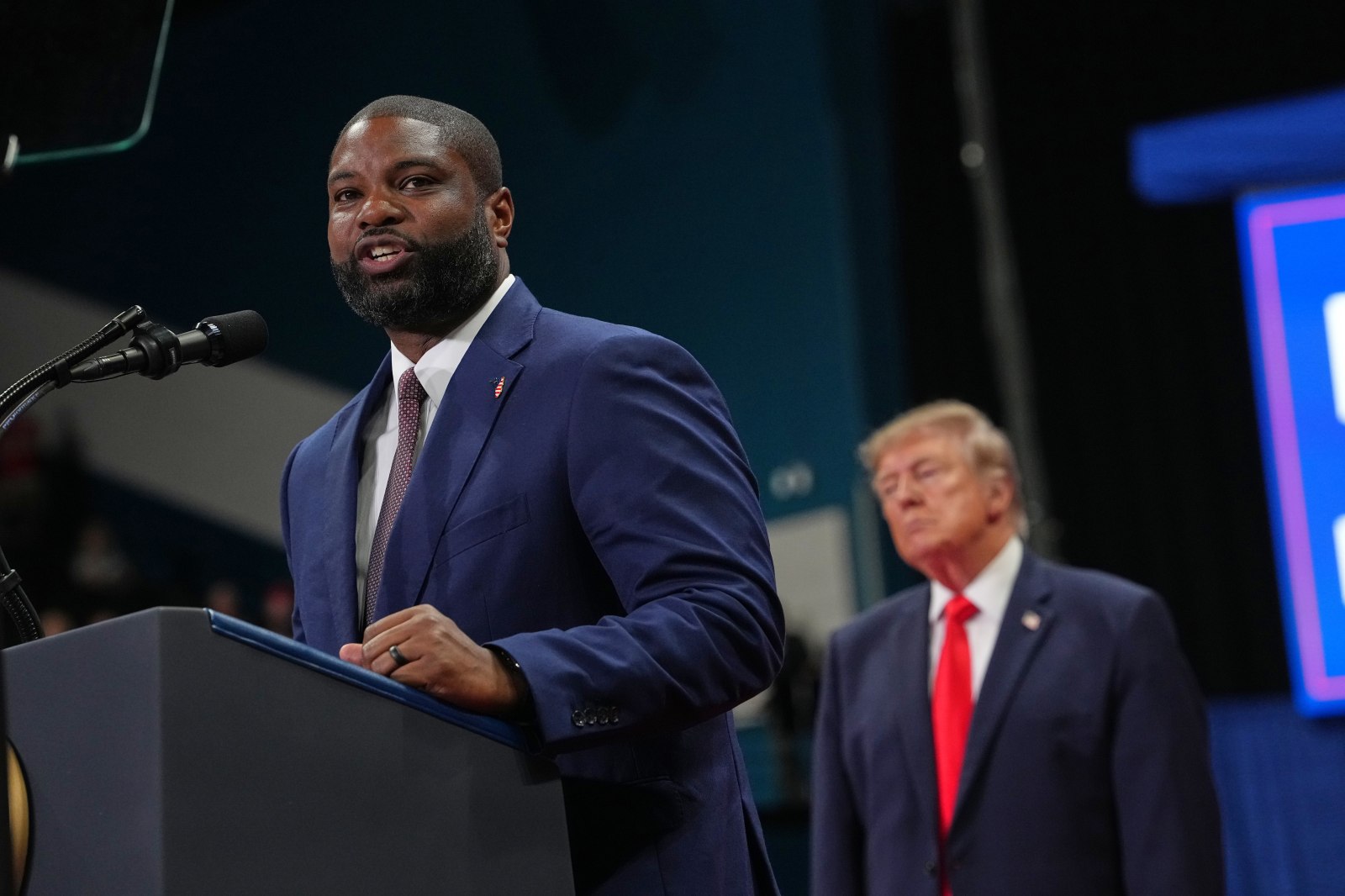
Byron Donalds, Republican congressman and incoming Florida governor, spoke about the importance of future hopefuls in 2028 forming their own political coalitions instead of attempting to replicate those of past administrations. “To be blunt, what I’ve observed in politics, it’s very hard for somebody to try to recreate the previous person’s coalition,” Donalds remarked during a conversation at the National Governors Association’s New Governors Leadership Forum.
Donalds makes history as the first Black governor elected in Florida. His candidacy received endorsements from President Donald Trump and Florida Governor Ron DeSantis after the primary. Following heavy midterm losses for Republicans that saw them lose majorities in both the House and Senate, speculation is rife about who will succeed the MAGA movement once Trump exits office.
Ron DeSantis’s media appearances post-midterms have fueled interest in his potential White House ambitions. When CNN’s Jake Tapper queried him about a possible 2028 run, DeSantis responded by saying he had no current plans. Other names in the Republican party like Vice President JD Vance, Secretary of State Marco Rubio, Senator Ted Cruz, and former Virginia Governor Glenn Youngkin have been probed about their intentions for 2028.
On the Democratic side, inquiries have been made to figures such as Representative Alexandria Ocasio-Cortez, California Governor Gavin Newsom, and former Vice President Kamala Harris about their political futures.
Whoever the next person is going to be, they’re going to have to redefine and reshape the electorate about what their supportive coalition is.
Donald reiterated this sentiment by advising potential candidates to define themselves distinctly and not emulate predecessors. His statement was aimed at fostering unique political identities.
Post-midterm, Trump administration officials considered factors like ending conflict with Iran, inflation focus, American relations with Israel, and an America-first approach as areas affecting the results. Trump acknowledged conversations with Vance about 2028 were premature, stating, “We’ll see what happens. … You don’t know who’s talking about running. … Maybe he won’t run, I don’t know who’s gonna run.” Vance indicated he expected an endorsement from Trump if he pursued the campaign but confirmed no discussion had yet occurred.
Donalds ruled out any ambitions for a 2028 candidacy, affirming he is “absolutely” not considering it. He emphasized his commitment to the governorship, saying, “I take this job very seriously. I am not looking at another one.”
Craig Agranoff, a political professor at Florida Atlantic University, noted Donalds’s comments highlight core political truths about coalition-building being inherently personal to political figures, similar to past presidents like Trump and Obama. Agranoff explained, “Coalitions are personal. Trump’s is built around him. Obama’s was built around him.” He added that Donalds’s decision to refuse a 2028 run is practical given his new role in Florida.
Prediction markets show 33 percent odds for Vance winning the GOP nomination on Kalshi, while Rubio has 22 percent and DeSantis 16 percent. Polymarket lists Vance with similar probabilities, Rubio at 21 percent, and DeSantis at 15 percent. Other potential nominees, such as Cruz, Youngkin, and Congressman Thomas Massie, have lower percentages.