
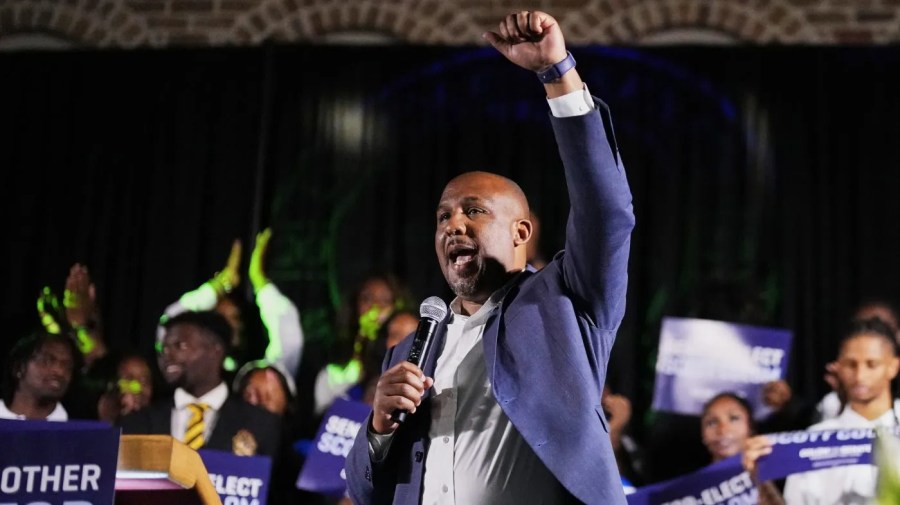
The newly elected House freshmen are eager to impact Congress with a focus on significant reforms. Just weeks after their election, these House Democrats are pushing to prioritize reversing Medicaid cuts and prohibiting members from trading stocks. This initiative comes within one of the party’s largest congressional majorities in recent times.
These incoming Democrats, with diverse backgrounds including roles as a smokejumper, mayor, state lawmaker, and emergency nurse, aim to cultivate a culture shift in Washington, D.C. They seek to make it more representative of those who elected them while promoting bipartisanship.
“I want to see, frankly, more of what I am happy to see in our freshman class, like just normal working people who are in the halls here,”Rep.-elect Sam Forstag (D-Mont.), a smokejumper and union leader, remarked.“It is far too rare a thing for a working-class person to make it up here nowadays, and that is a fundamental issue of representation, as I see it.”
The new Democratic class enters at a time when the party holds the largest majority since at least 2008, with the potential to rival numbers from the 1990s. In contrast, the working-class, which constitutes over half of the American labor force, represents only 2% of Congress. Wealthier individuals have historically dominated Congress, with a majority being millionaires since 2014.
The challenges of running for Congress are particularly daunting for working-class candidates. Nicholas Carnes, a public policy professor at Duke University, highlighted the difficulties faced by these individuals, including job security and financial constraints. This reality often deters working-class individuals from pursuing political careers, leading to a predominance of white-collar candidates in such races.
Rep.-elect Matt Little (D-Minn.) noted that the focus on fundraising was unexpected, with much of campaign time dedicated to soliciting donations. “You can’t accurately represent people if all you do all day is call people that can give you $1,000 or more,”
he commented.
Efforts like the New Jersey AFL-CIO’s “Labor Candidates School” aim to equip working-class individuals with the tools necessary for political campaigns. Recommendations for improvement also include seed money programs and political scholarships.
This year’s midterms have seen a historically diverse candidate roster. Among the changes, Abdul El-Sayed (D-Mich.) becomes the first Muslim American elected to the Senate, and Peggy Flanagan (D-Minn.) will be the first Native American woman in the Senate.
The new House freshmen are exploring various approaches to reform the culture in Congress. Rep.-elect Zach Dembo (D-Ky.) organized a bipartisanship mixer to encourage cross-party conversations. Other members emphasize maintaining consistency with their campaign platforms while in office.
Some initiatives focus on breaking traditional norms, such as relaxed dress codes, while promoting compassion during political discussions to ensure that debates retain humanity and decency.
On The Ballot is written by Julia Mueller and Caroline Vakil. For inquiries, reach them on X or via email.
Campaign Insights:
The Colom campaign in Mississippi, led by Sen.-elect Scott Colom and his team, garnered significant attention through a series of ads challenging opponent Cindy Hyde-Smith on issues like beef prices. The campaign relied on innovative ad strategies and notable support from figures like Symone Sanders and Sen. Angela Alsobrooks.
The creative team, led by Andrew Colom, employed strategies reminiscent of advertising in “Mad Men” to resonate with voters effectively. Despite initial skepticism from consultants, their approach was instrumental in reshaping traditional campaign methods.