
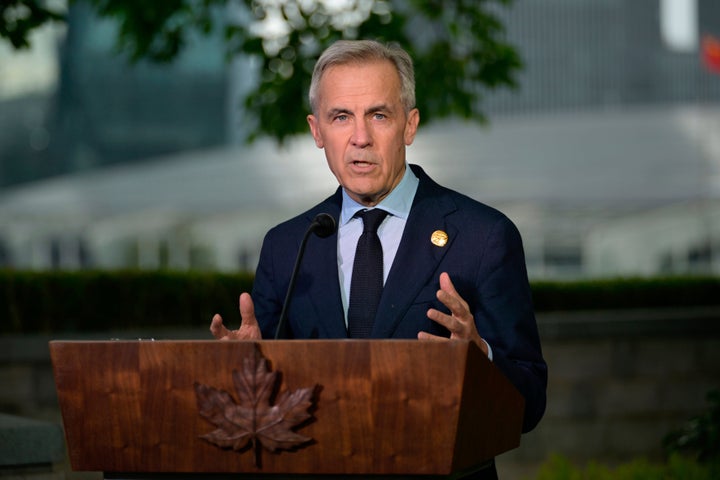
Canadian Prime Minister Mark Carney stated that increasing trade ties between Canada and China do not rank high on U.S. President Donald Trump’s list of concerns. Canada exports mainly commodities like canola, pork, and seafood to China, not advanced technologies such as semiconductors.
During a news conference in Shenzhen, ahead of the Asia-Pacific Economic Cooperation (APEC) leaders’ summit, Carney said President Trump showed interest in understanding Canada’s position and future plans with China. “In his hierarchy of issues, it’s not the top issue at all,” Carney remarked.
His comments came amidst criticism from White House trade adviser Peter Navarro, who expressed concern over Canada’s willingness to foster closer economic ties with Beijing. This includes potential collaboration with Chinese automakers.
Despite one of the world’s largest trading relationships between Canada and the U.S., recent tariffs have strained ties. Washington imposed 50% tariffs on approximately $20 billion in Canadian goods after negotiations failed in August, prompting Ottawa to seek other markets and retaliate.
Carney mentioned plans to meet U.S. President Trump in Shenzhen to discuss bilateral trade and progress toward a mutually beneficial deal. Although prioritizing U.S. negotiations, Carney acknowledged that the outcome could influence whether Canada explores options with European, Chinese, or Japanese automakers.
On the eve of the APEC summit, Carney and Chinese President Xi Jinping reached an agreement on further tariff cuts. China will offer relief on Canadian exports valued at about 400 million Canadian dollars ($280 million), including frozen pork, fish, and seafood. In exchange, Canada will extend exemptions for certain Chinese steel and aluminum products for two years.
Carney emphasized that Canada’s trade relations with China are unlike the complex U.S.-China relationship. Canada focuses on exporting essential commodities rather than cutting-edge technology, describing industries like liquefied natural gas and oil as important.
Navarro’s criticism followed Carney’s suggestion that Canada might consider Chinese automakers if trade talks with Washington don’t maintain the North American auto industry. “Are you threatening to play China off the U.S.? This is offensive in the extreme,” Navarro wrote on X. “You should be far more worried China is going to eat Canada alive.”
Associated Press writer Rob Gillies in Toronto contributed to this report.