
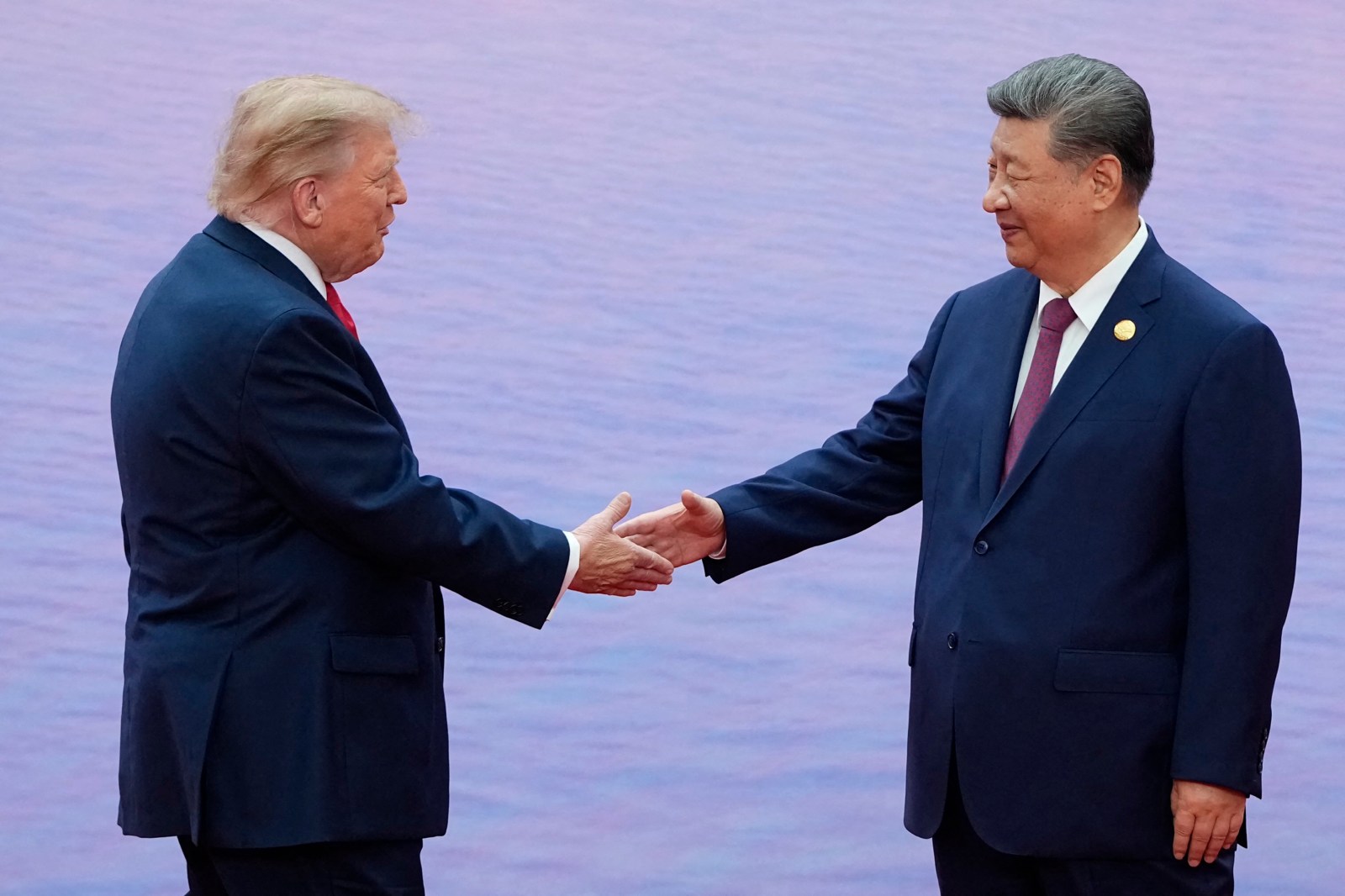
President Donald Trump arrived in China to hold summit discussions with Chinese President Xi Jinping. The focus was on regional trade agreements, but a significant long-term goal for his administration is reducing reliance on Chinese minerals. This involves securing domestic supplies of critical minerals.
A recent U.S. Geological Survey (USGS) report highlights China’s leading role in producing key minerals essential for national defense, semiconductor manufacturing, artificial intelligence infrastructure, and advanced batteries. The World Minerals Outlook projects the U.S. production of eight critical minerals by 2030: antimony, copper, graphite, niobium, potash, silicon, silver, and tungsten. While some growth in U.S. production is expected, China remains the leading supplier of key commodities.
Importance of Critical Minerals
These minerals are vital for industries crucial to economic and national security. The U.S. imports over half of its annual consumption of all eight minerals. Seven are used in defense production and advanced technologies.
According to the report, China produces about 70% of global natural graphite, 70% of tungsten, and 80% of silicon metal capacity. China also exports significant amounts of antimony, graphite, and tungsten.
“In the 21st century, mineral security is national security,”
Assistant Secretary of the Interior Andrea Travnicek emphasized the importance of securing these resources. China’s position as a top rare earths miner has been used as leverage, causing disruptions for U.S. manufacturers such as Ford Motor due to Chinese export restrictions.
Challenges and Actions
Braden Harker of the USGS National Minerals Information Center cautioned against concentrated supply chains, which can lead to vulnerabilities. World Minerals Outlook highlighted the role of materials like copper and silver in electronics and infrastructure.
Trump scheduled a meeting with Xi amid ongoing competition between the U.S. and China over trade, technology, and supply chains. China has tightened export controls on key minerals, and tungsten prices outside China have more than doubled.
Harker identified antimony, graphite, and tungsten as critical minerals in a 2025 supply-chain risk analysis. The summit between Trump and Xi could address trade agreements affecting these exports.
Prospects for U.S. Mineral Independence
The USGS report projects increased U.S. production capacity for certain minerals through 2030. Harker remarked that supply expansion relies heavily on economic factors. Colin Williams stated that domestic resources exist for all eight critical commodities, with ongoing efforts to identify mineral deposits for U.S. production.
Rich Nolan of the National Mining Association criticized the lengthy U.S. mine development timeline, averaging 29 years. According to Nolan, reducing dependence on China requires acknowledging the challenge’s scale and persisting in addressing it.
Future Outlook
The report forecasts a 20% growth in natural graphite production globally by 2030, the largest among the eight minerals. Increases in potash and other minerals are also anticipated. Harker highlighted that significant mining projects often have long timelines.
Andrew Stewart, lead author of the World Minerals Outlook, noted the importance of identifying production capacity changes to guide policymakers and industries in managing supply risks and investment decisions.