
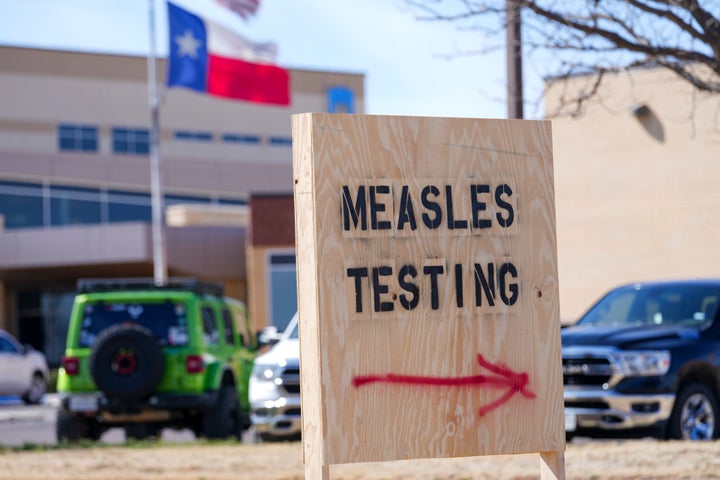
The United States has lost its measles-free status, as confirmed by international health officials. This development occurs as the highly contagious virus spreads at its steepest rate in over 30 years, primarily among the unvaccinated population. Alongside the U.S., Mexico and Bolivia have also relinquished their measles-elimination status, a devastating turn for public health efforts.
The Pan American Health Organization’s (PAHO) announcement is mostly symbolic but represents a significant decline from decades of medical advancements that nearly eradicated the disease. The resurgence of measles might signal a return to significant health challenges if vaccination rates continue to fall.
Rising Measles Cases in the Americas
Starting in 2024, measles began to spread throughout the Americas. The outbreaks originated in Mennonite communities with later spread to other low vaccination areas. Canada lost its measles-free status last year for the first time since 1998.
Measles is considered eliminated when it is no longer locally transmitted for 12 months. Tuesday’s announcement from PAHO underlines diminishing public health readiness. Vaccination rates are declining globally, making measles one of the first diseases likely to re-emerge.
It can be the canary in the coal mine to other things,
said Dr. Susan Kansagra from the Association of State and Territorial Health Officials.
Impact of Declining Vaccination Rates
To prevent measles outbreaks, a 95% community vaccination rate is crucial. However, as fewer parents opt to vaccinate their children and doubts about vaccines grow, the virus thrives. Nearly every state in the U.S. has reported measles cases this year.
In recent years, the U.S. faced over 7,000 cases and 11 deaths. Most cases were among those unvaccinated or who did not report vaccination status. Of the infected, over 10% required hospitalization. The illness begins with fever and a rash, and can lead to severe complications, especially in children and adults over 30.
This year, the U.S. experienced its highest measles death count in over 30 years, with ten deaths reported, including at least five children. The U.S. is currently enduring its worst year of measles since 1991.
Significant Outbreaks in Recent Years
The country has seen substantial outbreaks in Texas, Utah, South Carolina, and Pennsylvania since 2025. This year, over 5,400 cases have been reported, driven primarily by an outbreak in Pennsylvania. Experts believe actual numbers may be higher than recorded.
Criticism of U.S. Response
U.S. Health Secretary Robert F. Kennedy Jr., lacking formal medical training, has been a prominent anti-vaccine voice. He and other leaders claim falling vaccination rates predated current administration policies, calling measles an international, not an American phenomenon.
Despite some federal actions, like the CDC’s $100 million allocation for measles responses, critics find these efforts inadequate. Experts argue for a louder federal advocacy for vaccination. Professor Noel Brewer criticized the lackluster federal response, suggesting it compromises public health efforts.
Path Forward
The Americas were declared measles-free in 2016 after successful vaccination campaigns, which saved approximately 6.2 million lives between 2000 and 2023. Now, North America must work to regain its measles-free status. Countries like Brazil and the United Kingdom have previously lost and regained this status.
The situation urges stronger vaccination drives and robust public health strategies to secure future gains against the spread of preventable diseases.
The Associated Press Health and Science Department created this content, with support from the Howard Hughes Medical Institute and the Robert Wood Johnson Foundation.