
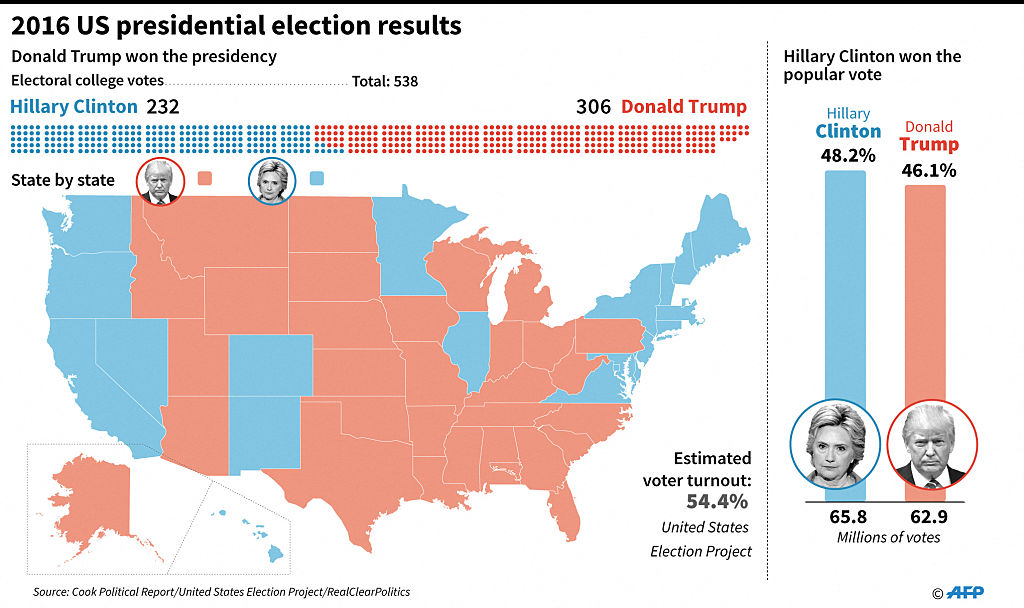
Following recent electoral victories, Democrats possess a pathway to potentially nullifying the Electoral College, a system that has cost the party two presidential elections this century. Officially abolishing the Electoral College would require a constitutional amendment. However, an existing state agreement, the National Popular Vote Interstate Compact, offers a means to effectively neutralize it.
This compact requires enough states to pledge their electoral votes to the presidential candidate who wins the national popular vote. To go into effect, member states must collectively represent at least 270 electoral votes, the minimum needed to secure the presidency.
Understanding the Compact
The National Popular Vote Interstate Compact commits states to award their electoral votes to the national popular vote winner. This approach contrasts with the current “winner-take-all” system, where nearly every state gives all its electors to the state popular vote winner. As a result, candidates can secure the presidency despite losing the nationwide popular vote. Notable instances include George W. Bush in 2000 and Donald Trump in 2016.
Since 2000, 18 Democratic-led states, along with Washington D.C., have joined the compact, totaling 222 electoral votes. The proposal emerged after the 2000 election, inspired by work from Yale’s Akhil Amar and the University of California, Davis’ Vikram Amar.
For a state to join, it must enact legislation passed by its legislature and signed by the governor, or override a gubernatorial veto with a supermajority.
Potential Impact of Midterm Victories
Democratic gains in state-level elections this year could bolster efforts to bypass the Electoral College. Democrats now hold trifectas in Pennsylvania, Michigan, Arizona, Wisconsin, and Nevada, collectively representing 61 electoral votes. Inclusion of these states in the compact would exceed the 270-vote requirement. Governor Josh Shapiro of Pennsylvania has expressed support, while Michigan’s Darrin Camilleri acknowledges potential GOP legal challenges.
Constitutional Questions
The compact may provoke legal challenges. Some legal experts, like Harvard’s Lawrence Lessig, argue it aligns with state powers per the Constitution. Others, including Jennifer Hendricks from the University of Colorado Boulder, cite the “compact clause” on potential agreements that could undermine federal authority. Yet, these concerns may not apply here since states control their electoral processes.
Electoral Implications
If enacted, the compact would make the national popular vote decisive, significantly altering presidential campaigns. Under the present system, candidates typically focus on swing states, a dynamic Lessig labels unjust. A popular vote system would require nationwide campaigning.
Yale’s Akhil Amar notes the appeal of the system’s one-person-one-vote principle but highlights the challenges in implementation. Scenarios such as states gaming the system by adjusting voter eligibility and the potential reluctance of non-compact states to recount their votes could pose challenges.
Both Akhil and Vikram Amar emphasize bipartisan support as crucial, suggesting delaying implementation might mitigate partisan concerns and potentially pave the way for an eventual constitutional amendment. This could lead to the abolishment of the Electoral College if the compact functions well over several election cycles.