
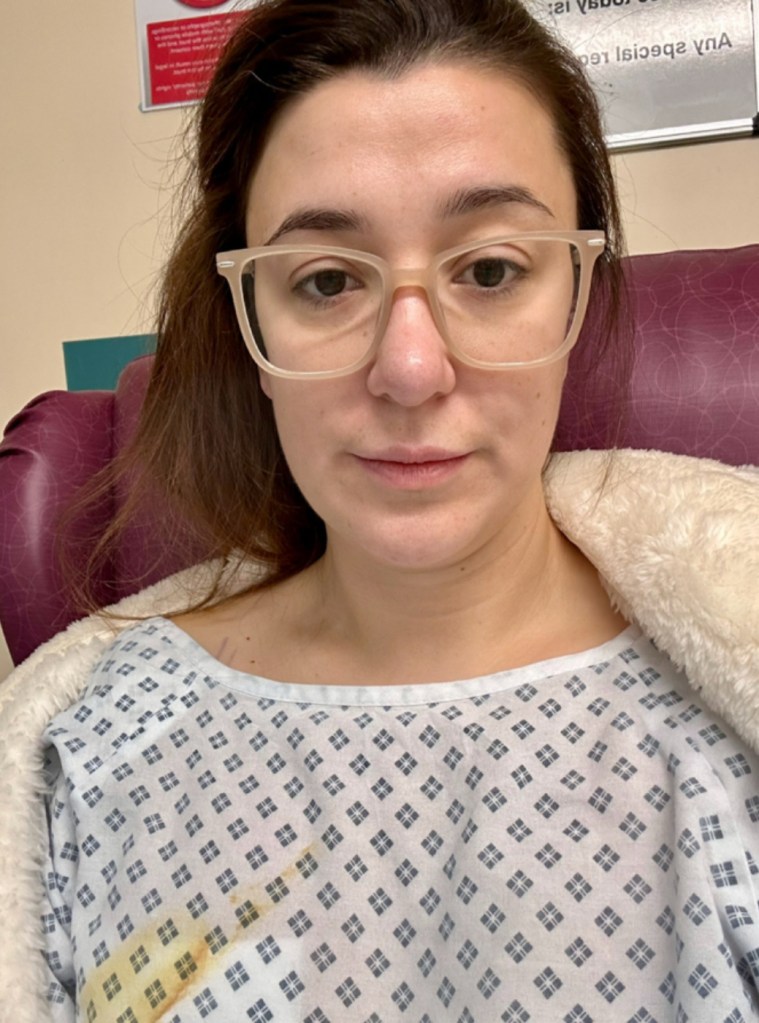
Maxine White, at just 34, discovered a lump that turned out to be breast cancer. She credits a period-tracking app for this crucial find. Using Natural Cycles, an app designed for planning or preventing pregnancy, she followed prompts to check her breasts. The app bases its suggestions on daily temperature readings and manual logging of symptoms.
Maxine shared her story, noting how the app’s reminder to self-check at a time with lower pain thresholds helped her discover the lump. Despite initial skepticism from her doctor, her persistence led to an ultrasound that confirmed the presence of cancer. The initial diagnosis was stage 2, later adjusted to stage 1, and it hadn’t spread to her lymph nodes. A lumpectomy followed, with surgeons using a radioactive seed to locate the small tumor.
Maxine avoided chemotherapy thanks to early detection, although she required radiation. She expressed immense relief at this outcome and compared her feelings to dancing with joy. The next steps involved taking tamoxifen, a hormone-blocking drug, while she also opted to freeze her eggs due to potential risks to a fetus.
Period-tracking apps play diverse roles, often predicting periods and managing hormonal changes. However, they also help some discover health issues sooner.
Research from Ohio State University indicates nearly half of American women use cycle-tracking apps. While most users aim for cycle predictions, some, like Grace Lemire from Florida, uncover more significant health insights. Grace, experiencing severe pain since 15, relied on Natural Cycles and an Oura ring for symptom tracking. Presenting her well-documented symptoms to doctors led to an endometriosis diagnosis after 12 years of suffering.
For women like Emmi Stead, who lives in the UK and has adenomyosis, period-tracking technology offers crucial support. Her Oura ring provides insights into menstrual cycle phases, alleviating anxiety and aiding symptom management. Despite initial doubts about its usefulness, it proved indispensable for identifying pain patterns linked to her cycle.
Dr. Stephanie Kuku, a former OB/GYN and executive at Conceivable Life Sciences, highlights how these apps empower patients by linking health symptoms with menstrual cycles. Although apps provide insight, medical consultation remains vital, especially for chronic conditions like adenomyosis and endometriosis. Tracking apps offer a complementary tool, enabling richer doctor-patient dialogues.
Professor Diana Laird from UCSF discusses how temperature data from wearables aids personal health insights but cautions against relying solely on technology. While data helps understanding connections between lifestyle factors and cycles, professional medical advice remains crucial.
Emmi emphasizes that informed cycle tracking improves mental control, helping her manage symptoms better. The tracking arms her with data, allowing her to prepare for and handle health challenges more effectively.