
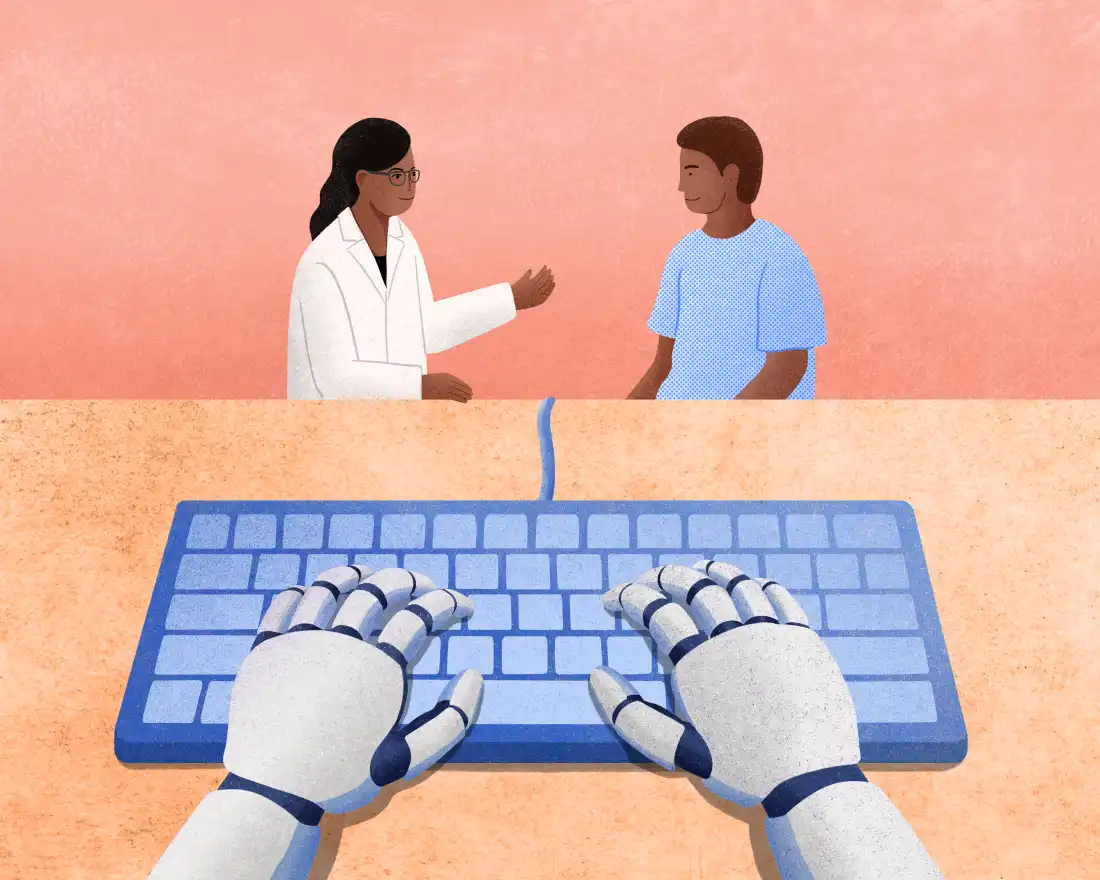
Dr. Mara Gordon, a family physician in Camden, N.J., regularly responds to reader health inquiries. Here is her response to a question about AI scribes:
My doctor recently started using an AI scribe during our visits to help with medical records. I agreed initially, but I’m now concerned about privacy. Should I be worried about AI listening to my private medical discussions?
AI scribes are increasingly popular in the medical field. Physicians use them to record notes in various settings, including gynecology and emergency rooms. Personally, I’ve embraced this technology in my practice. I use an app on my phone that captures the conversation with a patient and creates a preliminary summary for their medical record. This saves time and allows me to focus more on my patients, making eye contact rather than being preoccupied with a computer screen.
However, I understand concerns about privacy and the potential impact on the doctor-patient relationship. I also share worries regarding pressure from health systems to use any time saved for seeing more patients and the fear that AI might eventually replace human jobs.
Functionality of AI Scribes
During primary care visits, I inform patients about AI scribes and seek their consent before use. With their approval, I use an app to record the session. The technology, known as automatic speech recognition, distinguishes between voices and transcribes the conversation. A specialized language model then generates a medical note, reflecting the patient’s account, physical exams, and medical decisions.
Types of AI Scribe Software
There’s a variety on the market, ranging from integrated electronic medical record products to apps on a smartphone. These typically use mobile microphones to capture discussions, though desktop and other devices are also utilized. I use my phone for this purpose, ensuring notifications are disabled during use to avoid disruptions.
Privacy and Data Security
While the recordings are made on my phone, they aren’t stored there. Instead, they are uploaded to a cloud service, designed to comply with HIPAA regulations to ensure data privacy. This compliance means that the software company is responsible for securing the data through encryption and access controls.
Potential Errors with AI Scribes
AI scribes can make mistakes. For instance, incorrect interpretations of patient conditions or demographics can occur. The technology may misinterpret key statements, which could have serious medical implications. Dr. Eileen Kim notes that AI tools may contribute to errors, especially if not properly reviewed, leading to misinformation in patient records.
As a physician, I am accountable for the AI-generated notes. I thoroughly review and often adjust these notes for accuracy and clarity before finalizing them in a patient’s record.
Health Equity and Language Limitations
AI scribes are often limited to English, raising concerns about equal access and widening health disparities. Patients might feel more at ease discussing sensitive topics when doctors are more attentive, but fears of AI surveillance could suppress open communication. Researchers view the recordings as valuable for assessing AI software quality and studying doctor-patient interactions. However, these are typically not used for research unless part of a designated study.
Options for Patients
Patients can opt out of using AI scribes, though some AI technology in healthcare is omnipresent in decision-making tools and risk calculators. Dr. Kim asserts that AI’s integration into healthcare makes complete avoidance difficult without compromising care quality.
AI’s Role in Medicine’s Future
There’s debate about AI potentially replacing doctors. Dr. Kim and I believe human insight is vital. While AI might transform care delivery positively, the essence of medical practice remains in the human connection to patients.
Dr. Mara Gordon shares more insights in her Substack newsletter, ‘Your Doctor Friend.’