
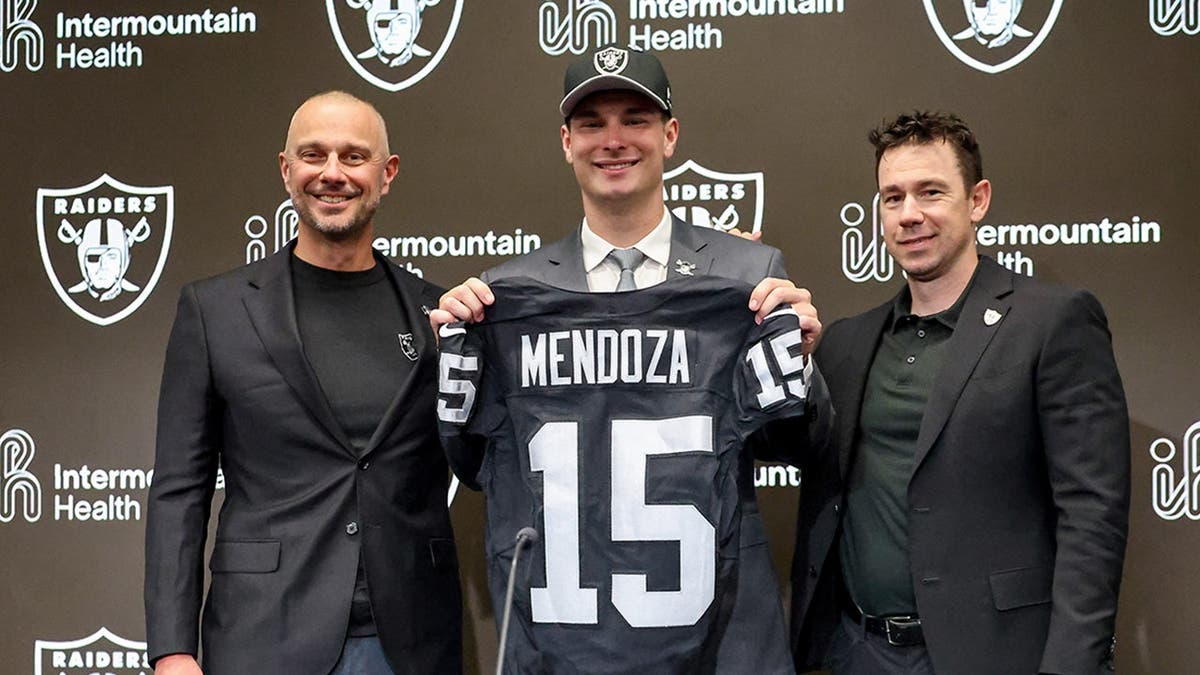
The NFL finds itself navigating new territory by embracing diverse cultural expressions. This comes as Fernando Mendoza steps into the spotlight as a starting quarterback. Emphasizing inclusivity, the league highlights its support for Spanish-speaking fans and players. However, the approach raises questions about authenticity and intention.
Born in Cuba, I have been reporting on the NFL for 36 years. Spanish is my first language, yet my work unfolds in English, reflecting the predominant language in the United States and NFL locker rooms. The recent decision to engage in Spanish outreach due to Mendoza’s Cuban roots signals a shift.
During a recent game, the Las Vegas Raiders showcased their Spanish-speaking attempts when Mendoza, mic’d up, conversed with teammates. At one point, teammate Aidan O’Connell urged him to “respira,” meaning breathe in Spanish. These moments, captured and shared on social media, suggest the NFL’s effort to market itself globally.
It’s a gesture that feels calculated rather than genuine.
Mendoza, of American upbringing, naturally communicates in English. The NFL’s selective cultural acknowledgment appears inconsistent, particularly for players of various ethnicities. This inconsistency becomes evident when the league’s approach seems more superficial than substantial, peppering random Spanish words that sometimes lack contextual and linguistic accuracy.
A coach’s use of the phrase, “Tu eres chingon,” meaning “You are awesome” in Mexican Spanish, underscores these missteps. The Spanish language varies across regions, comparable to the diverse accents and dialects in English-speaking locales.
The NFL’s effort highlights a gap in understanding Hispanic diversity. While nodding to Mendoza’s heritage might seem appreciative, history reminds us of pioneers like Tom Flores, the first Raiders quarterback with Hispanic roots, who led the team to Super Bowl victories without fanfare about his ethnicity.
In this context, the NFL’s actions serve more as virtue signaling than genuine cultural engagement. The league’s attempt to acknowledge Hispanic heritage, though well-intentioned, invites scrutiny over its execution and raises broader questions about meaningful cultural integration.