
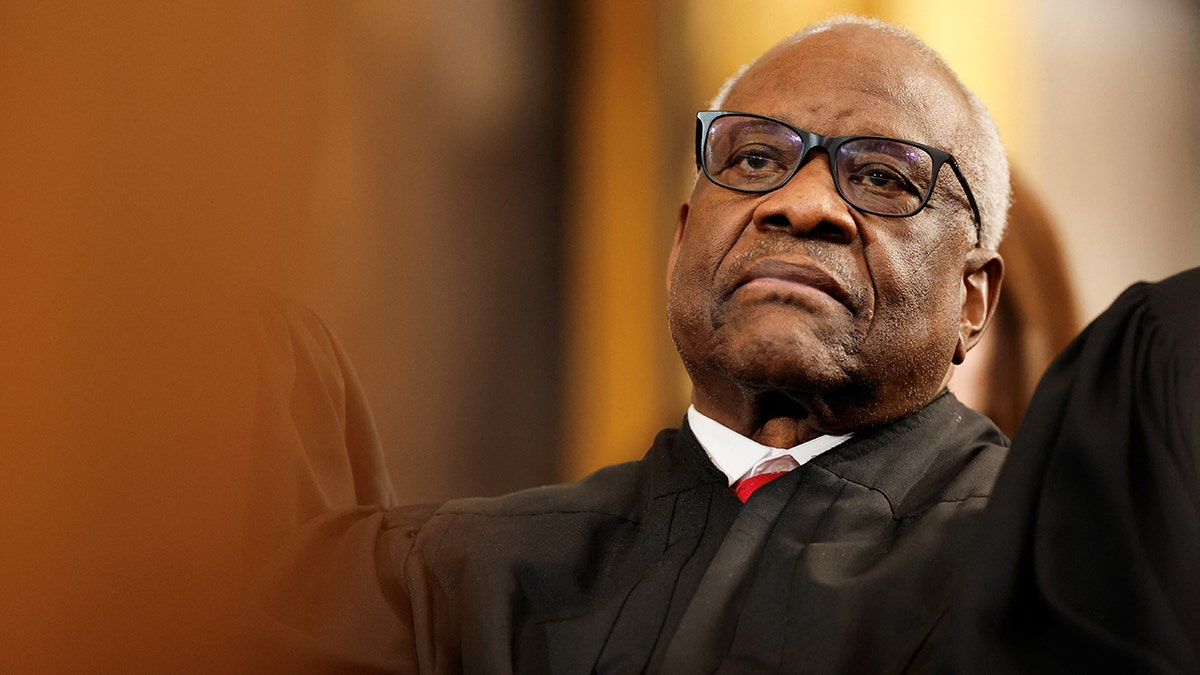
Justice Clarence Thomas has raised concerns about the Supreme Court’s decision not to review a challenge to a California law, which he believes may allow states to force private citizens to express certain views. The case involved a California doctor who claimed the state mandated her to present opinions she disagreed with in a required course.
The Supreme Court chose not to hear the case, which California mandates that all licensed physicians complete 50 hours of state-approved continuing education every two years. These courses must include content on implicit bias, influencing physicians’ treatment decisions and health outcomes, or strategies to address these biases.
Justice Thomas, with Justice Samuel Alito, dissented from the court’s decision. Thomas emphasized the importance of First Amendment rights in cases where private individuals are compelled to communicate government viewpoints.
“When the government requires private speakers to express its views, the First Amendment applies,” Thomas argued. “A state cannot avoid First Amendment scrutiny by regulating its way out.”
Dr. Azadeh Khatibi, who opposes including implicit bias discussions in her courses, sued alongside Do No Harm, claiming that the requirement violates the First Amendment. Khatibi’s legal team contends that implicit bias is not central to her course topics and that compliance undermines course quality.
California responded by stating that instructors must include implicit bias discussions but aren’t obliged to endorse the views. They argued that instructors can criticize the theory and inform attendees of its state-mandated inclusion. The Ninth Circuit previously ruled that these courses represent government speech, making them exempt from First Amendment scrutiny.
Justice Thomas contested this, stating that the requirement forces instructors to affirm the state’s view on implicit bias and its health outcome disparities.
“California’s stance leaves no room but to affirm its perspective on implicit bias,” Thomas noted. “The precedent set extends to other professions licensed by the state, risking encroachment on free speech.”
Even though Justice Neil Gorsuch also dissented, he did not join Alito and Thomas’ argument. The Supreme Court’s decision leaves the Ninth Circuit ruling in place, leaving the question of whether California’s law violates the First Amendment unresolved.