
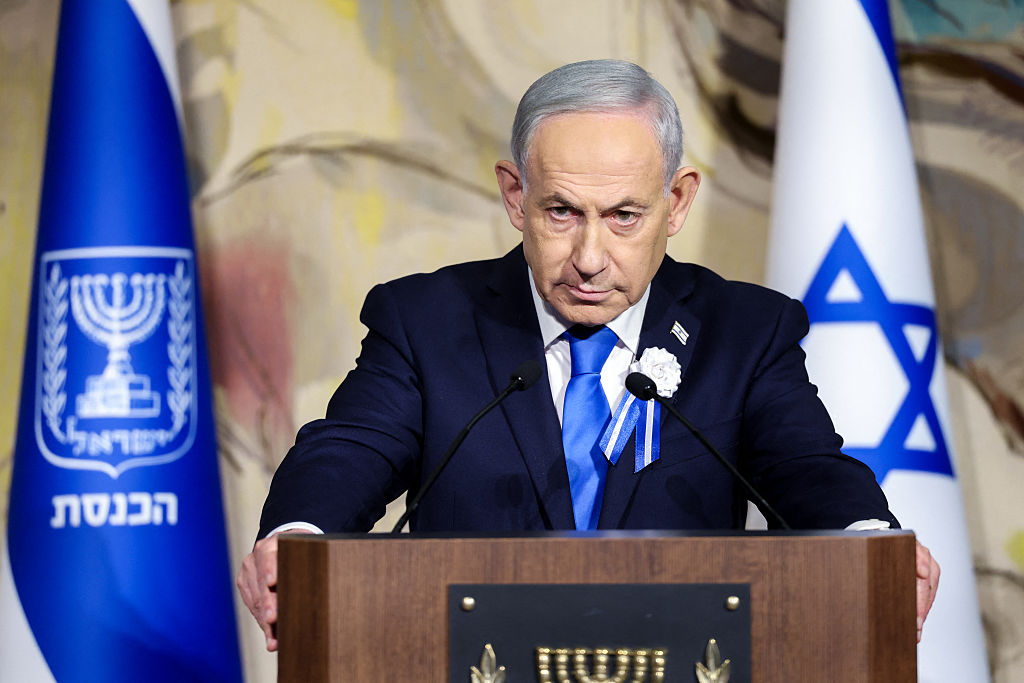
Israeli President Isaac Herzog has tasked Gadi Eisenkot, former military chief and leader of the Yashar party, with forming the next government. This step is essential in the process to determine Israel’s next Prime Minister, a potentially lengthy process that could keep Benjamin Netanyahu in power for now. Eisenkot has 28 days, with a potential 14-day extension, to establish a government that gains the Knesset’s confidence.
Once Eisenkot forms a government, the Knesset must vote within seven days. A successful confidence vote allows the new government to take office. Eisenkot faces the challenge of uniting diverse political parties to build a majority. Gaining their support essentially endorses him as Prime Minister. However, obstacles remain before he secures the required seats.
Election Outcomes
Last month’s elections left no party with the 61 seats needed for a majority in the 120-seat Knesset. This uncertainty continues as elections occur every four years, with the last on Oct. 27. An estimated 67,000 Israelis abroad returned to vote, as absentee voting is rare. Israelis vote for parties, not individuals, with seats allocated by vote percentage.
Despite Netanyahu’s low approval, his Likud party, along with far-right and ultra-Orthodox allies, won 53 seats. Eisenkot’s allied parties secured 48 seats, with Arab-led parties holding 19. No clear majority emerged, prompting coalition negotiations to gain the 61 seats required or fewer if some parties abstain.
Joining forces with both Arab-led parties could give Netanyahu or Eisenkot a majority. Alternatively, the rival blocs could unite for 101 seats but would need to agree on the Prime Minister role, a decision made before proposing a government to the Knesset. Parties can also negotiate separately; supporting roles such as the Knesset Speaker have already been assigned in anticipation of a new government.
Selection of Eisenkot
The presidency in Israel, mainly ceremonial, plays a pronounced role after elections. Herzog consults party leaders and picks the person likely to successfully form a coalition. Although Netanyahu’s party received the most votes, Herzog selected Eisenkot, endorsed by 67 Knesset members compared to Netanyahu’s 46 endorsements.
Herzog’s choice of Eisenkot indicates a belief in his potential to unite parties into a viable government. More voters supported anti-Netanyahu parties, making coalition building complex yet critical to forming a government.
Obstacles to Forming a Government
Securing cooperation from Arab-led parties for their 19 seats would aid Eisenkot. However, some supporting parties oppose this. Yair Golan alone backs a coalition with the Joint List and Ra’am, while others remain resistant. Historically, Arab-led parties have rarely joined coalitions, supporting governments from outside without formal membership.
Another option for Eisenkot involves ultra-Orthodox parties with 13 seats, but their opposition to mandatory military service for yeshiva students presents a challenge. Eisenkot insists on national service as a condition for coalition participation.
Netanyahu’s Potential Retention of Power
As Eisenkot forms a coalition, Netanyahu remains as head of the outgoing government, attempting to form his own coalition. If Eisenkot cannot create a coalition in time, Herzog may nominate another candidate or deem further attempts futile, initiating a parliamentary request for a Knesset member to attempt forming a government within 21 days.
If all attempts fail, new elections happen within 90 days, keeping Netanyahu as caretaker until a replacement arises. Israel faced this before, holding multiple elections between 2019 and 2022 amid governmental deadlock.
Failed coalition formation would prolong political uncertainty, unappealing to voters and lawmakers. For Netanyahu, convincing right-leaning members of Eisenkot’s supporting parties like Bennett and Lieberman may be key. Success in swaying their support over Arab-led cooperation could enable Netanyahu’s government.
The final decision rests more with leaders like Bennett and Lieberman than with Eisenkot or Netanyahu, hinging on the compromise they find acceptable.