
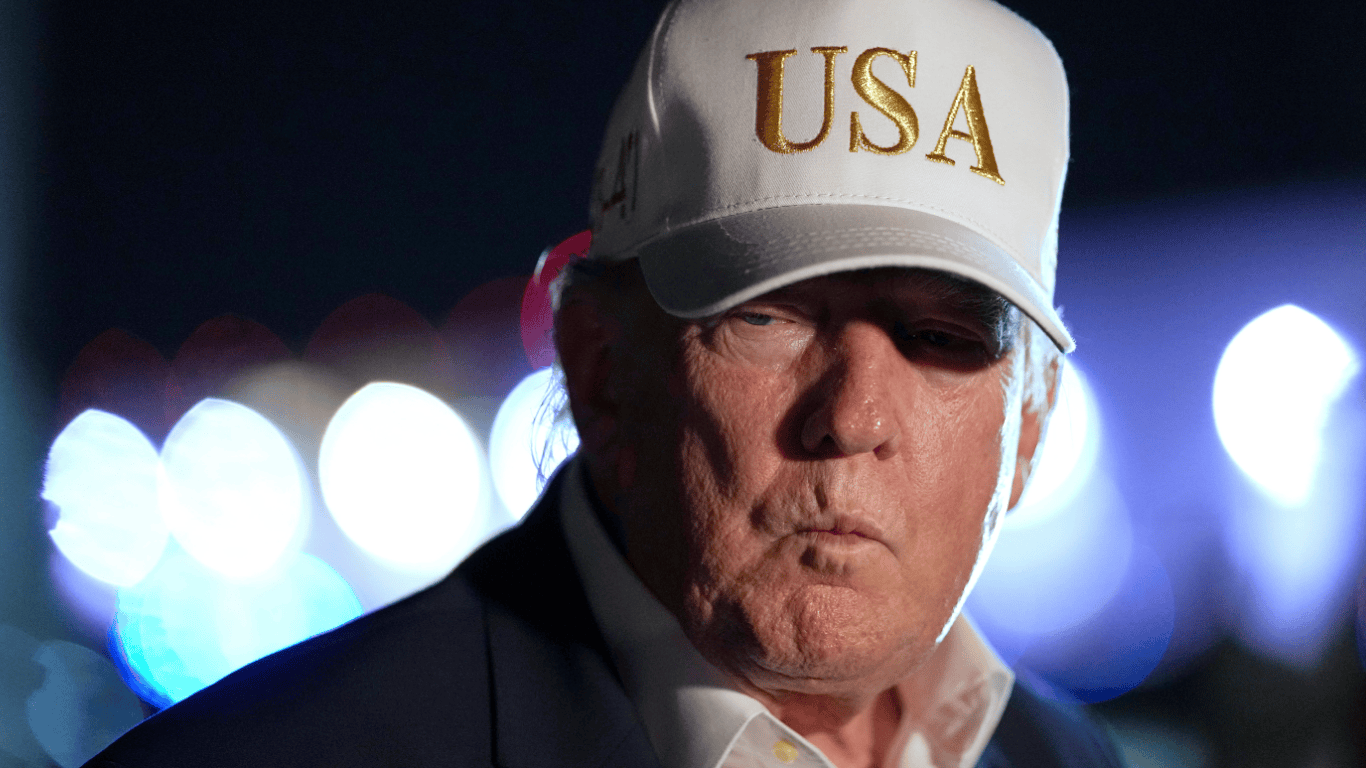
President Donald Trump is considering his options for the 2028 presidential race. In an interview, Trump did not commit to endorsing the next Republican candidate. He mentioned only one potential successor and suggested that he might refrain from participating in the race.
Trump’s Ambiguity on Endorsement
When asked whether he would endorse a candidate, Trump replied, “Probably, not necessarily.” The conversation, recorded at the White House and aired on CBS’ 60 Minutes, left both possibilities open. For ten years, Trump’s approval has been crucial for the Republican nomination, but his recent remarks have left the candidates uncertain.
Following a mixed performance in the midterms, Trump did not confirm whether he would offer his endorsement again. This leaves 2028 hopefuls wondering if his support could aid in the primaries but possibly hinder their chances in the general election. Trump’s notion that he might be “better off not getting involved” raises further questions about his future role in the race.
Potential Successors and Trump’s Remarks
When asked about potential candidates, Trump acknowledged having many reputable associates. After naming Secretary of State Marco Rubio as a possible successor, he stopped short of listing others. Trump said, “There are many others. And I’d rather not mention their names.” He emphasized his strong endorsement power despite not committing to any candidate.
Recently, Trump’s endorsements in Texas and South Carolina did not succeed in the elections. His endorsed candidate in Texas, Attorney General Ken Paxton, lost to Democrat James Talarico. In South Carolina, Trump-backed Senator Darline Graham was defeated by Democrat Annie Andrews. Trump stated he endorsed Graham in honor of her late brother and defended his choice regarding Texas, arguing that “Cornyn would have lost also.”
The Case of JD Vance
Vice President JD Vance was another figure mentioned in the discussion. Trump did not directly address Vance, even though the Vice President recently attributed midterm losses to the U.S. war with Iran. Vance had highlighted issues such as focusing on inflation and changing America’s relationship with Israel.
Trump revealed that Vance sought his advice before issuing his statement. Trump agreed with most of Vance’s analysis but emphasized his stance on Iran, asserting, “My answer is an emphatic yes,” regarding keeping Iran from obtaining nuclear weapons.
Current Polls and Predictions
Trump did not specify the “many others,” but polls provide insight into potential candidates. Prior to the election, polls placed Vance at 38 percent, followed by Rubio with 26 percent, and Florida Governor Ron DeSantis at 8 percent. Other senators Trump might have implied have minimal support.
Following recent events, prediction markets like Polymarket and Kalshi have adjusted their probabilities. Vance remains a strong contender but has seen a decline, while DeSantis gained traction. Markets predict a potential change in Rubio’s role, contrasting Trump’s prediction of his continued tenure.
Looking Forward
No Republican has officially declared their candidacy for 2028. Vance plans to decide post-midterms, and Rubio has indicated willingness to defer if Vance runs. This decision point has arrived, and the political landscape remains open.