
In 2015, a phone call alerted Dr. Tom Chiller to a serious problem. United Kingdom health officials were struggling with Candida auris at a London hospital. This new fungus resisted elimination efforts and spread quickly. Chiller, who led the U.S. CDC’s fungal-diseases branch, found it surprising and concerning.
Unusual Characteristics of Candida Auris
First identified in 2009 in Japan, Candida auris is unusual. Unlike other fungi, it survives at high temperatures and in salty environments, making areas like ears and armpits suitable for growth. It adheres to skin, hair, and hospital surfaces, rendering it difficult to eradicate and highly drug-resistant.
By 2015, only a few countries reported infections. But as Candida auris spread, understanding it became critical. A 2015 conference in Denver put the fungus at the forefront. Attendees realized the seriousness of the threat.
Global Proliferation and Data
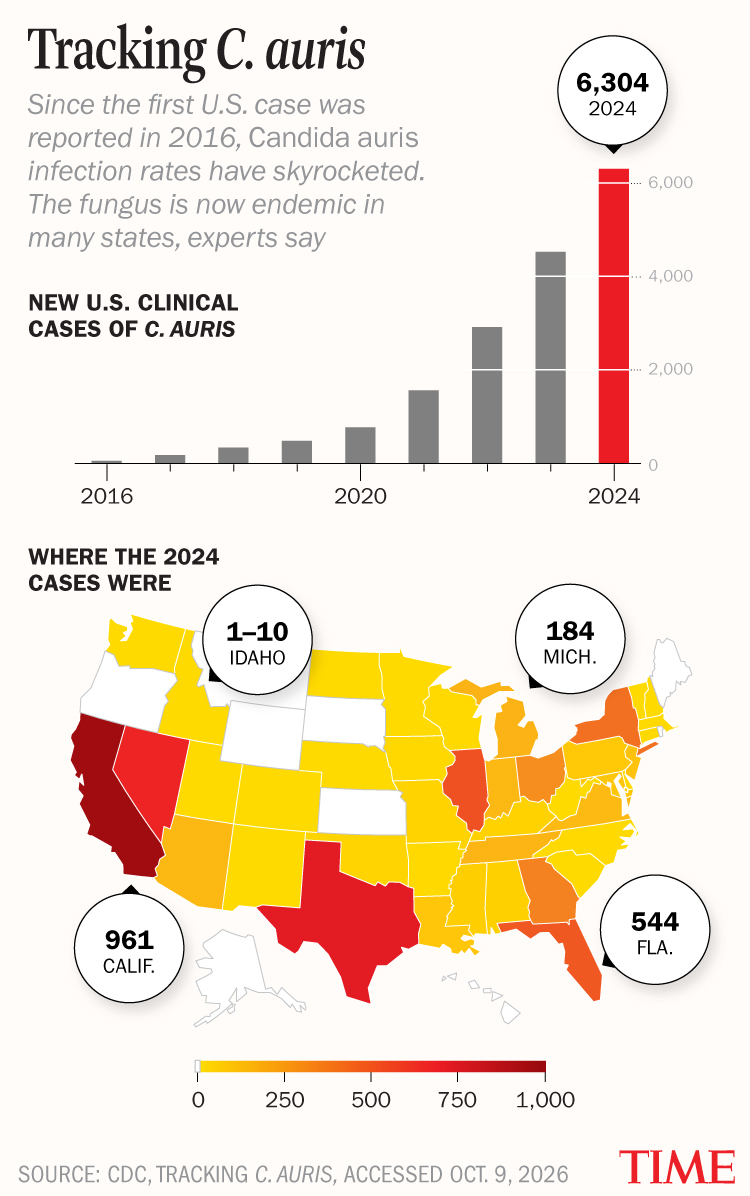
Candida auris has now affected tens of thousands worldwide in over 80 countries. In the U.S., the CDC listed it among top-priority drug-resistant pathogens. With over 3,000 cases in 2023 alone, the fatality rate can reach 60%.
This rise reflects broader trends. Climate change and human activities create favorable conditions for fungal pathogens. Global warming likely facilitated the emergence of Candida auris, while antifungal overuse has driven drug resistance.
The Fungal Threats Expanding
Fungi are ubiquitous but mostly harmless. However, rising temperatures are helping some adapt and pose new threats to humans. New fungal pathogens are arising, such as molds infecting previously healthy people.
Other fungi, like Histoplasma, are expanding geographically. Valley fever is now seen further from its traditional range, and ringworm species are becoming drug-resistant.
Challenges in Medicine and Treatment
Modern medicine has unintended consequences. Immunosuppressive drugs, while life-saving, increase susceptibility to fungal infections. Medical devices also raise infection risks. Candida auris infections are now reported among healthier patients in U.S. states like Texas and New York.
An example is Ryan Zwick, a healthy young nurse whose severe infection followed COVID-19 complications. He continues to need antifungal treatment to manage his condition, worrying about future drug resistance.
Persistent Progress and Advocacy
Despite advancements in diagnosis and treatment, the fight against fungal threats remains arduous. The CDC, under Dr. Chiller’s guidance, enhanced research and surveillance of fungal diseases, including the creation of a life-saving test for Cryptococcus.
Chiller advocates widely for fungal-disease awareness. Even post-CDC, he contributes through his role at IMMY and nonprofit boards. His efforts underscore the ongoing need to prioritize fungi in health agendas.
A Collective Responsibility
Misdiagnosis of fungal diseases remains a challenge. For example, valley fever often goes undiagnosed due to unreliable blood tests. Advances like a new urine test aim to improve detection.
Enhanced awareness and response to fungi are crucial. The scientific community must continue evolving strategies to combat these emerging health threats. Only through concerted global action can we effectively address the growing impact of fungi on human health.