
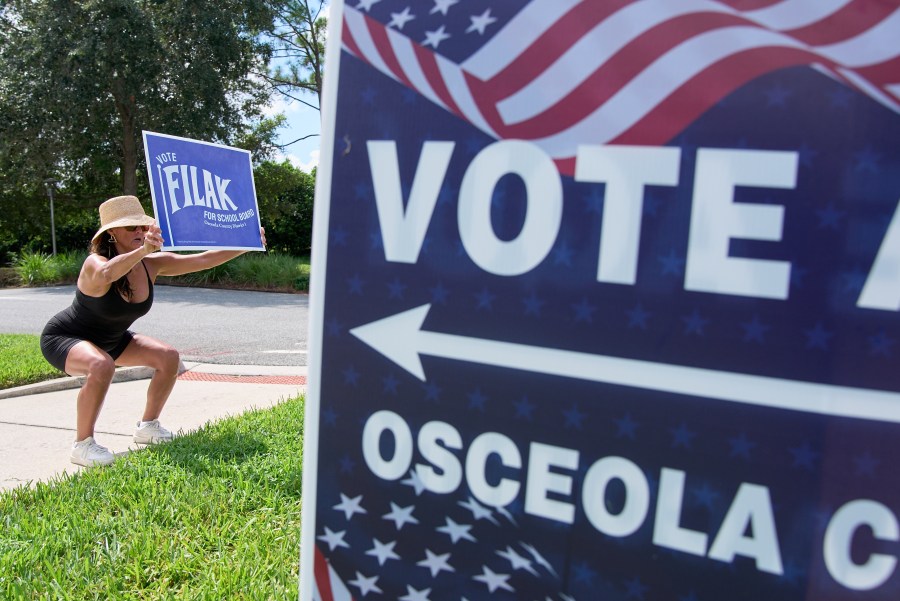
Expressing support for a candidate or party near polling places could complicate your voting experience. Over half of U.S. states restrict wearing campaign apparel when casting a ballot. Nearly all states prohibit signs, banners, or campaign materials near polling areas, as per the National Conference of State Legislatures.
These rules have stirred debates. For instance, in 2024, a situation arose when a woman was told by a poll worker to remove a Trump campaign shirt due to electioneering rules. Upon disagreement, she voted shirtless instead. Quinn Yeargain, a law professor at Michigan State University, emphasizes that electioneering regulations aim to maintain polling places as neutral zones. “This is not about restricting free speech,” Yeargain states.
Monitor What You Wear
According to the NCSL, 27 states prohibit wearing campaign items like stickers, shirts, and buttons. Vermont expects voters to cover campaign-related apparel at polling places. Similar rules apply in Michigan, Minnesota, and Texas. Vermont officials remind voters that polling places focus on voting, not campaigning.
In Colorado, Louisiana, and Nebraska, you can’t wear anything promoting a candidate or ballot issue you’re voting on. Delaware, Georgia, and Oklahoma also restrict campaign gear. Other states with similar bans include Arkansas, California, Hawaii, Indiana, Kansas, Maine, Massachusetts, Montana, Nevada, and many more.
Maryland and Iowa permit campaign-related clothing or buttons, but voters must leave promptly after voting. In New Hampshire, those who can’t easily remove campaign messages on their clothing can still vote. Alabama advises voters against loitering with campaign materials, while Pennsylvania prohibits campaigning or encouraging others inside polling places. In Virginia, voters may wear campaign apparel, but election workers cannot.
Leave Campaign Signs at Home
Almost all states restrict campaigning close to polling places. For instance, Massachusetts and Georgia ban electioneering activity within 150 feet of polling locations. This distance extends to 200 feet in Nebraska and 250 feet in Idaho. In Oklahoma, it stretches to 300 feet, and in South Carolina, restrictions begin within 500 feet.
Louisiana’s rule extends to 600 feet, while Pennsylvania only mandates 10 feet from the voting-room entrance. Alabama sets the boundary at 30 feet. Maryland’s electioneering limits are “as near as practicable to 100 feet” from entry points.
In Colorado, electioneering is banned within 100 feet of polling locations and ballot drop-boxes. Minnesota, Texas, and West Virginia follow similar restrictions. New Hampshire requires “no-electioneering corridors” that must be at least 10 feet wide.
Checking your state’s specific laws regarding what campaigning is allowed near polling places before voting can help you avoid complications.